

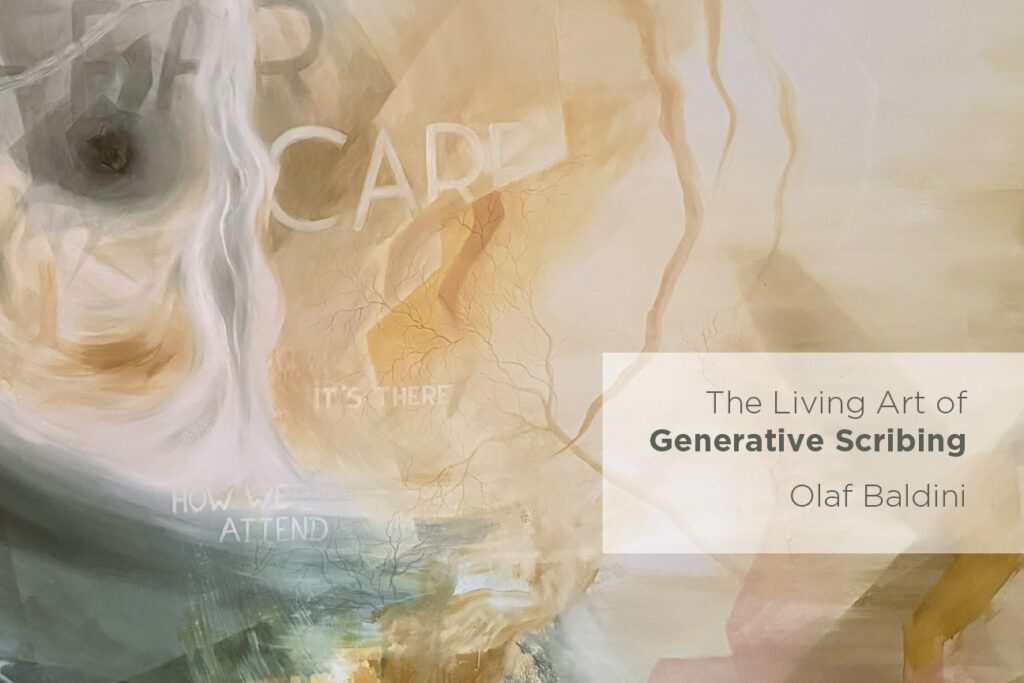

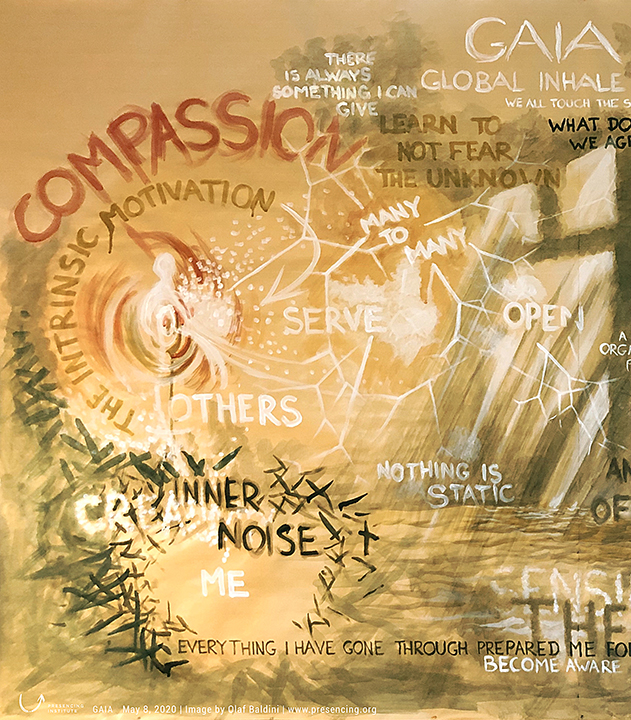
What happens when artists co-create visualizations of an emerging future with community in real time? How can this creative practice be precisely what the world needs now?
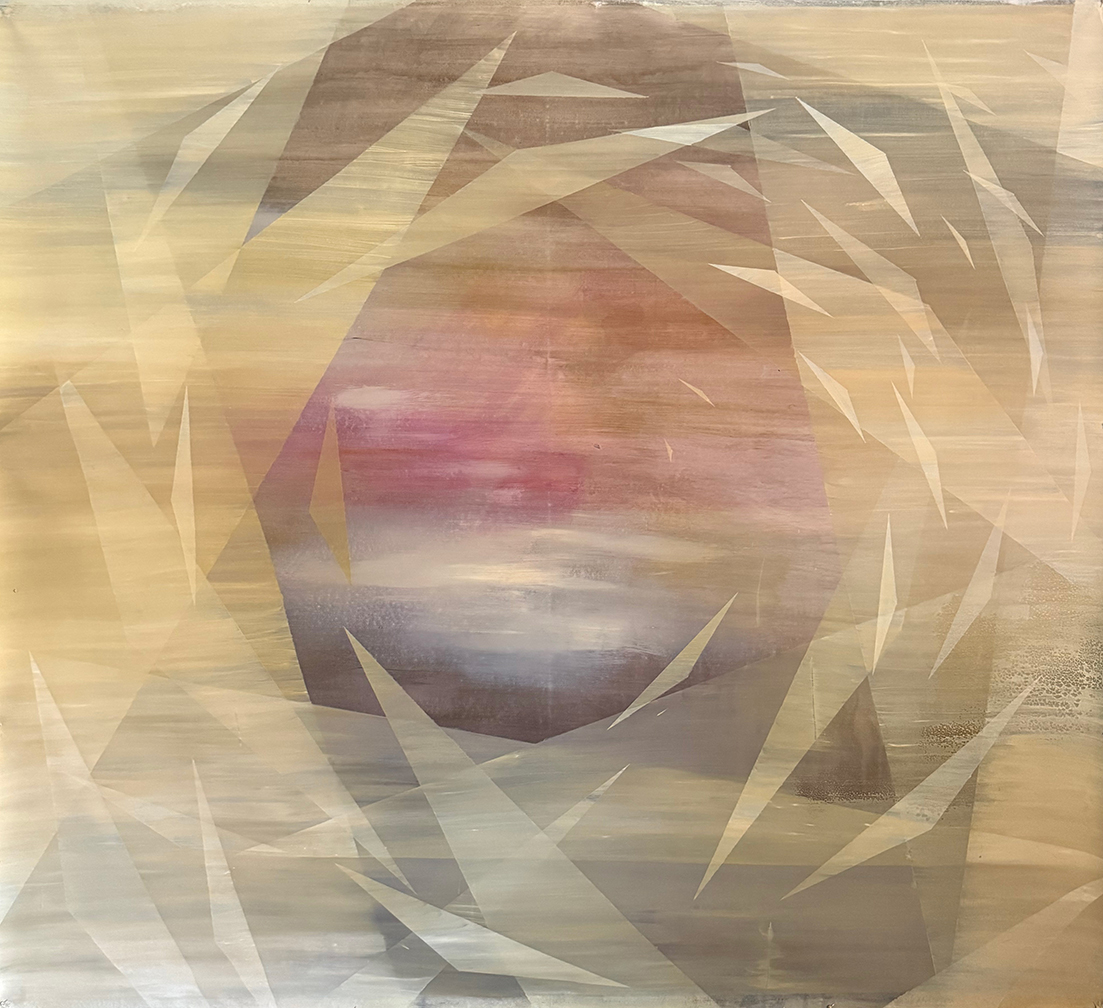
The Living Art of Generative Scribing brings together—for the first time in exhibition form—dynamic paintings and drawings by Olaf Baldini that he co-created in support of awareness-based social processes. Kelvy Bird, author of the book Generative Scribing: A Social Art of the 21st Century, describes this practice as a distinct social art form that not only facilitates group learning and cultural memory, but also extends into the sensing of social fields and the emerging potential of systems to transform. In Bird’s words, it is an “inherently participatory social art form….that offers a relational way of seeing” pp. 6-8.
We all stand in our historical moment. And, like all artists who choose to be aware of their socio-cultural contexts when they create, generative scribers consciously step into a space of responsibility and become receptive to the breadth and depth of a social field unfolding through people who have chosen to engage in constructive and intentional conversation. While maintaining a connection to their own experience, these artists turn their attention to the group and become aware of the social field being created. Having focused, they set an intention by clarifying purpose—of the group and of their creative role in the social field. They then act through a type of mark-making that is more attunement than translation. Through sensing and gesture—in a dynamic act of continual responsiveness—the artist makes visible what is present and wanting to emerge from the social field. (For more on attention, intention, and action as process, see Scharmer & Kaufer).
“What you see might seem the result of one art form—painting/writing (or whatever discipline is used)—whereas in reality it is the product of many art forms…the art of listening, the art of speaking, the art of being present and, only then, the art of visualization…”
—Olaf Baldini
“Scribing at the Ecosystem Leadership Conference,” Medium
With Generative Scribing, the creative process does not end when the artist puts down their tools. The painting or drawing becomes a locus for ‘resonance,’ a way of sensing the social field through an encounter with an image that has emerged from collective intention. ( Scharmer & Pomeroy) Resonance practice differs from expressions of likes, dislikes, formal analysis, or academic contextualization and interpretation of art. Instead, it is treated as a relational phenomenon. In this way, resonance practice expands on Marcel Duchamp’s ideas about the relationship between artwork and the viewer, which had been developing in philosophical and aesthetic circles for more than two centuries. “All in all, the creative act is not performed by the artist alone; the spectator brings the work in contact with the external world by deciphering and interpreting its inner qualifications and thus adds his contribution to the creative act” (Duchamp, “The Creative Act” 1957. See also Kant, Critique of Judgment (1790); Dewey, Art as Experience (1934); Heidegger, “The Origin of the Work of Art” (1935–36).
Otto Scharmer, author of Theory U, uses language that points to an important distinction between modern art reception and resonance practice. “Resonance mediates between the subjective and objective and we can understand that as a gateway into our deeper levels of knowing…” (Scharmer) Resonance, then, moves beyond Duchamp’s viewer response toward a more active participation in a living social field and an emergent process.
How can exhibitions act as a container for intentional conversations and help to surface deeper levels of knowing?
The Living Art of Generative Scribing exhibition, as a physical installation, builds out awareness-based social art practices that have been cultivated at the Presencing Institute. For its duration (AY 2026-27), the show will function as a container for episodic events and conversations, including a world café, performance, class visits, and spontaneous dialogue. In this way, it will act as a space of both learning and research about the practice of this living art and its expanding place in the world.
A week of events will open and activate the installation container. Arawana Hayashi, author of Social Presencing Theater: The Art of Making a True Move, and her team will teach and lead Social Presencing Theater (SPT) practices with Otterbein students. SPT, like Generative Scribing, is a living art and awareness-based social art practice that emerged at the Presencing Institute. Hayashi and a group of Otterbein students will perform at the exhibition’s opening reception on October 8th from 4p – 7p. Olaf Baldini will work live in the space, generatively scribing the SPT performance and visitor responses.
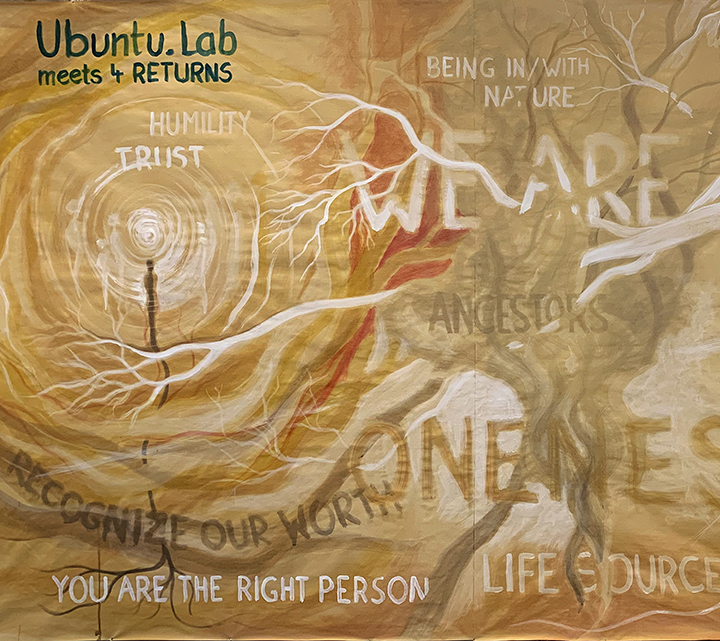
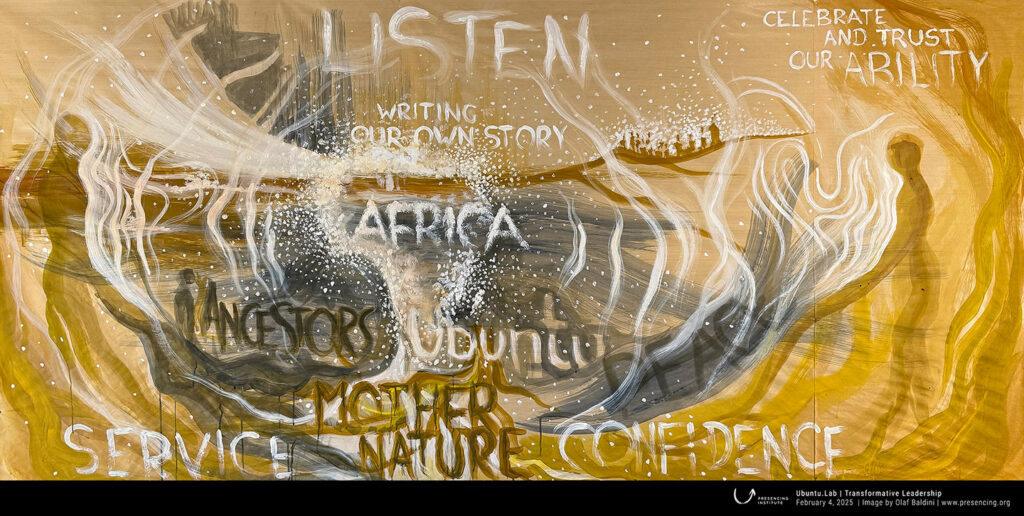
The Living Art of Generative Scribing is part of the Otterbein & the Arts: Opening Doors to the World (ODW) exhibition, programming, and publication series that seeks to move audiences beyond single narratives toward more nuanced understandings about peoples, places, societies, and cultures. The installation will include examples of Baldini’s artwork from a range of contexts, including global conversations, such as GAIA Journey (COVID 2020-21) and Ubuntu Lab (2019-2026), and hyper-local work, such as a Social Presencing meeting (2026). New work created by Baldini during his artist visit to campus will also be included in the exhibition.
ABout the Artist
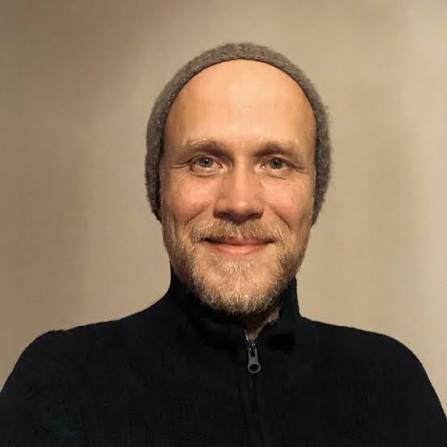
Olaf Baldini
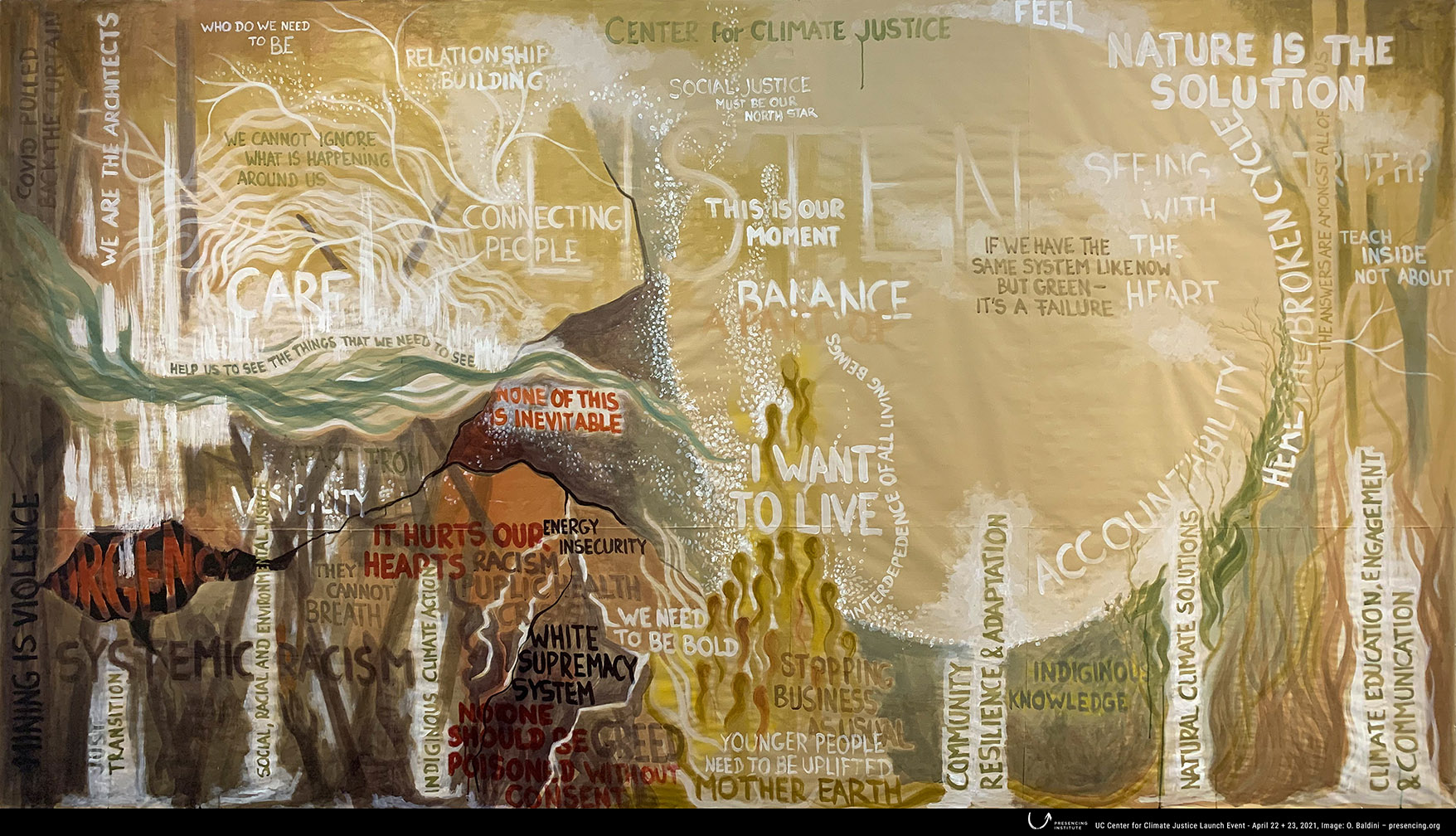
Olaf Baldini is a fine artist and Generative Scribing practitioner. He has been engaged with the Presencing Institute and their processes that support transformation for social, ecological, and systemic regeneration since 2017. He has engaged with global communities and organizations, including the UNDP Bosnia/Herzegovina at the “Future Cities Forum”, the UC Center for Climate Justice (University of California), the “Zuhören” (Listening) Congress, initiated by Sasha Waltz and “Learning from the bees” Conference in Berlin, as well as with regional and hyper-local events around climate and social change processes.
Olaf’s roots are in graphic design which he studied in Vienna before he moved to Berlin in 2000 to work in corporate design, animated web-applications, and web design. In 2003 he started his own business in that field. His clients include europeana (in Den Haag, Netherlands), the local government of Berlin, the state owned housing agencies of Berlin, and several event/concert production companies in Germany, Denmark and the UK.
ABout the Artist
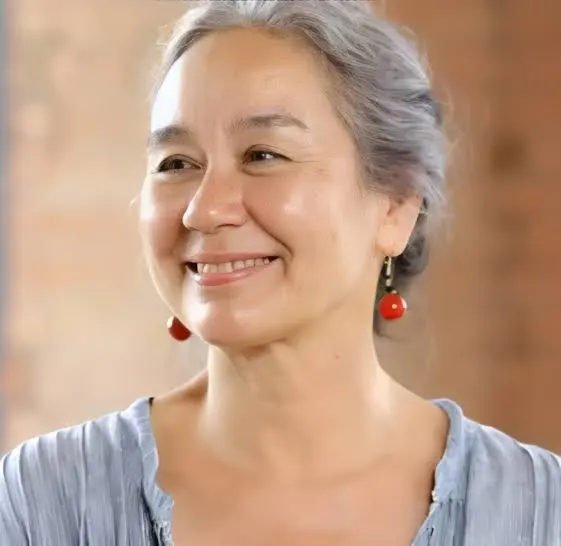
Arawana Hayashi
Arawana heads the creation of Social Presencing Theater (SPT) for the Presencing Institute. Working with Otto Scharmer and colleagues, she brings her background in the arts, meditation, and social justice to creating “social presencing” that makes visible both current reality and emerging future possibilities for individuals and groups.
Arawana’s pioneering work as a choreographer, performer and educator is deeply sourced in collaborative improvisation.
Her dance career ranges from directing an interracial street dance company formed by the Boston Mayor’s Office for Cultural Affairs in the aftermath of the 1968 murder of Dr. Martin Luther King, to being one of the foremost performers of Japanese Court Dance, bugaku, in the US. She has been Co-Director of the Dance Program at Naropa University, Boulder, CO; and founder-director of two contemporary dance companies in Cambridge, MA.
Thank you to our sponsors for their ongoing support of our global arts and interdisciplinary exhibitions and programming.



Plan
Your
Visit
The Frank Museum is located one block east of Uptown Westerville’s vibrant commercial district. Spend an afternoon visiting the museum’s current exhibition, browsing in Uptown’s locally owned shops, and relaxing in our excellent restaurants or coffee establishments. The Frank Museum staff are always available for tours.
Current Exhibitions
-
A Journey through America with Robert Freimark
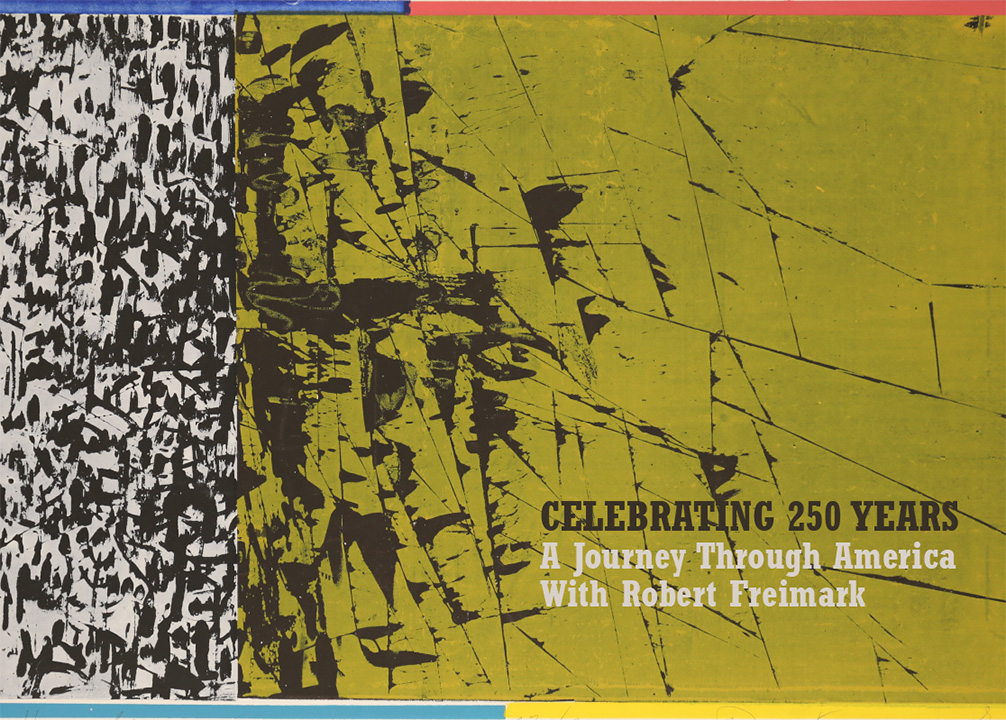
Christian Hohmann, Curator; In collaboration with HOHMANN Fine Art GalleryFrank Museum of ArtAugust 19 – December 4, 2026Between 1960 and 1968, artist Robert Freimark created Fifty States, a suite of abstract, full-sheet color screen prints representing each of the fifty United States. To make this collection, Freimark traveled around the country. He drew from his own experiences as well as extensive research into the history of each state to create a unique, multilayered print. Situated in The Frank, a museum dedicated to global art, the installation reflects on America’s 250th Anniversary of the signing of the Declaration of Independence and our country’s place in the world. -
Jim Bowling: Inside Out
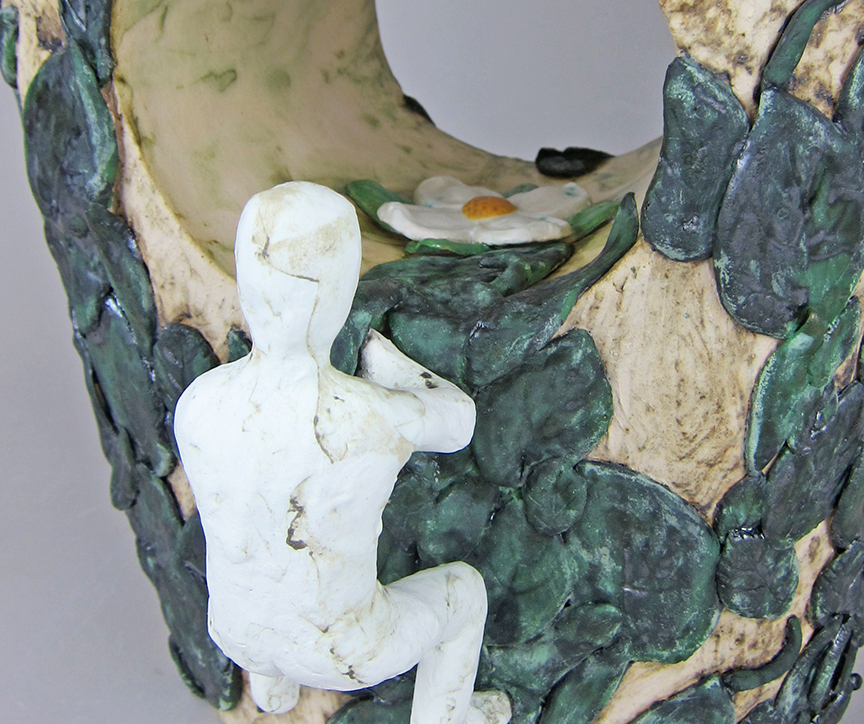
A Sabbatical ExhibitionMiller GalleryAugust 19 – November 4, 2026In this sabbatical exhibition, Jim Bowling reflects on the ways that personal, internal narratives influence external expressions. The artist explores this theme through the intimate connection between the interiors and exteriors of sculptural forms. Each narrative begins in the center of the sculpture, at the core of each piece. The surface narratives on the exterior ‘support’ forms, which are simple figurative bases, are impacted and transformed by the internal narratives. Viewers can investigate the nuanced relationships between inner narratives and exterior expressions through this series titled “Inside Out.” -
Weight & Witness
Alex Lewis & Jack KoppertFisher GalleryApril 5 – September 26, 2026Weight & Witness pairs the accumulated gravity of Alex Lewis’ ceramic and assemblage sculptures with the unflinching portraiture of Jack Koppert’s oil paintings. Together, their work engenders a domestic solemnity, punctuated by moments of surprise and humor.