

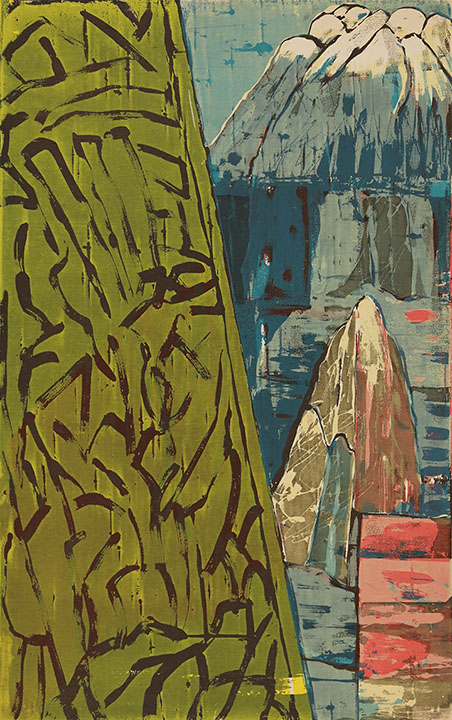
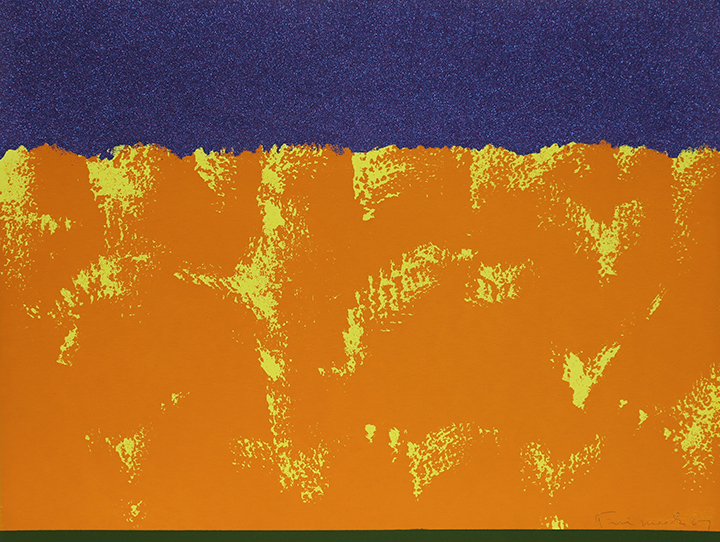
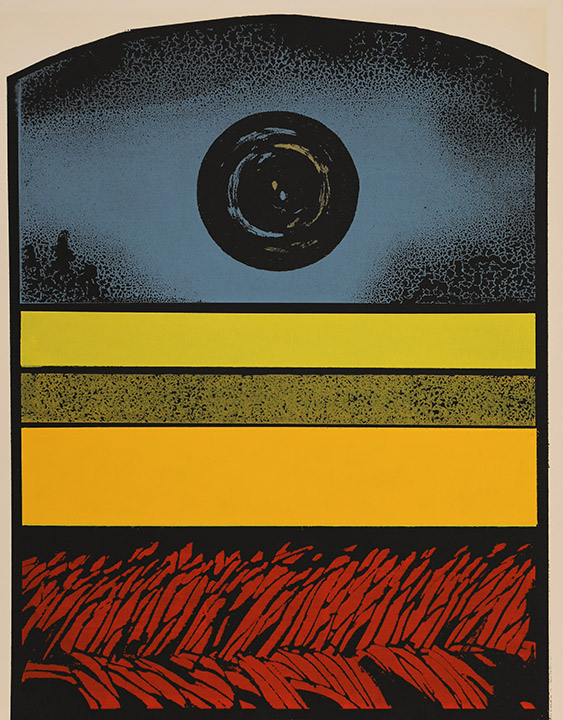
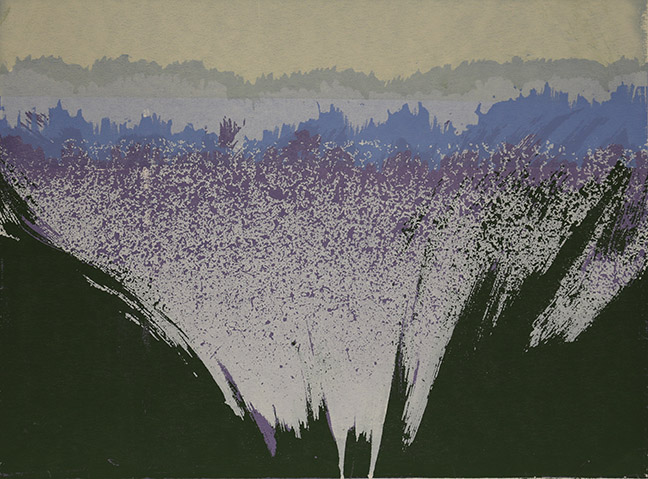
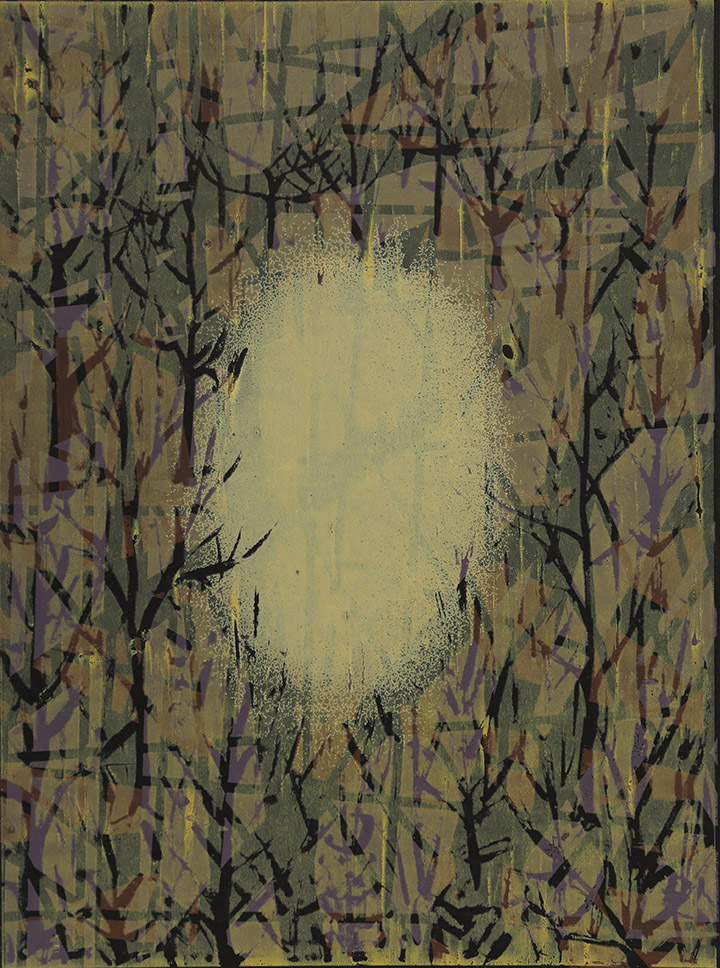
What is the visual identity—the spirit—of an American state, and how can an artist communicate that essence through abstraction?
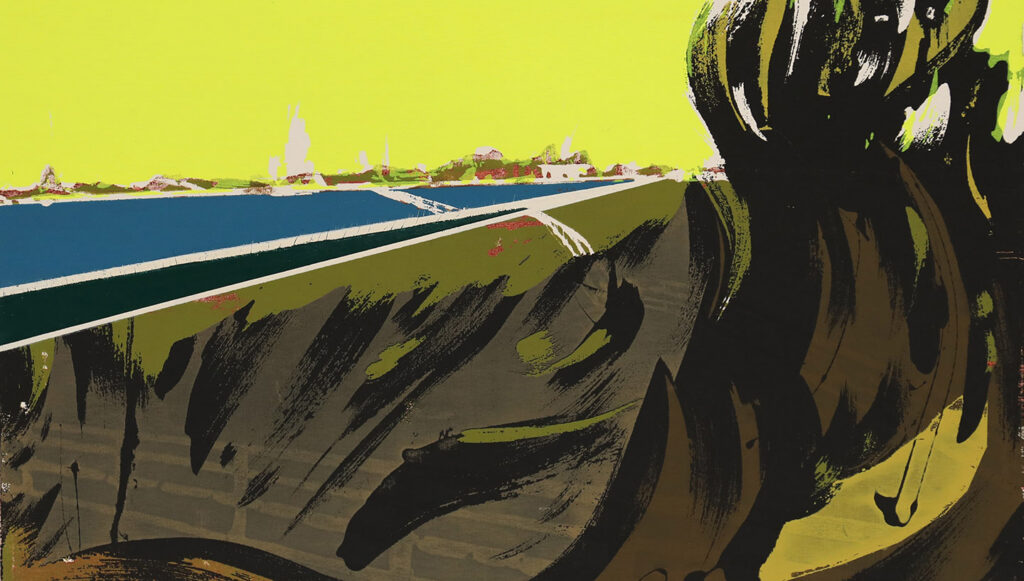
The Fifty States series was completed under the aegis of a California State Colleges Special Creative Leave and was based on impressions and observations gleaned from Freimark’s personal sojourn to each state, in which the artist drew firsthand inspiration from each territory’s distinct vibe. The artist sought to connect each state’s geographical singularities with their deeper historical contexts, suggesting that each print was intended as a synthesis of both physical place and cultural identity rather than a literal scene.
In the 1970s, Freimark exhibited the works featured in this exhibition throughout Europe while on sabbatical with his wife and daughter. The series became the official US bicentennial offering at the 1976 opening of the Amerika Haus in Munich and has since been shown worldwide.
Each print has been the result of considerable research and refinement to capture aesthetically the central significance of the geographical area involved.
—Robert Freimark
Freimark summarized his philosophy of art in this way, “I am an abstract-expressionist, but I am committed to the belief that all artists must thoroughly know and pursue the figure and the figurative genre, in the same sense that a pianist regularly practices the scale. It is imperative that the artist seek and discover the most suitable media for the labor at hand, and to attempt to master whatever media he encounters, to achieve this goal.”
The artist’s experiences of war had a profound effect on him and the direction of his artwork. “I spent seven years of my life in the United States Navy, including all of World War II. I was on the ship with the best firing record throughout the war, where I was a pointer on a forty millimeter quad. The pointer is the man who aims and fires the guns. I was in 56 engagements with the Japanese. I came out of the experience disillusioned by the intelligence of our Naval officers, and totally against all war. As an artist, it is one of my commitments to relay this experience to my fellow citizens.”
ABout the Artist
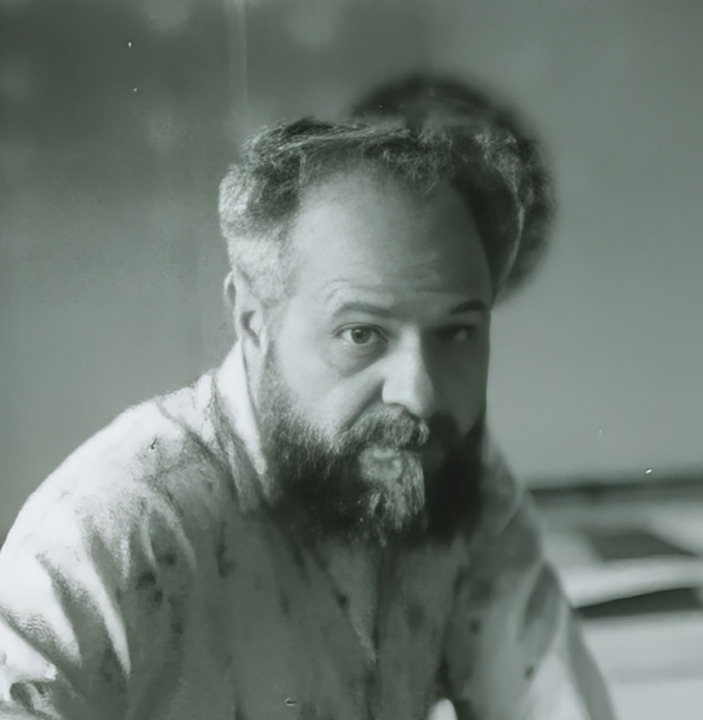
Robert Freimark
American artist Robert Freimark (1922–2010), a true West Coast abstract expressionist, was born in Michigan during a time of remarkable creative ferment and experimentation, leading him to explore a range of artistic mediums, including painting, watercolor, drawing, print media, tapestry, and sculpture. Like many artists of his day, Freimark’s work was interrupted by World War II, where he served for seven years. Upon his return, he attended the University of Toledo on a GI bill. He earned his MFA from the Cranbrook Academy of Art, studying architecture under Eliel Saarinen and sculpture with Carl Milles. He also lectured around the world, was a visiting professor at Harvard University from 1972-73, and spent 22 years teaching at San Jose State University.
Freimark drew inspiration from his early life
in Michigan and Ohio, the residency programs he attended in Iowa and the Midwest, his extensive travels throughout Mexico, and his studio practice in California. Each of these experiences informed his unique approach to his artistic practice. Freimark’s work was included in over 250 solo exhibitions and has been collected globally.
Thank you to our sponsors for their ongoing support of our global arts and interdisciplinary exhibitions and programming.





Plan
Your
Visit
The Frank Museum is located one block east of Uptown Westerville’s vibrant commercial district. Spend an afternoon visiting the museum’s current exhibition, browsing in Uptown’s locally owned shops, and relaxing in our excellent restaurants or coffee establishments. The Frank Museum staff are always available for tours.
Current Exhibitions
-
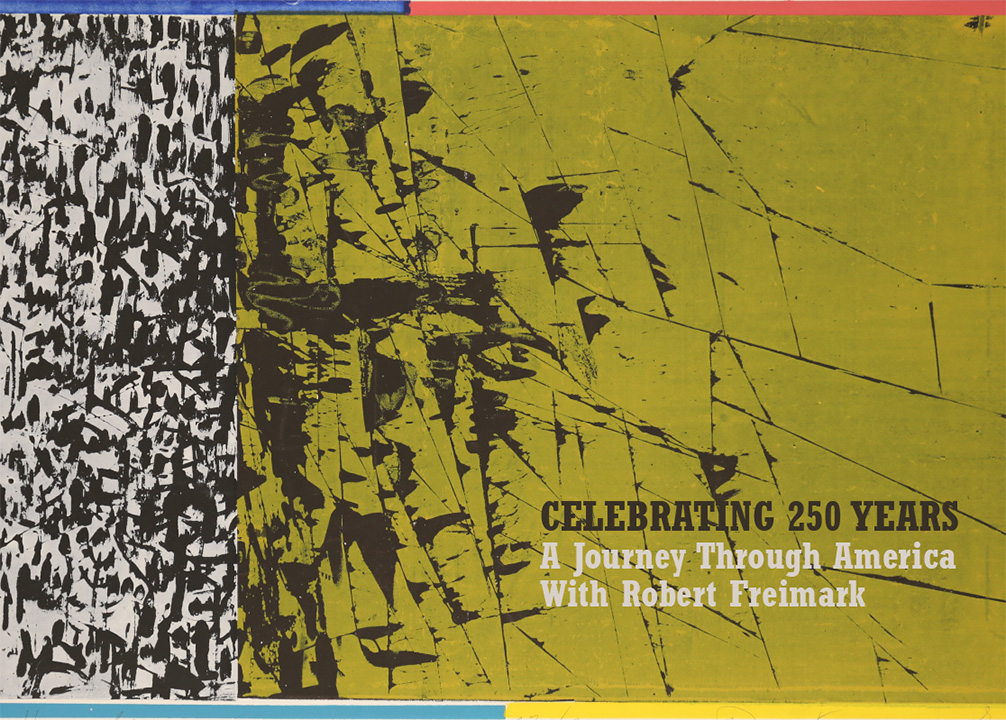
A Journey through America with Robert Freimark
Christian Hohmann, Curator; In collaboration with HOHMANN Fine Art GalleryFrank Museum of ArtAugust 19 – December 4, 2026Between 1960 and 1968, artist Robert Freimark created Fifty States, a suite of abstract, full-sheet color screen prints representing each of the fifty United States. To make this collection, Freimark traveled around the country. He drew from his own experiences as well as extensive research into the history of each state to create a unique, multilayered print. Situated in The Frank, a museum dedicated to global art, the installation reflects on America’s 250th Anniversary of the signing of the Declaration of Independence and our country’s place in the world. -
Jim Bowling: Inside Out
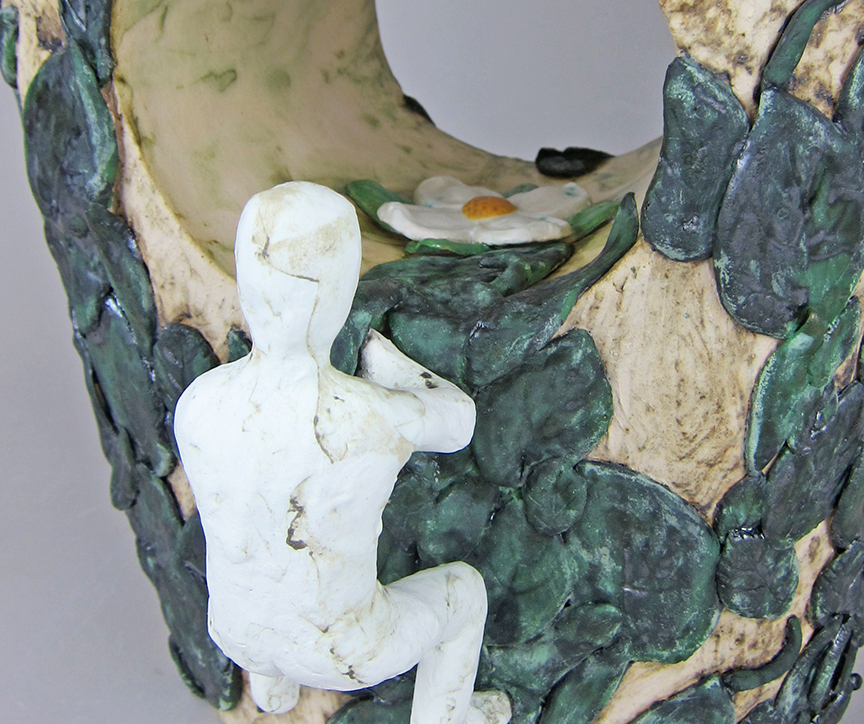
A Sabbatical ExhibitionMiller GalleryAugust 19 – November 4, 2026In this sabbatical exhibition, Jim Bowling reflects on the ways that personal, internal narratives influence external expressions. The artist explores this theme through the intimate connection between the interiors and exteriors of sculptural forms. Each narrative begins in the center of the sculpture, at the core of each piece. The surface narratives on the exterior ‘support’ forms, which are simple figurative bases, are impacted and transformed by the internal narratives. Viewers can investigate the nuanced relationships between inner narratives and exterior expressions through this series titled “Inside Out.” -

Weight & Witness
Alex Lewis & Jack KoppertFisher GalleryApril 5 – September 26, 2026Weight & Witness pairs the accumulated gravity of Alex Lewis’ ceramic and assemblage sculptures with the unflinching portraiture of Jack Koppert’s oil paintings. Together, their work engenders a domestic solemnity, punctuated by moments of surprise and humor.