

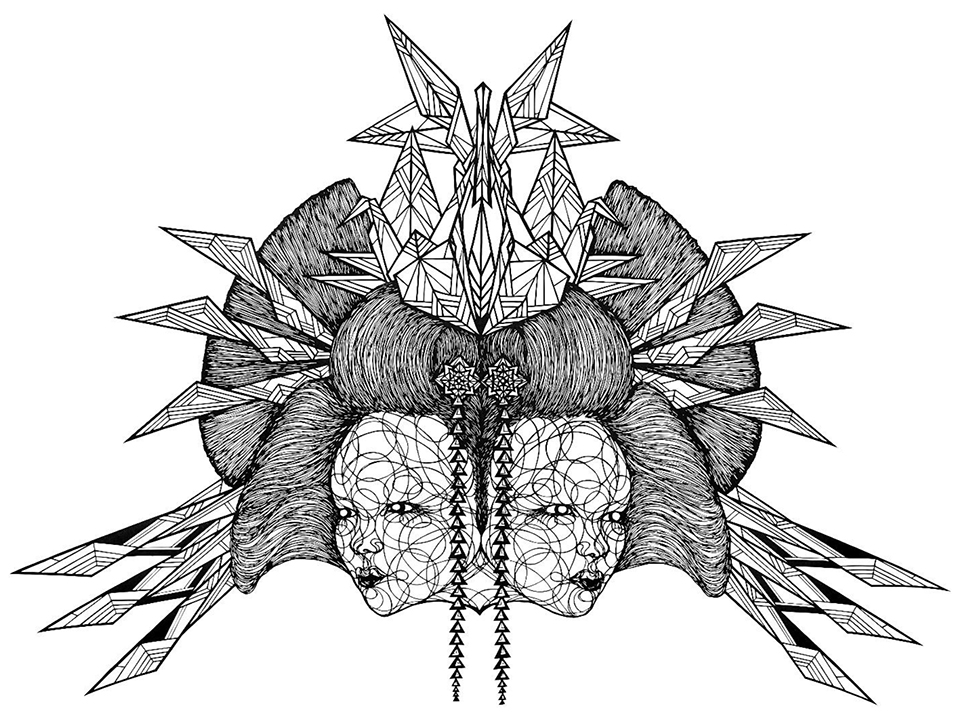
What happens when innate, creative impulse blends with personal and cultural histories?
Japanese artists began making kirié or paper cut works in the early 7th century CE, when the tradition was introduced from China. At the same time, washi—paper made from plant matter, usually mulberry bark—was also introduced to Japan from the Asian continent. Originally used for the woodblock print-production of Buddhist texts, washi provided the strength and flexibility necessary to accept hundreds or even thousands of fine cuts, without disintegrating and still retaining its intended shape.
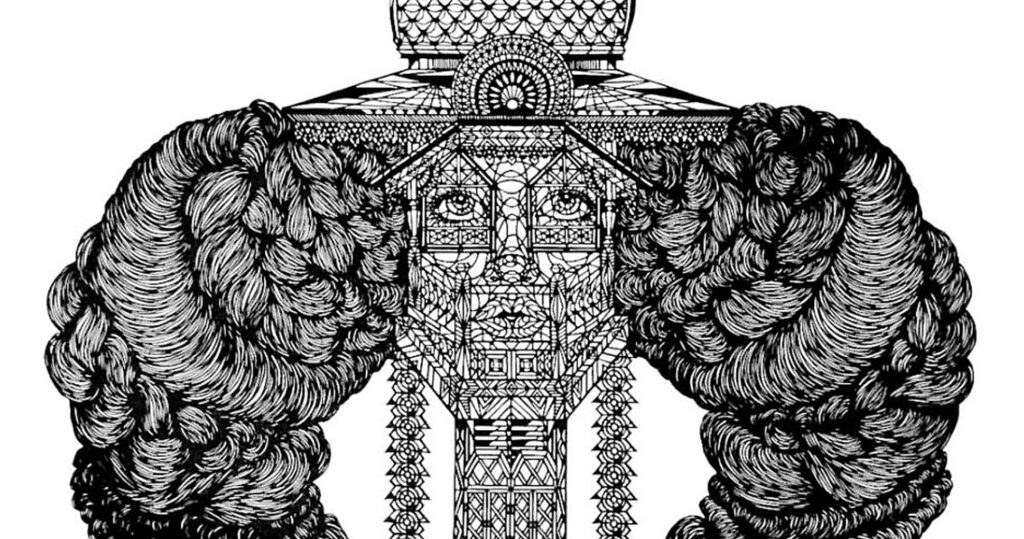
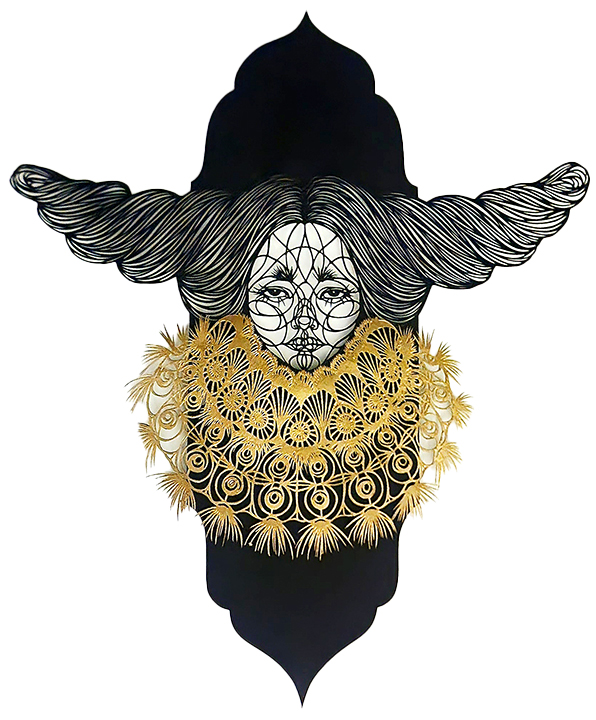
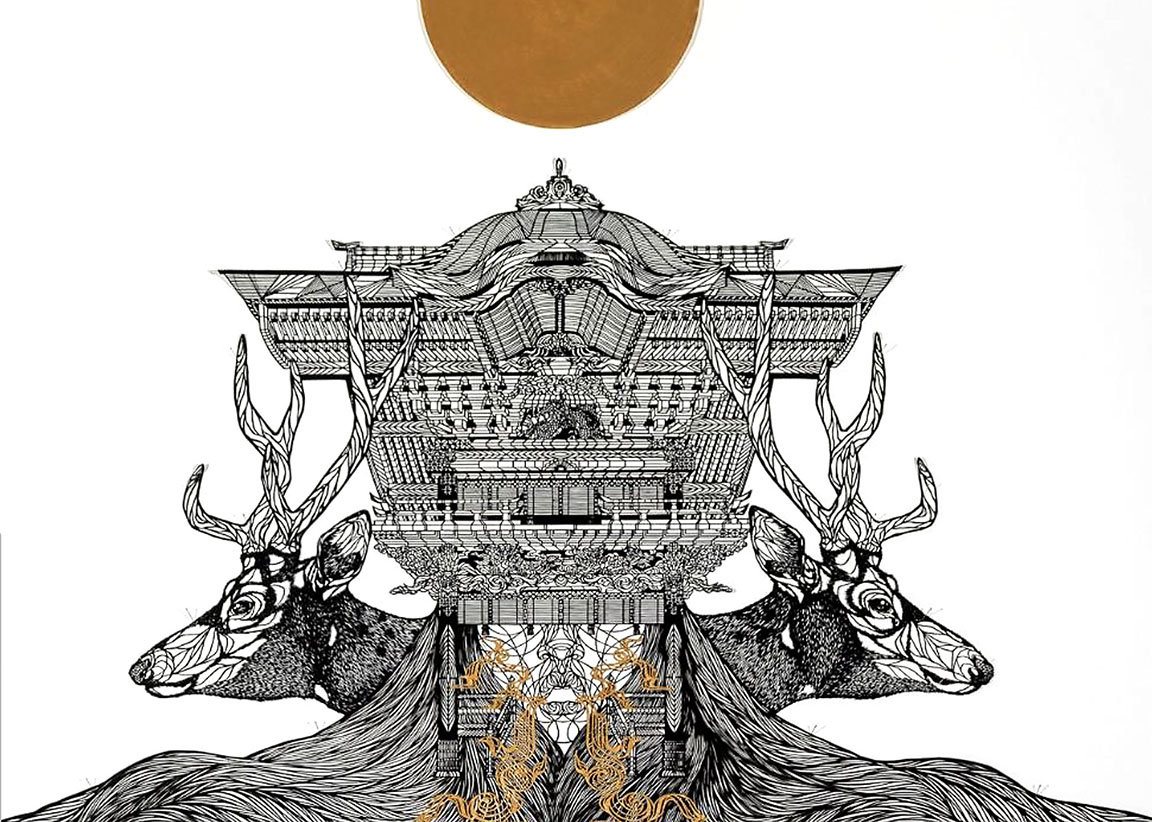
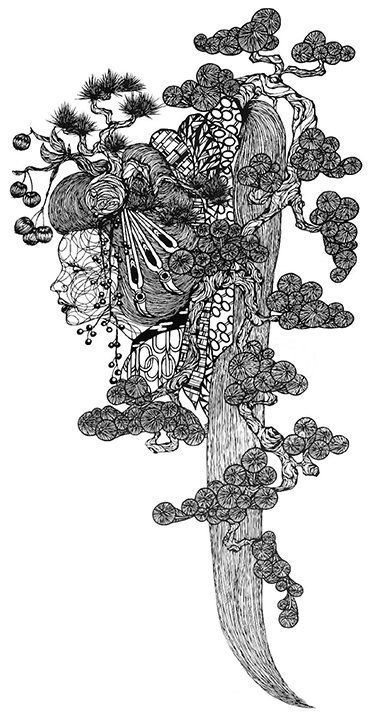
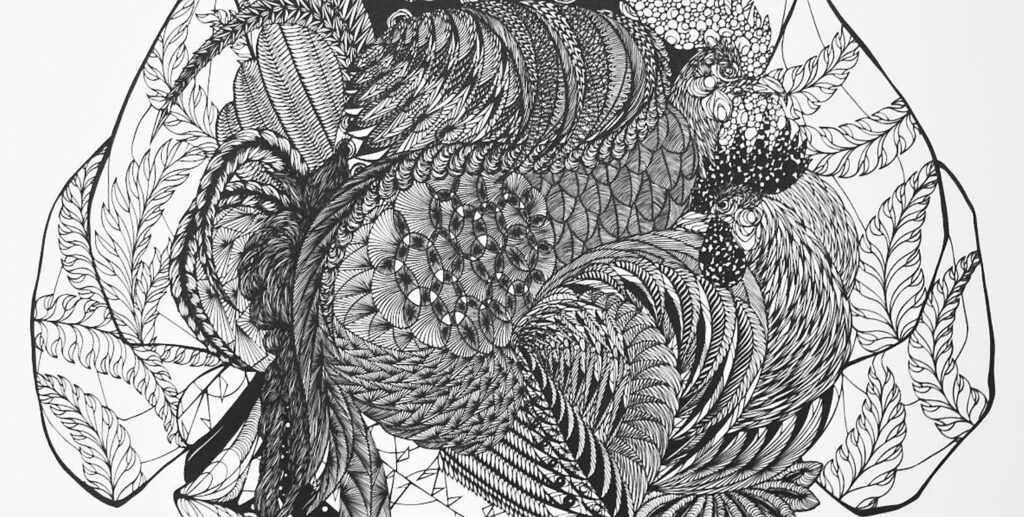
Hiromi Mizugai Moneyhun began practicing kirié in 1997as a way to satisfy her creative aspirations and personal interest in slow, methodical, and highly detailed work. Drawing on Japanese cultural histories and worldviews, Moneyhun began making paper cut art with increased complexity. In her Ukiyo series, the artist recalls the ukiyo (floating world) cultural movement that developed during the Edo Period (1603-1868) and which emphasized the pursuit of life’s fleeting pleasures by living in the moment. Images of youthful, beautiful women with elaborate hairstyles act as the primary reference for this series. At the same time, both her Ukiyo and Emergence series recall the Buddhist worldview of interdependence and the inseparably of all aspects of reality.
Human faces, bodies, and clothing mingle with and emerge within representations of traditional Japanese temples, ancient pines, and horned stags. The results are both dizzying and playful, contemplative and spontaneous. The depiction of interconnection is underscored by the fact that each work of art is made with a single sheet of paper.
“…my daughter is my muse…”
Experience the fantastical and studied worlds of Hiromi Moneyhun’s paper cuts at The Frank Museum of Art.
ABout the Artist
Hiromi Mizugai Moneyhun’s (水貝 宏美)
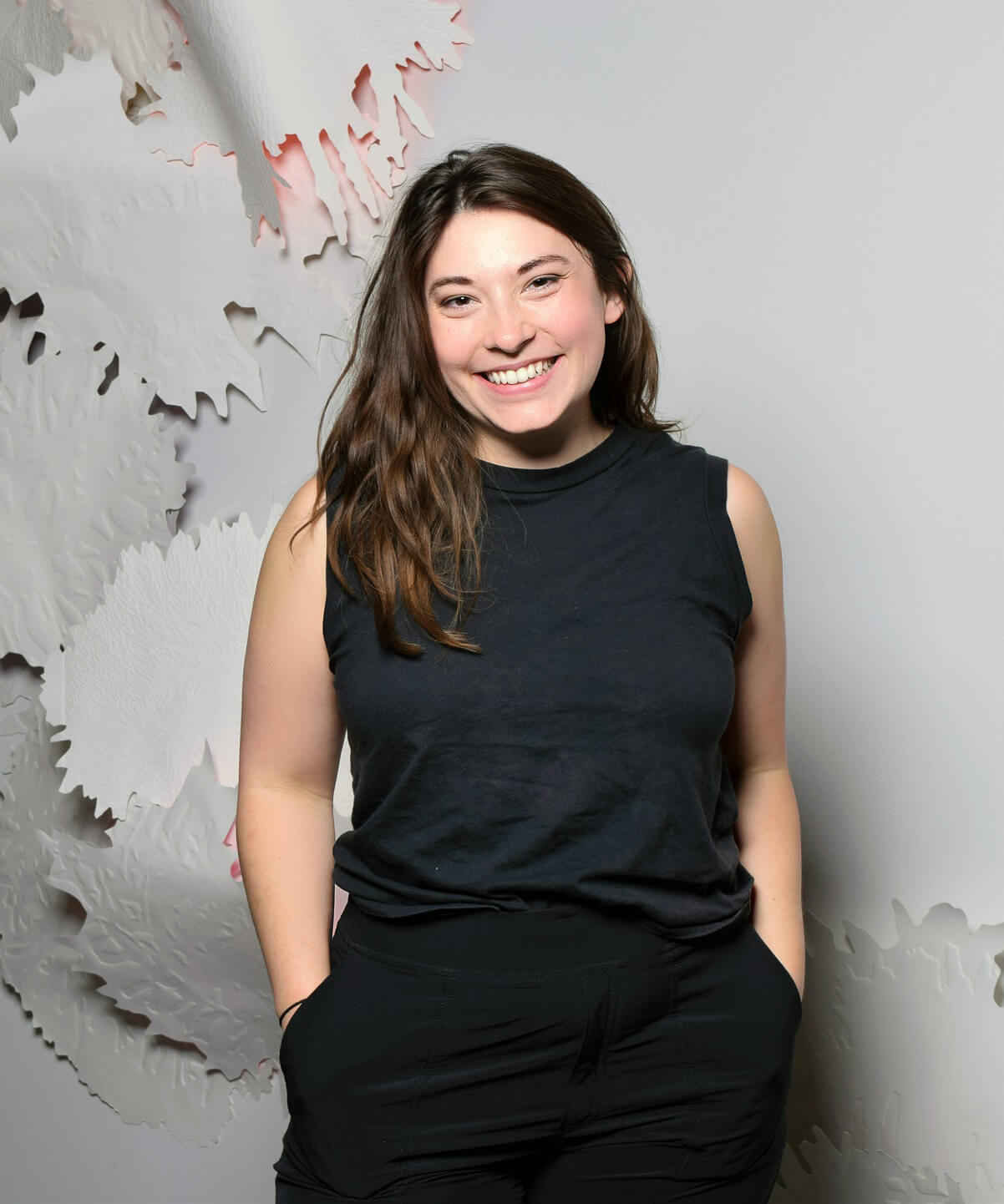
Hiromi Mizugai Moneyhun, a native of Kyoto, Japan, is a self-taught papercut artist based in Florida. With no formal art training, she has developed a style that seamlessly merges traditional Japanese art forms with the contemporary sensibilities found in Japan’s bustling metropolises.
Hiromi’s art is renowned for its intricacy and unwavering commitment to exacting standards. Her creations, often taking weeks or even months to complete, stand as a testament to her extraordinary skill and mastery of the papercut medium. Her talent captured the spotlight when she exhibited at the Crystal Bridges Museum of American Art’s prestigious 2014-15 show, “State of the Art: Discovering American Art Now,” leading to a feature article in the Huffington Post alongside three other artists from across the nation. She also garnered attention in her homeland when she became the subject of a syndicated Japanese television show.
Hiromi’s work has been showcased in both group and solo exhibitions in prominent art centers, including New York, Miami, London, and Orlando. Notably, she received the People’s Choice Award during the Florida Prize exhibition at the Orlando Museum of Art in 2022. Her artistic contributions extend beyond galleries, as her work is collected by museums and cherished by numerous private collectors worldwide. Hiromi’s art continues to bridge the gap between tradition and contemporary innovation, forging a path that resonates with art enthusiasts around the globe.

Related Programming
These will be manually selected posts or events. Use Post Cards Block but without Columns?
Thank you to our sponsors for their ongoing support of our global arts and interdisciplinary exhibitions and programming.

Plan
Your
Visit
The Frank Museum is located one block east of Uptown Westerville’s vibrant commercial district. Spend an afternoon visiting the museum’s current exhibition, browsing in Uptown’s locally owned shops, and relaxing in our excellent restaurants or coffee establishments. The Frank Museum staff are always available for tours.
Current Exhibitions
-
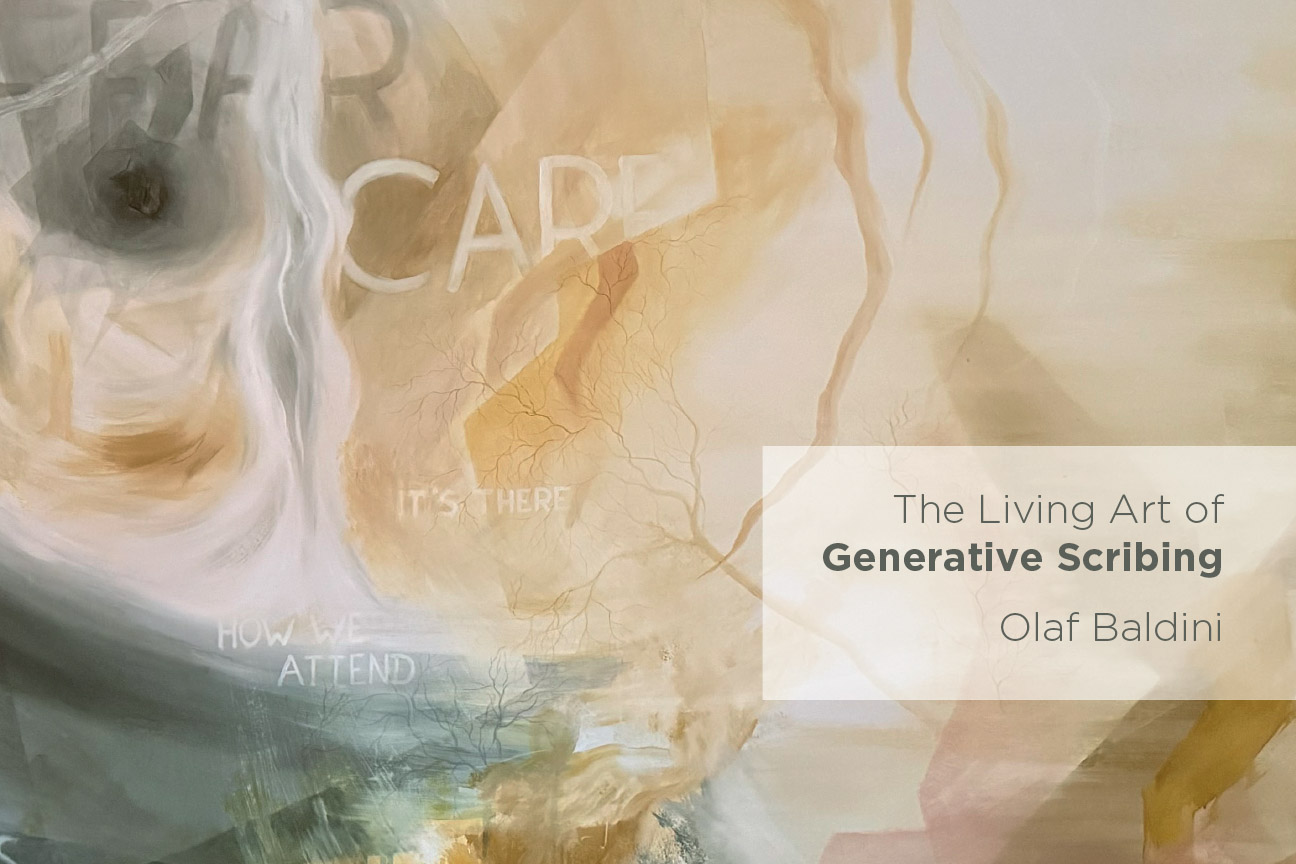
The Living Art of Generative Scribing
Fisher GalleryOctober 5, 2026 – April 15, 2027This exhibition showcases Generative Scribing, an emergent social art form, featuring the work of Berlin-based artist Olaf Baldini. Generative Scribing pairs deep, active listening with fluid visual art to help organizations and communities navigate complex, evolving futures. The installation features large-format paintings and drawings from global initiatives, alongside new work that will be drawn from dialogues and social fields at Otterbein and Central Ohio. -
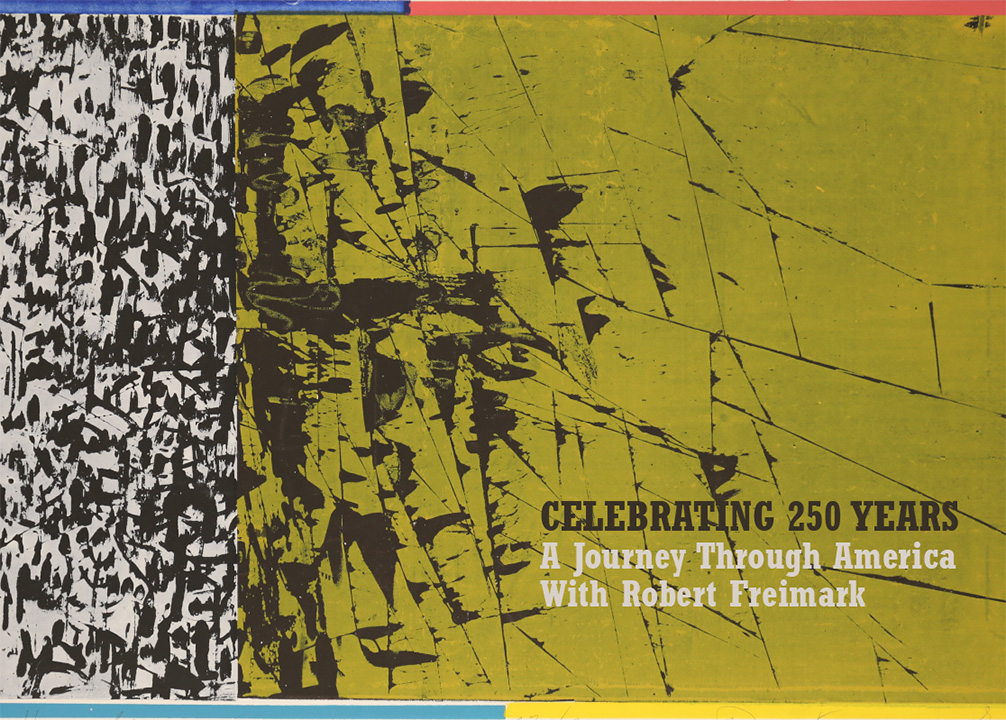
A Journey through America with Robert Freimark
Christian Hohmann, Curator; In collaboration with HOHMANN Fine Art GalleryFrank Museum of ArtAugust 19 – December 4, 2026Between 1960 and 1968, artist Robert Freimark created Fifty States, a suite of abstract, full-sheet color screen prints representing each of the fifty United States. To make this collection, Freimark traveled around the country. He drew from his own experiences as well as extensive research into the history of each state to create a unique, multilayered print. Situated in The Frank, a museum dedicated to global art, the installation reflects on America’s 250th Anniversary of the signing of the Declaration of Independence and our country’s place in the world. -
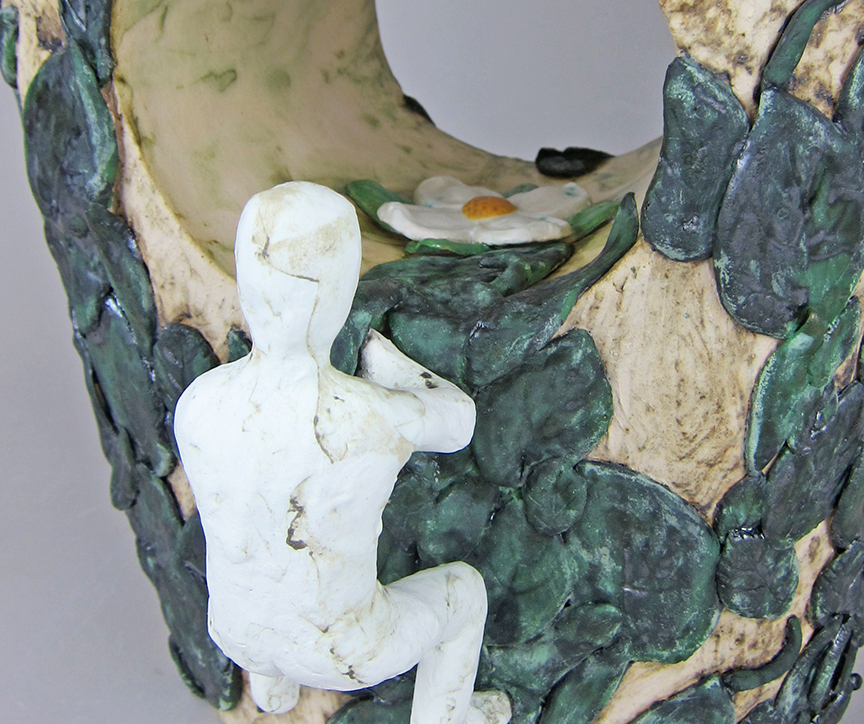
Jim Bowling: Inside Out
A Sabbatical ExhibitionMiller GalleryAugust 19 – November 4, 2026In this sabbatical exhibition, Jim Bowling reflects on the ways that personal, internal narratives influence external expressions. The artist explores this theme through the intimate connection between the interiors and exteriors of sculptural forms. Each narrative begins in the center of the sculpture, at the core of each piece. The surface narratives on the exterior ‘support’ forms, which are simple figurative bases, are impacted and transformed by the internal narratives. Viewers can investigate the nuanced relationships between inner narratives and exterior expressions through this series titled “Inside Out.”