Educating Students for Democracy

Education, and Democracy On Campus

According to the Fair Election Center’s Campus Votes Project, young adults historically have voted at lower rates than older cohorts. Why? They face many obstacles to voting, including frequent address changes, confusing voter ID laws, and lack of transportation to polling locations, among other things. That’s why there are efforts at Otterbein to educate student voters about the voting process and to remove those obstacles that might prevent them from practicing their civic rights.

Peer-to-Peer Outreach

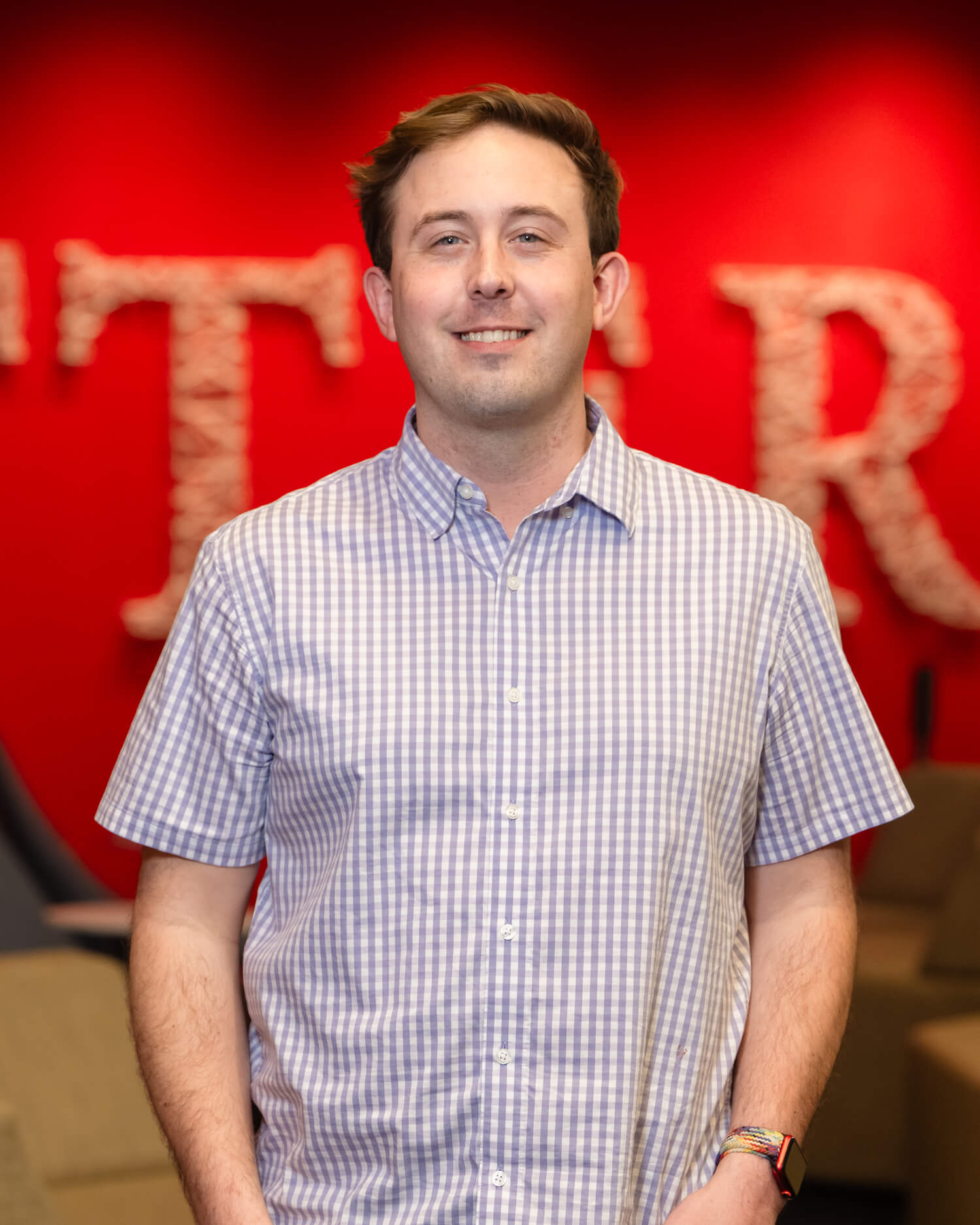
BY GRACE SIMS ’25 Sociology, Psychology, and Women’s, Gender, and Sexuality Studies triple major; CardinalCorps Co-Leader of Raise Your Voice; and Democracy Fellow*

*Note: Democracy Fellows are selected by the Campus Vote Project of the Fair Elections Center. Democracy Fellows talk to their peers about registering to vote, educate them on election laws and what’s on the ballot, and make sure students at their campus are ready to engage with democracy. Fellows implement programs on each of their campuses that will remain long after they graduate and make an impact on students for years to come.

Civic engagement is not only our right as U.S. citizens, but also an essential component of our democratic process, and education is a crucial part of every person’s voting journey.

From local issues to state elections and, this year, the presidential election, voters will be presented with a lot of information in November. So it is essential that they submit their vote, confident that they understand their ballots. After all, our vote has a variety of real-world outcomes that impact everyone from college students to families and retirees.

These outcomes matter to young people, who have been making their voices heard in increasing numbers. Young voters had record turnout in the 2020 and 2022 elections and Otterbein students have been no different. In 2020, Otterbein students registered to vote and then voted at higher rates than the national average and at a higher percentage than previous classes at Otterbein. Raise Your Voice, Otterbein’s non-partisan, student-run, voter education group, hopes to continue this legacy and improve our registration rate and voting rate in 2024.

Raise Your Voice has hosted events throughout the semester including on national civic holidays such as National Voter Registration Day (Sept. 17), National Voter Education Week (Oct. 7-10), and Vote Early Day (Oct. 29) to bring students together to learn about and celebrate the voting process.

At past events, students have enjoyed casting a mock ballot with the Franklin County Board of Elections, Q&As with local politicians, and discussions with various community partners including the League of Women Voters and Rank The Vote.

As a Democracy Fellow and college student, I recognize the apathy and dispiritedness prevalent among my fellow college students when it comes to voting. It is vital for me to educate my peers on the importance of not only voting in November, but voting down the ballot in an educated, informed, and confident manner. You can see our action plans, awards, and voting achievements at allinchallenge.org/campuses/otterbein-university.

In the Classroom

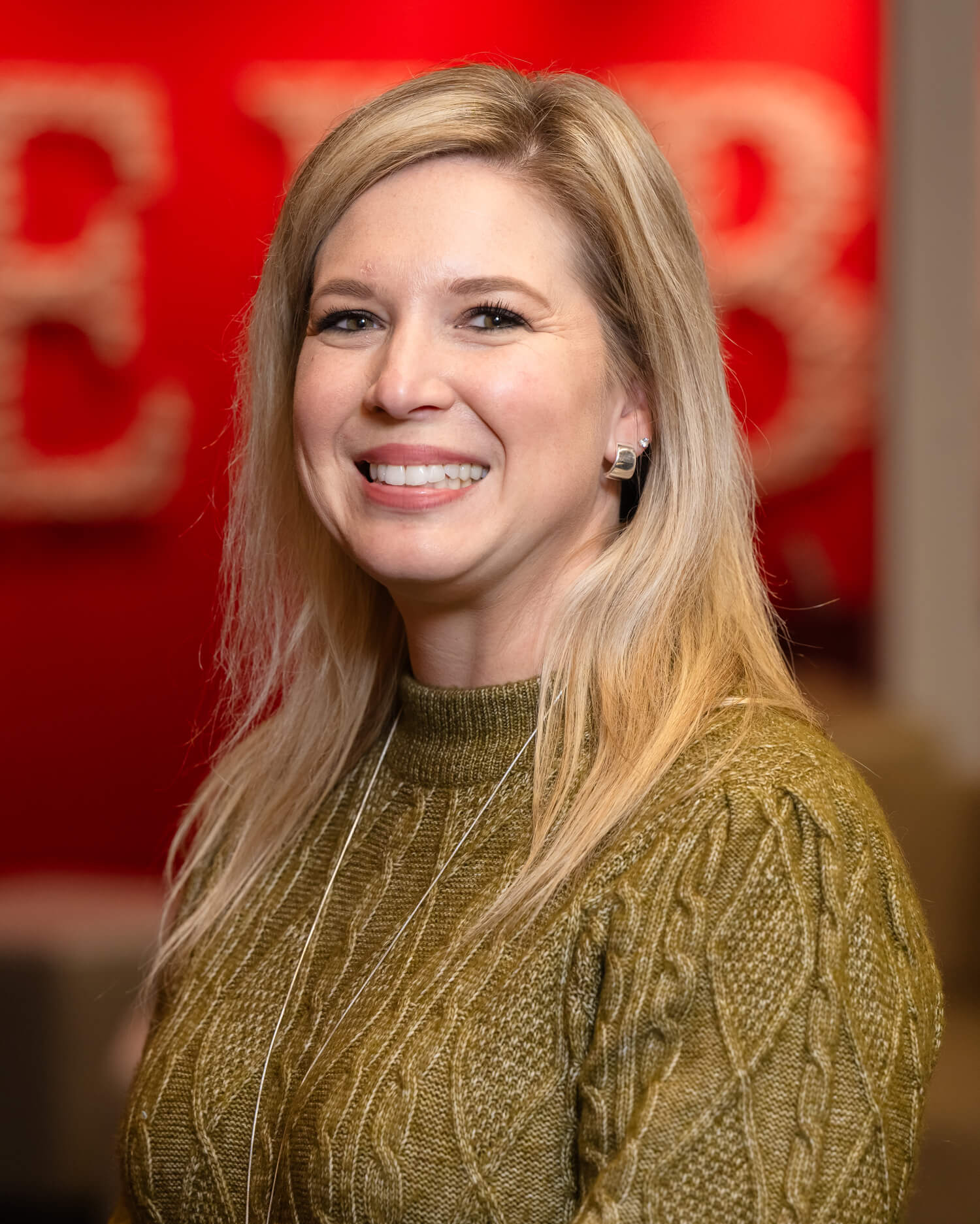
BY LEESA J. KERN, PH.D. associate professor, Department of Sociology, Criminology and Justice Studies

Many students are like me when I was in college. Traveling home to vote was impossible. I didn’t know how absentee ballots worked. I didn’t know how to find useful information about candidates and issues — well before social media and the Internet. To combat this, in 2008 I approached a colleague in History and Political Science, and we developed a Senior Year Experience course, “High Stakes: The 2008 Presidential Election.”

This year’s election has already had its share of twists and turns, but in many ways the challenges facing new voters are similar to those in 2008. Today we have access to a great deal more information, but it is harder to know what is “good information.” Students can be wary of asking questions or sharing ideas in a climate where discussion can become divisive.

The goal of my class is to help students navigate:

  • practical aspects of elections, like how to register to vote and where to go;
  • informational aspects, including where to find information about candidates and issues, and what the “down ballot” races are;
  • educational aspects, including what the electoral process is and how we get candidates; and increasingly
  • the relational aspects, talking with people who disagree with you and understanding where your own viewpoints come from.

Civic engagement is not only our right as U.S. citizens, but also an essential component of our democratic process, and education is a crucial part of every person’s voting journey.

In class, we will learn together how to talk about poli tical issues with respect and compassion.

If I’ve done my job right, they won’t be able to tell which candidate I have voted for. (In years past, I’ve been really successful at that!)

My hope is that they take away a new appreciation for the importance of participatory democracy. I hope they understand how their education allowed them to cultivate the skills to collect, evaluate, and use information. And lastly, I hope they aspire to maintain respectful dialogue and participation in any political setting.

Homecoming & Family Weekend 2024

Homecoming & Family Weekend 2024 was a celebration like no other, as the annual event shifted from the Campus Center grounds to the beautiful, shaded canopy of trees on the lawn of our iconic Towers Hall.

The Class of 1974 celebrated its 50th Golden Reunion as well as the Class of 1969 coming home for its 55th reunion milestone. In addition, several other alumni groups came back to the ‘Bein this year, including the Alumni Choir, ’80s Theatre Alumni, Greek Alumni, Equine Alumni, and more.

The Class of 1968 celebrated the dedication of its 50th reunion legacy gift – the restoration of historic windows saved by Dean Joanne Van Sant from the old Association Building – which are on display in Roush Hall, where the “Sosh” building once stood.

The Department of Communication celebrated the life and legacy of Professor Emerita Christina Reynolds (who also received Honorary Alumna recognition, posthumously) along with the 100th anniversary of the Speech and Debate program.

Eight exemplary alumni received awards from Otterbein this year, along with the Austin E. Knowlton Foundation receiving the university’s highest honor, the Mary B. Thomas ’28 Commitment to Otterbein Award

2024 Homecoming Photo Galleries

HOMECOMING & FAMILY WEEKEND
ALUMNI AWARD
CLASS OF 1974 GOLDEN REUNION
CLASS OF 1969 55TH REUNION

See More Otterbein Galleries →

CLASS OF 1980 THEATRE REUNION

Our sincere gratitude to these alumni and friends who have recently made generous gifts to Otterbein – Fall 2024

Donna Kerr H’71 contributed $18,000 to support students receiving the Thomas J. Kerr IV Scholarship. Alumni, friends, and family established this scholarship in 1984 in honor of Kerr’s service as the 18th president of Otterbein. Donna has worked tirelessly in support of the University and its students in her husband’s memory. The residents of Kerr Hall look forward to every visit and care package from the benefactor of their hall’s namesake

Susan Palmer Cordle ’70 and Christopher T. Cordle ’69, respectively an educator and a scientist, have completed a pledge to support Cardinals Care and Otterbein Fund Scholars. Removing barriers for students is a priority for the Cordles, and their leadership in this area is inspiring.

The Roush Family Foundation donated $50,000 to support the Campus Center renovation project. The Roush Family Foundation is an early supporter of the effort, with gifts totaling $250,000 toward the complete renovation of the Campus Center that will impact current and future staff, students, faculty, and alumni.

The Westerville Otterbein Women’s Club (WOWC) once again donated the annual revenue from the Otterbein Thrift Shop to support WOWC Scholarships. This year, $65,000 was raised by the volunteer-run, volunteer-led campus landmark. The shop at 177 W. Park St. is open on Wednesdays and Saturdays.

Otterbein Psychology Professor Noam Shpancer and Mia Lewis supported the Kraft Lewis Sphancer Fun(d) for Creative Enjoyment and a new psychology endowment named the Mia Lewis and Noam Shpancer Endowed Scholarship for Psychology. The new scholarship is for first-generation American students who demonstrate financial need. The Kraft Lewis Sphancer Fun(d) for Creative Enjoyment is an innovative approach to reward associate professors and enhance faculty teaching and was created in collaboration with Psychology Professor Emeritus Robert Kraft.

Otterbein Trustee Mindy S. Phinney ’85 gifted $180,000 to support the Campus Center and the Otterbein Fund. This donation will positively impact students for generations.

Otterbein Psychology Professor Emeritus Robert Kraft made a contribution to help found the Kraft Lewis Sphancer Fun(d) for Creative Enjoyment. The retired Otterbein professor wishes to fund associate professors to pursue enriching and personally meaningful experiences that will inform their teaching.

Otterbein Trustee Emeritus Mark R. Thresher ’78, P’05 and Deborah Scott Thresher ’77, P’05 gifted $190,000 to benefit the Campus Center, the Deborah and Mark Thresher Family Scholarship, and replacement of the floor and bleachers in the Rike Center. This generosity is fueling the implementation of Otterbein’s priorities to benefit our entire campus.

The Marcia A. Baer Trust gave $100,000 to equally support the Department of Health and Sports Sciences (HSS) and HSS scholarships.

William W. Davis and Ellen Gagne supported the Dr. William and Mary Davis H’01 Memorial Scholarship with a gift of $10,000. The Davises raised their family in Westerville and were devoted Otterbein supporters who traveled with the Otterbein basketball team to cheer them on at the NCAA Division III Championship game in 2002.

Dr. Adam Rothermel, M.D. ’06 graduated with a bachelor’s degree in molecular biology and played on the men’s soccer team at Otterbein. This year he and his wife, Kyleen, donated $12,000 to support the team that Adam once played for, fitting the 2024 men’s soccer team with new athletic apparel. They also made gifts to the women’s soccer team and Department of Biology and Earth Science.

Katelyn Tilley Willyerd ’05 and Scott D. Willyerd ’05 gave $10,000 to support the Otterbein Fund.

Otterbein Trustee Emeritus William L. Evans ’56 and Sonya Stauffer Evans ’56, loyal donors, supported the Class of 1956 Scholarship Fund and the Department of Theatre and Dance with gifts totaling more than $30,000.

Elmer W. “Bud” Yoest ’53, P’77, P’80 gifted $30,500 to support the Otterbein Fund, new bleachers at the Rike Center, the University Archives, and the Yoest Endowed Award.

Carolyn Swartz Royer ’60, P’85, P’88 established the Carolyn Swartz Royer ’60 Endowed Scholarship in Mathematics.

Former Otterbein Trustee and Chair Emeritus Cheryl Herbert honored Otterbein initiatives with a gift of $12,000 to support the Biochemistry and Molecular Biology Program and the Academic Affairs program as a whole.

Rohini Desai Mulchandani, a graduate of The Ohio State University and resident of Dublin, OH, has established a new Assistance Fund for Immigrant and Refugee Students with a gift of $50,000. Her generosity will support immigrants and refugees who choose to attend Otterbein.

Evelyn Widner ’49 bequeathed $1,297,598 to Otterbein after a lifetime of supporting the Otterbein Fund annually. She enjoyed visiting and walking on campus throughout her life, but she most enjoyed her time as a student and the lifelong friendships she made at Otterbein

Otterbein received a donation of over $15,000 from Robert E. Woodruff ’67 to support the Campus Center renovation project, the Otterbein Fund, and the Library Belonging Endowment.

YOUR GIVING MAKES AN IMPACT

FISCAL YEAR 2024 GIVING TOTALS DONOR LOYALTY

million

Total Commitments Pledged

million

Total Cash
Donated

$834,024
Otterbein Fund
(Unrestricted Fund)

There were 6,622 gifts last year and more than half of the year’s gifts were designated for the Otterbein Fund!

FISCAL YEAR 2024 GIVING TOTALS DONOR LOYALTY

$1,000+ annually

448
Donor Households

$5,000+ annually

153
Donor Households

TOTAL YEARS SUPPORTING OTTERBEIN

OFFICE OF ANNUAL GIVING Led by the Office of Annual Giving, a new effort was created to promote philanthropy education and deepen the culture of philanthropy among the members of the 2024 senior class. The program culminated in an event on campus hosted by an exemplary donor, Marsha Rice Scanlin ’74.

73 members of the Class of 2024 donated to the senior class gift,
a 62% increase over the donor participation count for the Class of 2023.

Current Otterbein parents donated an impressive
$25,490 to the University in fiscal year 2024.

ENGAGEMENT BY THE NUMBERS

4,000
alumni, donors, families, and friends attended

48 events hosted by (or in collaboration with) the Office of Engagement in fiscal year 2024.

247 Alumni and Friends volunteered their time in service to support Otterbein via alumni councils, boards, and networks, and through the Otterbein READY program, Admission office events, and in-classroom experiences.

200+ members
Otterbein’s Lifelong Learning Community exceeded 200 members in Spring 2024, its highest membership since the start of the program.

OTTERBEIN UNIVERSITY ASSETS
$141,450,975
12 NEW ENDOWMENT FUNDS

Jerry Green Memorial Scholarship Fund

William D. Squires Endowed Scholarship

Dr. Michael S. Bridgman Mathematical Science Enhancement Fund

Robert F. ’49 and Evelyn Bender ’51 Vance Endowed Scholarship in Science and Education

Anonymous Endowed Scholarship for Students in Psychology

Cardinal Tribute Scholarship

Theresa A. Petch ’51 Endowed Scholarship

Round Robin Endowed Scholarship
(Gerald ’49 and Miriam Wetzel ’51 Ridinger)

Carolyn Swartz Royer ’60 Endowed Scholarship

Weiler Family Fund for Student Success

Dr. Kim Fischer Memorial Endowed Fund

Belonging Endowment Fund

According to data in Money magazine,
Otterbein is the 2nd Most Affordable private university,
and 7th when you include public universities, in Ohio.
Money “The Best Colleges in America” 2024 | List by The Columbus Dispatch, June 2024

THANK YOU DONORS FOR MAKING THIS POSSIBLE!

Grants, Corporate, and Foundation Support

Grants help to provide essential funding for new programs, research, and other areas that directly impact our students. Our faculty and staff have recently been awarded grants from several organizations, including those listed here.

Interfaith America

Advancing Pluralism Grant

AMOUNT: $15,000

The Interfaith America Advancing Campus Pluralism comprehensive strategic grant provides funding for pluralism activities on campus and provides an opportunity for training and to join a national movement and conversation on the importance of promoting collaboration on campus and ways to bridge divides of political, ideological, and religious beliefs. This project will further Otterbein’s current commitment to inclusivity by connecting the different efforts and groups on campus that focus on understanding and celebrating community members’ different political, cultural, social, and religious beliefs. This project will also work to include students who are not already involved in or aware of campus activities that teach the importance of understanding and appreciating the differences that can connect, instead of dividing, the community.

Ohio Art Council

Ohio Arts Council

FY25 Music Sustainability Operating Support for Public Programming

AMOUNT: : $35,025

This grant supports the operating costs of music events for the public and the campus community, giving Otterbein’s Music Department the opportunity to bring in artists of various genres from around the country to perform in campus venues. The funds support artists fees and other associated costs, which also include the Westerville Symphony Orchestra’s Masterworks and holiday concerts performed on Otterbein’s campus.

FY25 Frank Museum and Galleries Operating Support.

Franklin Park Conservatory

Otterbein Community Garden Support

AMOUNT: : $2,049

This grant provides funding and supplies for Otterbein’s Community Garden as it provides local, nutritious produce for the Westerville and Otterbein communities. Otterbein students run the campus Farmers Market social enterprise to provide a sustainable framework for the garden and other activities. The crop share program supports food insecure residents and students and strives to ensure zero hunger on campus while encouraging healthy eating habits.

State Library of Ohio

Program: Celebrating Ohio Book Award

AMOUNT: : $ 600

The Courtright Memorial Library has been awarded a grant to purchase children’s books to serve as a resource for education majors to use while working with students in local schools.

Columbus Foundation - Johnstone Fund

Composure and Performance of a Left-handed Piano Piece

AMOUNT: : $7,500

This grant from the Johnstone Fund of the Columbus Foundation provides the opportunity for Nick Ross, professor and chair of Otterbein’s Music Department, to compose a piece of music to be played specifically with the left hand. Ross will perform the piece for the public at a concert on campus.

Franklin County Department of Health

Westerville CHAT

AMOUNT: : $35,000

Two grants from the Franklin County Department of Health were awarded in support of Otterbein’s work with The Westerville Community Health Action Team (CHAT), a partnership between Franklin County Public Health and residents, seeking to build a healthier Westerville. The funds support health educational outreach materials and activities conducted by Otterbein’s Health Promotion Team and Westerville CHAT at various events in Westerville.

17th Century Painting Donated to Otterbein Collection

Second Floor Lobby

The Tiger Hunt (after Peter Paul Rubens).

Donors, faculty, staff, and art enthusiasts from the community came together in June to celebrate the donation of the 17th century painting, The Tiger Hunt (after Peter Paul Rubens), to the Otterbein collection by Colette M. Masterson ’05. Masterson is the associate director of experiential learning in Student Success and Career Development at Otterbein.

New Lower Level

Reception held at the Frank Museum with Colette M. Masterson ’05 standing at the side of The Tiger Hunt painting.

The donated artwork will be preserved in the Frank Museum of Art and will play a significant role in future Integrative Studies (INST) courses, bringing the departments of chemistry and art together. Students in these courses will explore the intersection of chemical processes and artistic techniques, gaining a deeper appreciation for both disciplines.

The reception in June marked a promising start to this innovative educational journey and underscored the University’s appreciation for donors like Masterson.

Learn more about the Frank Museum at: www.otterbein.edu/art/frank-museum

100 Years of BAE at Otterbein

CELEBRATING 100 YEARS

The Evolution of Business, Accounting, and Economics

As one of the largest departments at Otterbein University, the Department of Business, Accounting, and Economics (BAE) has a rich history that spans over a century.

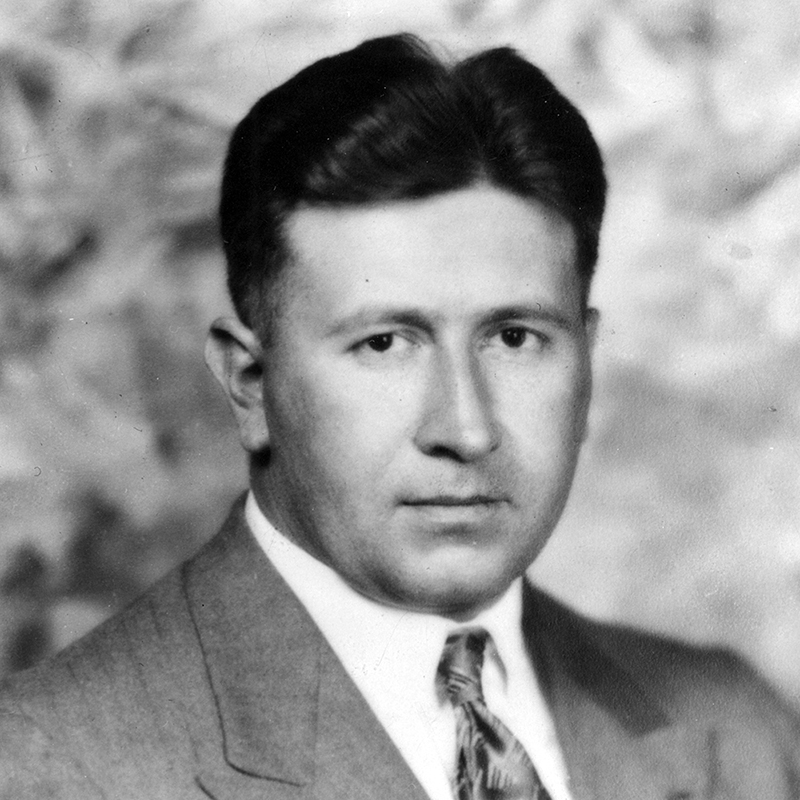
The first mention of a business-related department at Otterbein was in 1864, but it wasn’t until 1924 that the Department of Business Administration was established, initially focusing on business fundamentals. Since 1930, the department has undergone a significant evolution with a greater emphasis on economics. Under the leadership of Professor Horace W. Troop, Class of 1923, who served as chair from 1924-1952, the department’s name was changed to the Department of Economics and Business Administration in 1938, reflecting its expanding scope.

100 YEARS OF CHAIRS

Dr. Harance Troop

1924-1952

Dr. Ralston Scott

1952-1958

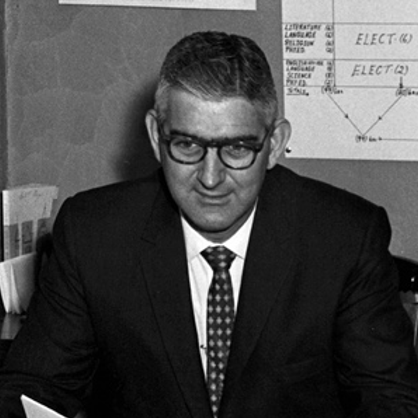
Dr. Bert Glaze

1958-1962

Dr. Stanley Hart

1963-1967

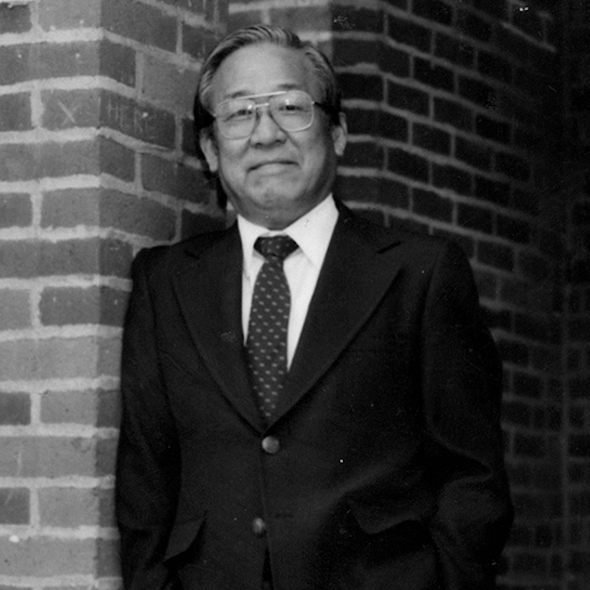
Dr. Young Whe Koo

1969-1978, 1985-1989

Dr. Gail Miller

1979-1984

Dr. Gerald Brown

1990-1994

Dr. Kamel Abdullah

1993-1997

Dr. Allen Prindle

1997-2000

Dr. Charles G. Smith

2000-2008

Dr. Don Eskew

2009-2016, & 2019-2023

Dr. Michael Levin

2017-2019

Steve Osborne

2023-current

100 Years

1924
The Board of Trustees approved the establishment of the Department of Business Administration under the first Department Chair, Horace W. Troop, class of 1923.

1963

Ralston D. Scott (1952- 58)

Chair Ralston D. Scott (1952- 1958) introduced courses in typing, shorthand, and commercial subjects when the department was housed in Towers Hall.

1969

BAE Society of Advanced Management

1993

BAE moved to Roush Hall in 1993.

1998
The MBA program earned accreditation in 1998.

2013
With the transition from quarters to semesters and the shift from business concentrations to majors, BAE continued its curriculum innovations. New majors and courses enhanced its interdisciplinary interactions with mathematics and computer science programs.

The department briefly merged with business education from 1952-1961, when it changed course under the leadership of Bert Glaze and became a pioneer among liberal arts colleges by revising its curriculum to include more mathematics. A statistics laboratory was established in 1965. In 1990, Young Koo and Gerald Brown led the work to rename it the Department of Business, Accounting, and Economics.

The curriculum has continued to evolve to meet the demands of an ever-changing business world, expanding across disciplines such as accounting, business administration and management, business analytics, economics, finance, and marketing.

Today, the BAE department remains a cornerstone of Otterbein’s academic landscape. Committed to its legacy of innovation and academic rigor, it continues to shape the future of business education and nurture the next generation of entrepreneurs and business professionals as it enters its second century.

For a look back at a century of memories and photos, visit www.otterbein.edu/business-accounting-economics/100th-anniversary-history/

Department faculty and staff 2024 (L-R): Kyriacos Aristotelous, Allison de Nijs ’96, Kristina Medvedeva, Don Eskew, Brian Weikel, Yiyuan (Ava) Liu, Maria Tarbell, Brian Day, Hyuk Kim, Sergei Chuikov, Takeshi (Mike) Tsuyuguchi, David Riepenhoff ’99, Stephen Osborne

Rike Center Turns 50

RIKE CENTER TURNS

RIKE CENTER TURNS 50

When it was dedicated on May 17, 1975, few could have predicted the incredible stories that would be set at the Rike Physical Education Center.

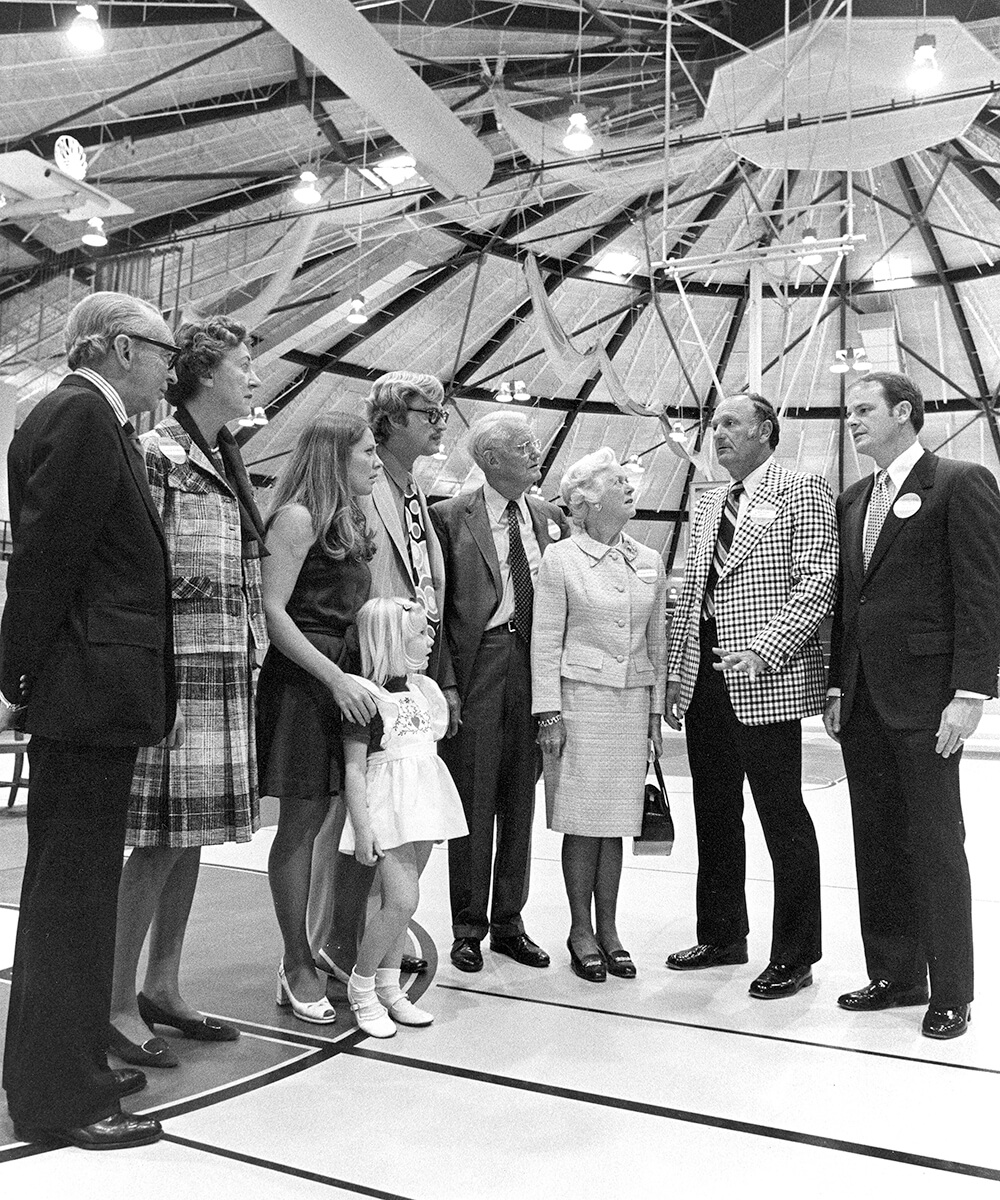
Prior to 1975, men’s indoor athletics took place in the Alumni Gymnasium – now Battelle Fine Arts Center. But a lead gift of $300,000 from the Rike family of Dayton, OH, allowed Otterbein to build a new, $1.5 million, state-of-the-art athletics facility. Fondly called “The Otterdome,” the Rike Center was considered the envy of the OAC at the time of its dedication. It is now the home of women’s and men’s basketball, volleyball, and men’s and women’s wrestling.

ABOUT THE Rike Family

David L. Rike served on the Otterbein College Board of Trustees from 1879-1895. His son, Frederick H. Rike, class of 1888, held the same position from 1906 to 1947. Susanne Rike MacDonald, class of 1890, taught music at Otterbein from 1894-1895. Generations continued their relationship with Otterbein through the establishment of the Rike Family Foundation.

THANK YOU TO ALL OF THE DONORS

who have invested in the Rike Center over the past 50 years, including these leadership level donors who recently supported the replacement of the court floor and upcoming bleachers.

The Vida S. Clements Foundation Mark R. Thresher ’78, P’05, and Deborah Scott Thresher ’77, P’05, Roush Family Foundation, “O” Club Foundation, Elmer “Bud” Yoest ’53, P’77, P’80, Phil J. Susi ’05, Steve Moeller ’66, P’97.

Rike Center - Dedication

May 17, 1975 DEDICATION DAY. David L. Rike served on the Otterbein College Board of Trustees from 1879-1895. His son, Frederick H. Rike, class of 1888, held the same position from 1906 to 1947. Susanne Rike MacDonald, class of 1890, taught music at Otterbein from 1894-1895. Generations continued their relationship with Otterbein through the establishment of the Rike Family Foundation.

The design has allowed the facility to be adapted to address changing needs over the past 50 years, thanks to the open-area concept championed by former Director of Athletics Elmer “Bud” Yoest ’53, P’77, P’80. The Rike Center has hosted commencements, college fairs, and even the October 2019 Democratic Presidential Debate, presented by CNN and The New York Times.

For its 50th anniversary, the Rike Center received some upgrades, including two indoor golf practice facilities (a simulator and space for putting practice) and, most importantly, a new, state-ofthe-art floor.

The maple hardwood floor covers 12,200 square feet and has a 61% force reduction, which means that athletes using the floor absorb 39% of the impact, while the floor absorbs the rest of the impact. The new floor replaces the one installed in 1992, which was also maple hardwood, but only had a 40% force reduction. Tony Stalford, the president of The Final Floor, Inc., is also part of Rike Center history; he has installed every floor the Rike Center has had, starting when he was a teenager helping to install the center’s first floor.

To celebrate its 50th anniversary with some exciting new updates, here’s a look back at the history of “The Rike.”

July 19, 1973

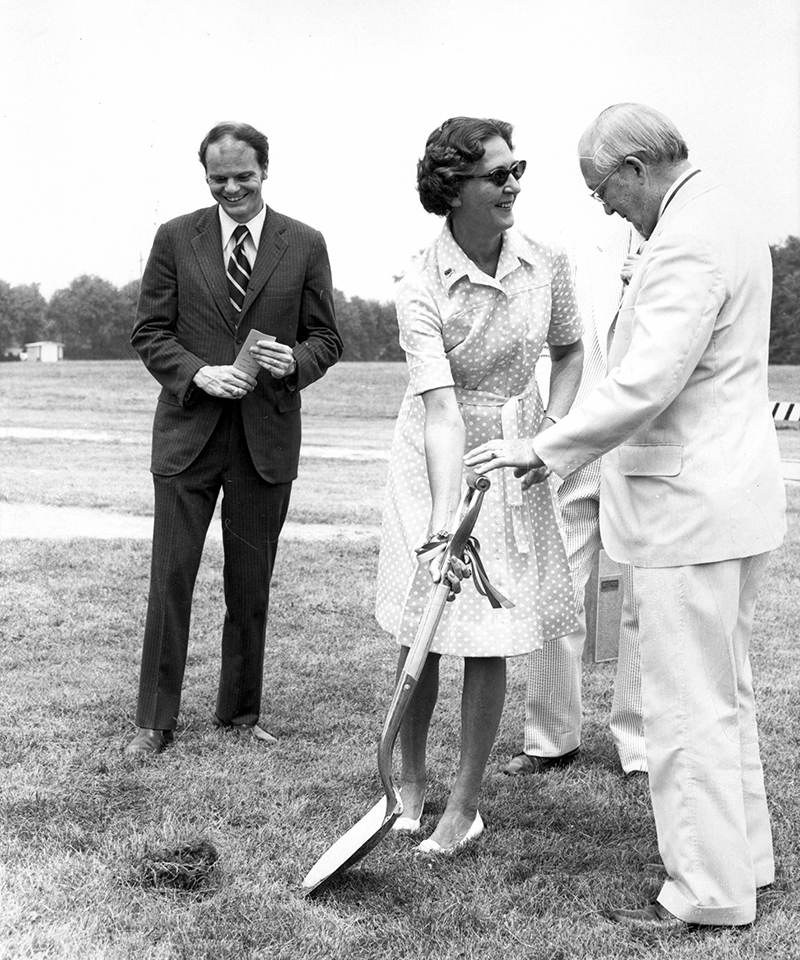
Suzanne Rike Kircher hands the ceremonial shovel to Board

Groundbreaking. Suzanne Rike Kircher hands the ceremonial shovel to Board Chair Harold Boda, as President Thomas J. Kerr IV looks on.

June 1, 1974

Board Chair Elmer Funkhouser Jr. at the cornerstone laying ceremony.

Board Chair Elmer Funkhouser Jr. at the cornerstone laying ceremony.

1975

Rike Center The Curved Roof

The curved roof, which had already earned the building the nickname “Otterdome,” takes shape over top of the Rike Center.

May 22, 1975

Danish Gym Team

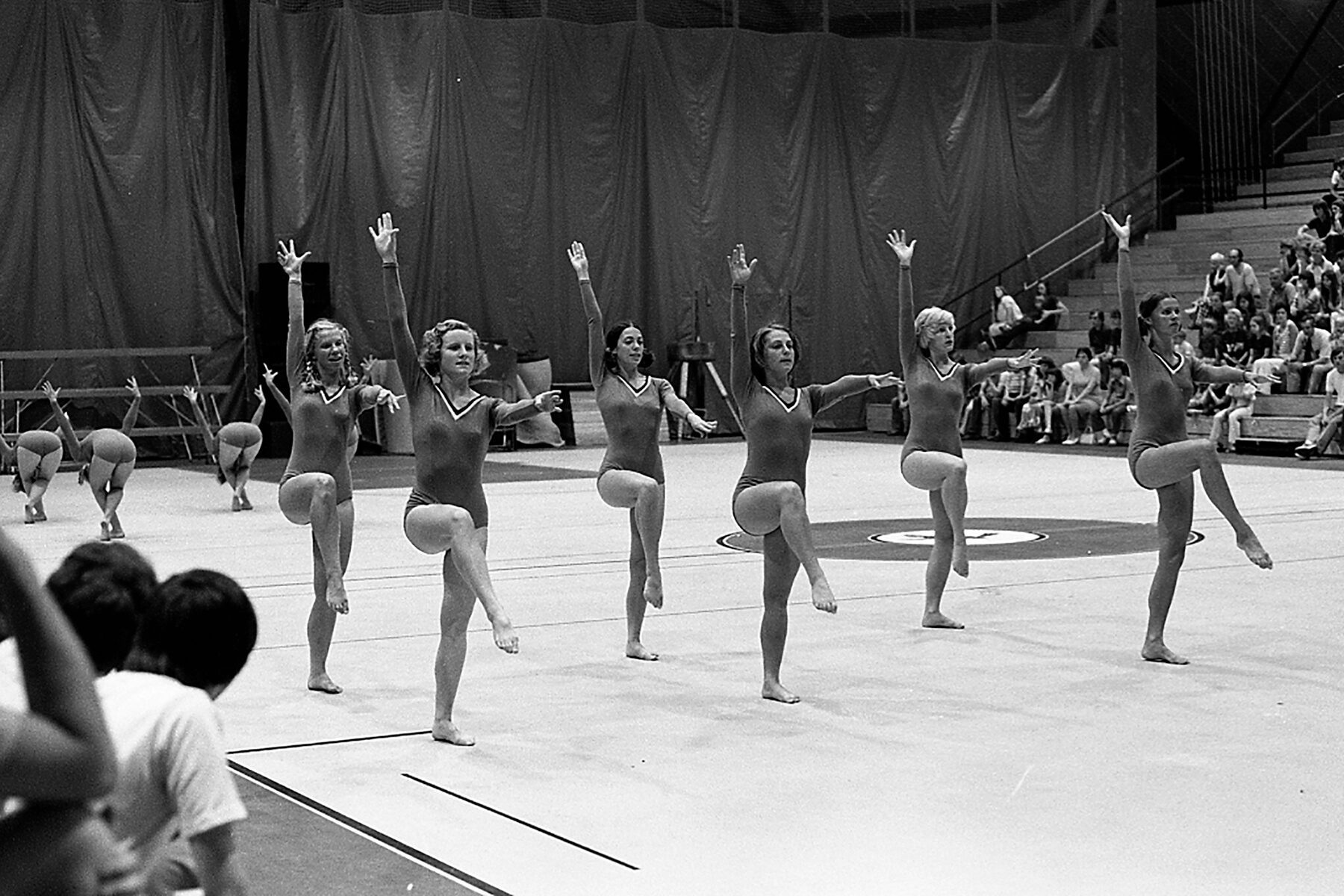
The Danish Gymnastics Team presented the first public performance in the Rike Center as part of the events of the Rike Center dedication week.

1975 to 1992

Elmer “Bud” Yoest ’53, P’77, P’80 s

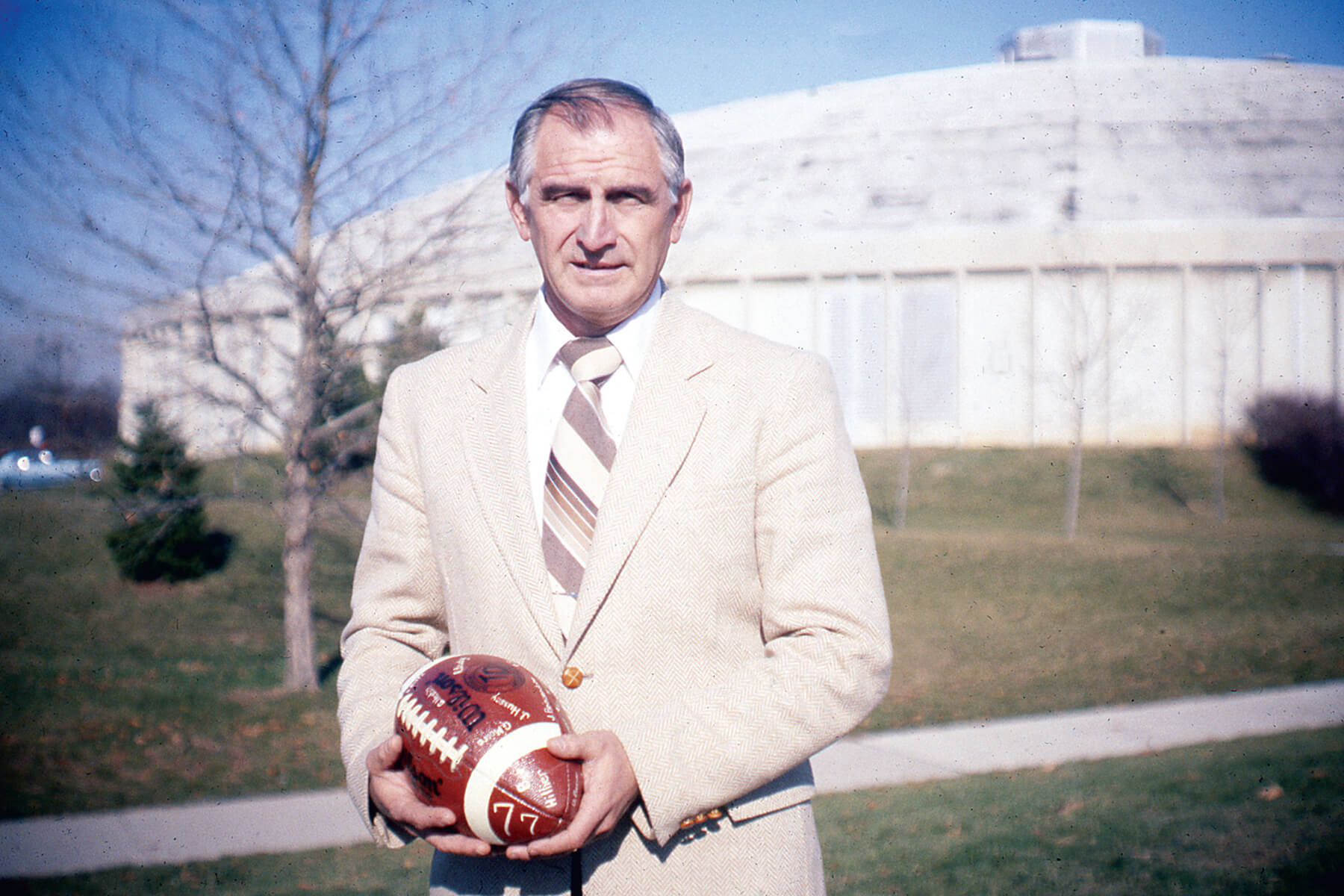
Elmer “Bud” Yoest ’53, P’77, P’80 served as athletic director. He taught and coached at Otterbein for 36 years. His push to make the Rike Center an open area, multi-use structure allowed the facility to grow to meet the changing needs of Otterbein students and athletic programs.

Coach Dick Reynolds ’65 Leadership Era

Reynolds_CapOtter_color copy_1982-83

Coach Dick Reynolds ’65 guided the men’s basketball team for 40 seasons from 1972-2012. Reynolds is the most successful basketball coach in the history of the Ohio Athletic Conference, with all but three years of his coaching under the Rike Center dome. In 2002, he led the Otterbein Men’s Basketball Team to win the NCAA Division III Championship. He also served as athletic director from 1992 to 2012.

1976

Otterbein “O” Club founding member Dwight “Smokey” Ballenger, Coach Dick Reynolds ’65, and athletic director Elmer “Bud” Yoest ’53, P’77, P’80 a

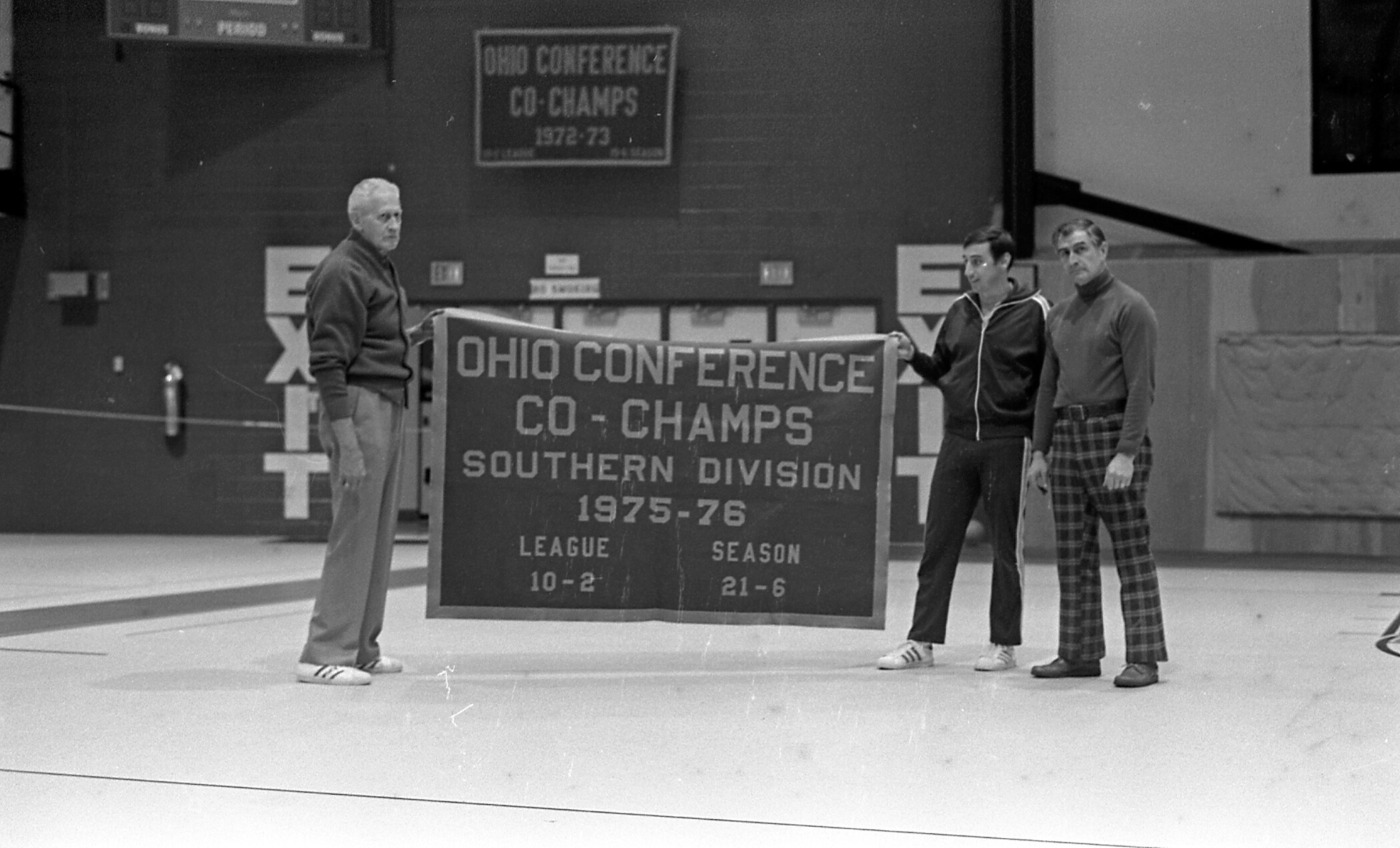
Otterbein “O” Club founding member Dwight “Smokey” Ballenger, Coach Dick Reynolds ’65, and athletic director Elmer “Bud” Yoest ’53, P’77, P’80 add the first championship banner earned in the Rike Center to the historic banners brought over from the old Alumni Gymnasium.

1985

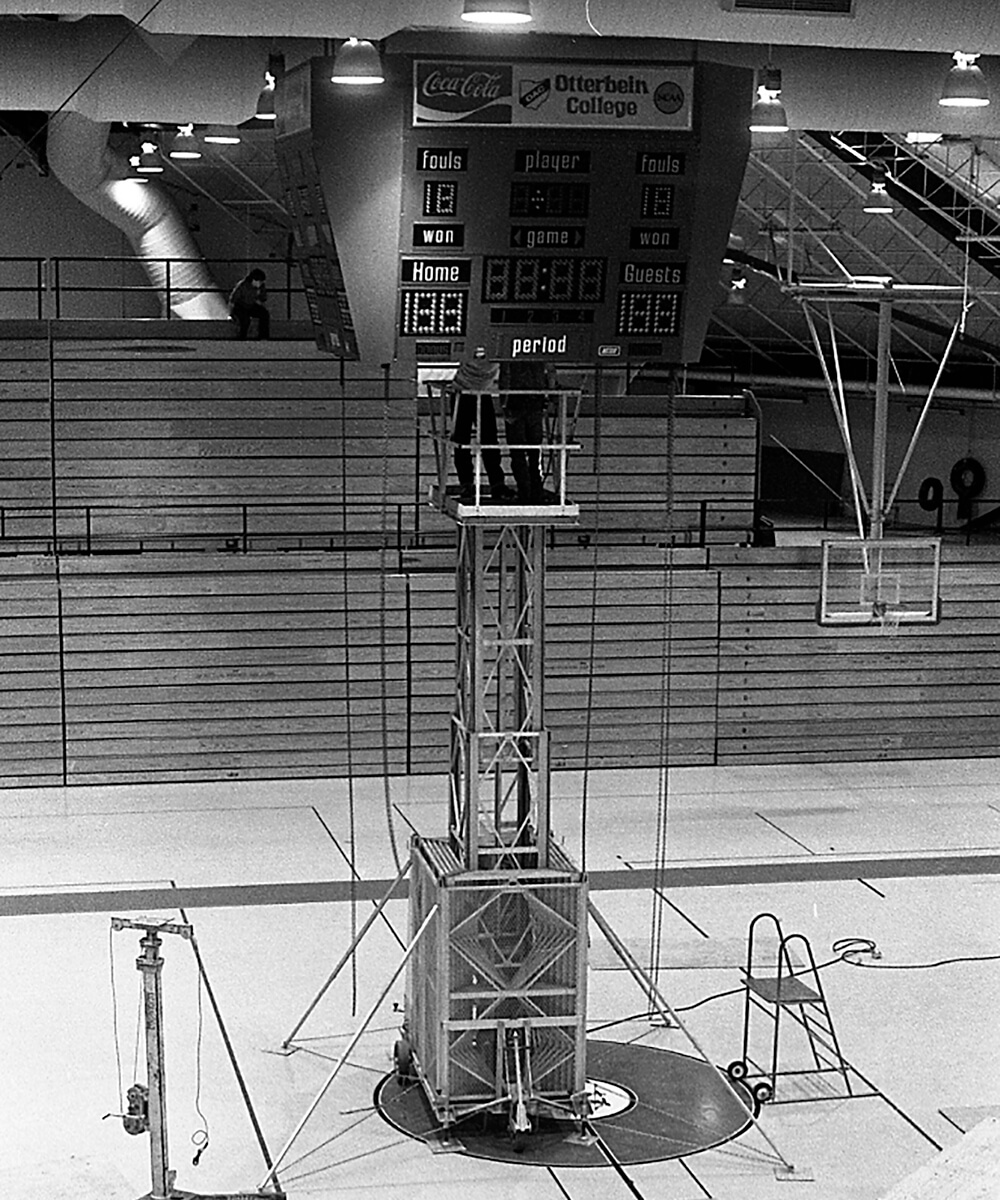
Scoreboard

The Rike Center received a major upgrade when a new scoreboard was installed over the basketball court.

Fall of 1996

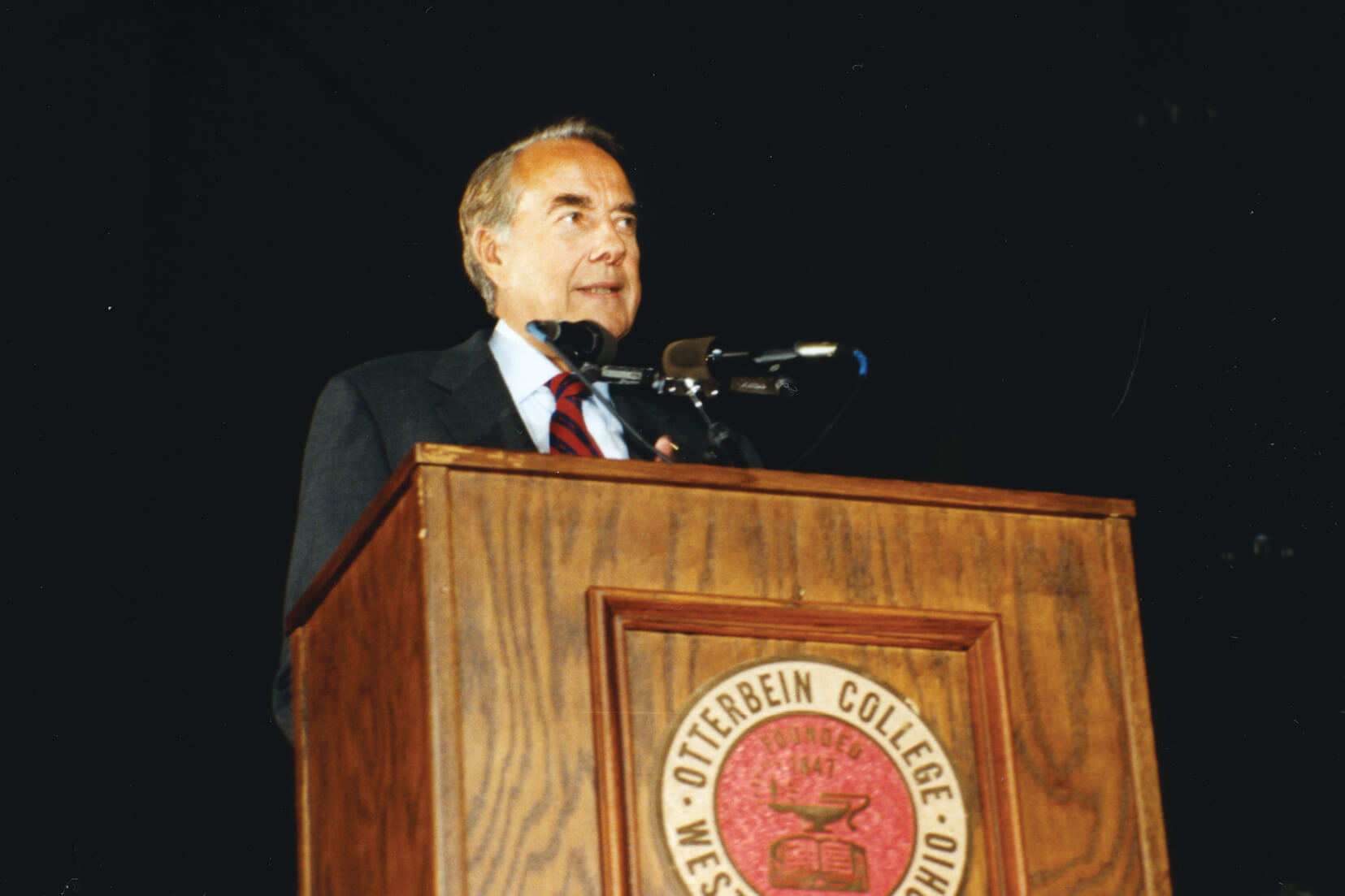
Senator Robert Dole of Kansas

Senator Robert Dole of Kansas spoke at Otterbein in the Rike Center while on the campaign trail. Over the years, Otterbein has played host to numerous national and international dignitaries.

2001-02 season

Basketball Court

The most exciting Men’s Basketball season to date in which Otterbein won the NCAA Division III Championship. Though the final game was played in North Carolina, students were treated to a truly spectacular season at home in the Rike Center.

2002

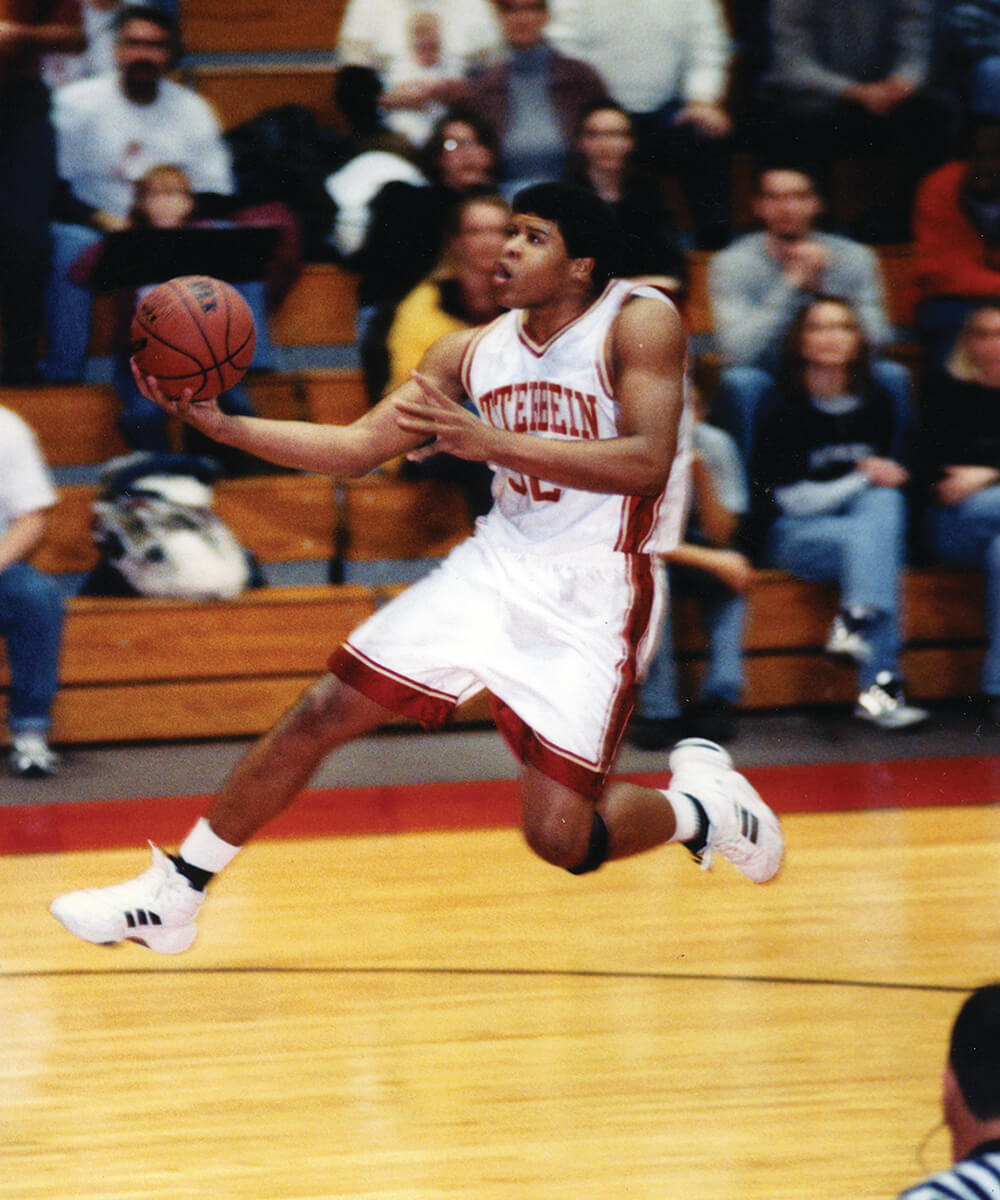
Basketball_Player

Jeff “Mr. Incredible” Gibbs ’02 led the Men’s Basketball Team to the championship. He averaged 23 points and 16 rebounds per game that season, and was named Division III Player of the Year for his hard work.

2008

Arizona senator John McCain

Arizona senator John McCain joined the ranks of presidential hopefuls who spoke to Otterbein and Westerville under the Rike Center dome.

Photo by Lauren Rothermel McClor ’10

2019

The Rike Center hosted the October 2019 Democratic Presidential Debate

The Rike Center hosted the October 2019 Democratic Presidential Debate, presented by CNN and The New York Times.
2024

For its 50th anniversary, the Rike Center installed a new, state-of-the-art floo

For its 50th anniversary, the Rike Center installed a new, state-of-the-art floor. The maple hardwood floor covers 12,200 square feet and has a 61% force reduction.

Belonging is This Program’s Purpose

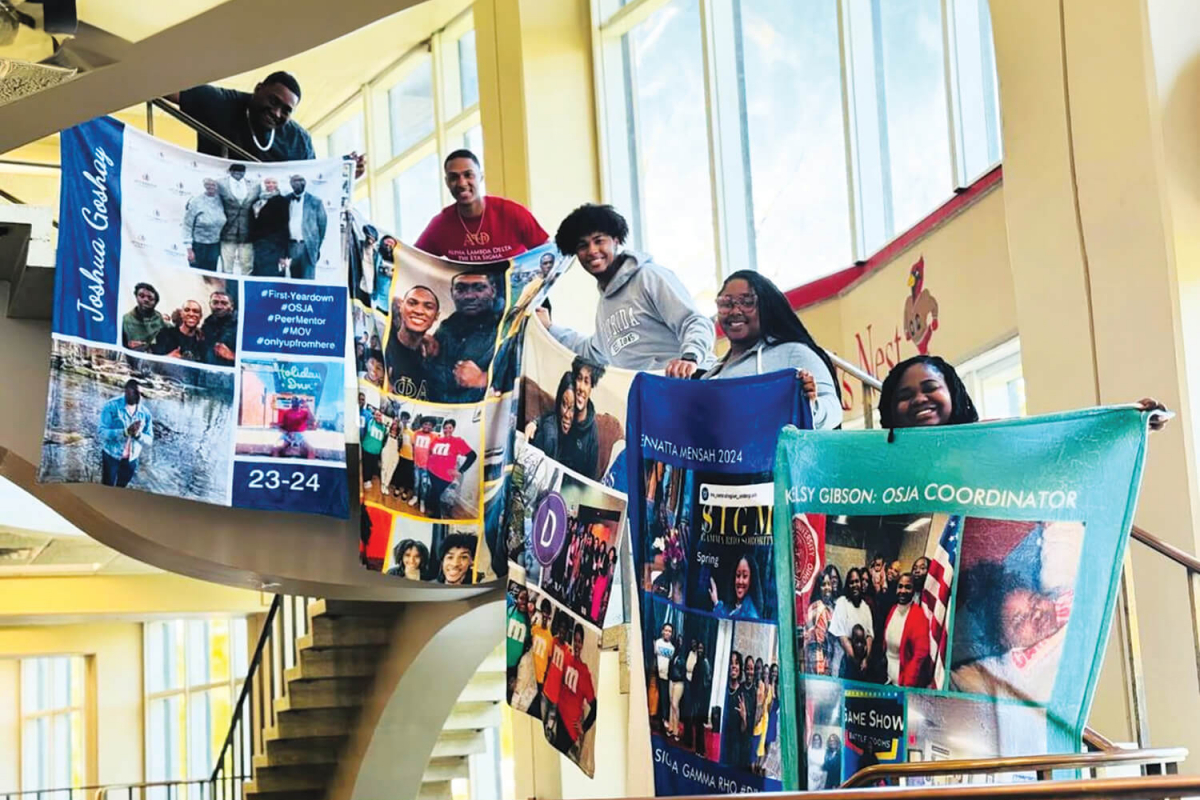
Mary B. Thomas Award Honorees 2022

L-R: Joshwa Goshay ’27, Dezmon Howard ’27, Demetrius Howard ’27, Jennatta Mensah ’25, Kelsy Gibson ’23

BELNG HERE

BELONG HERE

Building Community and Confidence through Mentorship

At Otterbein University, the sense of belonging is more than a feeling — it’s a mission. To that end, the Office of Social Justice and Activism (OSJA) created a new mentoring program for students from marginalized backgrounds and first-generation students, helping them carve out their place and flourish within the campus community.

Launched in fall 2023, Campus Compass is a tiered mentoring program that gives under-represented students the direction, encouragement, and strategies they need to overcome obstacles to graduation. Students benefit from an entire network of peer, professional, and community mentors.

First-year students, who can be stressed as they acclimate to the challenges of the university experience — especially if they have not had a parent or sibling attend college before them — are paired with third- and fourth-year student mentors who can provide advice, support, and friendship as the new students become oriented, gain confidence, and make friends.

“I had an amazing time my first year at Otterbein but having Campus Compass made my first year much better . . . I didn’t have to stress or figure things out on my own,” said Nina Goodlett ’27. “With Campus Compass, college didn’t feel like I was thrown in with the sharks, but rather just getting my feet wet.”

The program is equally valuable to the student mentors, who are supervised by Otterbein alumni and develop the leadership and professional networking skills that will prepare them for life after college.

“The Campus Compass program has offered me invaluable opportunities for growth as a student, a person, and, most importantly, a mentor,” said Kelsy

Gibson ’23, who was key to the program’s success, both as an OSJA staff member and a mentor.

“I take immense pride in mentoring my incredible mentees,” she added. “I am grateful and privileged to assist them in any capacity and witness their transformations from high school seniors to fully engaged and successful college students.”

After a successful first year, Campus Compass is already expanding. In fall 2024, first-year students will become mentors themselves, working with pre-college students in Westerville and surrounding areas.

While Otterbein is a predominantly White institution (PWI), approximately one-third of its student body self-identifies as being from a different background, so the OSJA seeks to make certain that every Otterbein student — regardless of race, ethnicity, sexual orientation, gender identity, or any other characteristic — finds their community here. At Otterbein, “Belonging” is not just a buzzword; it is a promise.

Letter from President Comerford, Fall 2024

​Dear Alumni and Friends,
What a spectacular Homecoming Otterbein celebrated this year! If you missed it, you missed a good one. Music, tents, activities for families, and conversation sprawled across Towers lawn. There was a new parade route with floats and entrants not only from our student organizations but from enthusiastic alumni groups, too. I loved seeing the Classes of 1974 and 1969 in the parade. I don’t think their reunion fun ever slowed down!​

Somehow, the Offices of Engagement and Development partnered to help organize and host even more events this year — a full house for the Alumni Awards, a gala to mark 15 years of the Austin E. Knowlton Center for Equine Science, an ’80s Theatre Alumni Reunion, an Alumni Choir concert, and the Black Student Union’s All-Star Weekend. While much was new for the 2024 Homecoming, the constant was the spirit of Cardinals back home to celebrate the place that gave you lifelong friends, a strong start in life, and a host of memories.

I also had the chance to share my annual State of the University Address over the Homecoming weekend, which I did again online for alumni who couldn’t join us in person. What I shared with them and what I want you to know is this: while things are looking dire for a lot of higher education right now with college closures averaging almost one per week along with other schools experiencing painful cuts in faculty, staff, and academic programs and enrollment shortfalls — Otterbein is standing strong.

We were in the enviable position to have welcomed a large and diverse class of entering first year students to campus. (You can see the new class statistics on pg. 3.) While other schools gauge their exclusivity on their ability to deny students admission, Otterbein honors its role as a College of Opportunity. Not only is it the right thing to do — we’re seeing strong indicators in student success, retention, and persistence. Otterbein knows that creating diverse learning environments positively impacts the outcomes of all students.

We’re doubling down on the power of integrative and experiential education. We’ve already realized growth thanks to the addition of an Esports team, a women’s wrestling team (the fastest growing sport in the state), new recruiters for Equine and Nursing programs as well as for the Marching Band, and we’re planning the first all-campus READY Day as part of our four-year professional and career-readiness preparation program for all students. I always tell families if you want to watch life unfold — go to another school. If you want to DO — come to Otterbein.

Finally, we’re honoring our commitment to advance the common good. Our work in co-founding the Coalition for the Common Good is allowing us to serve new models of workforce development directly to employers in our region. We’re also expanding opportunities for Otterbein students with access to Graduate Early Admission Pathways, giving students a chance to shorten time and expense to a graduate degree. It’s clear that there is power in the partnerships we’re building.

My whole update, along with thoughtful questions from alumni, is available online on the Alumni/Family Engagement website at www.otterbein.edu/alumni, as well as the online version of Towers at www.otterbein.edu/towers. I invite you to listen if you’re excited about the direction Otterbein is headed.

And if we missed you at Homecoming, I hope we’ll see you back on campus soon — for a game, a theatre or music production, a lecture, the Holiday Tree Lighting, or any other great Otterbein tradition. We’re counting on your involvement and support as a proud member of our Cardinal Nation!

Sincerely,

John L. Comerford, Ph.D.

Dishing up a NEW DINING EXPERIENCE for students

What’s ON THE Menu?

With Phase One complete, the modernization of the Campus Center continues. Up next: Phase Two and a new dining experience for Cardinals.

“We’re looking to make big changes to the dining experience – from the dining space to the kitchen layout and program offerings,” said Bill Fox, vice president for student affairs and Otterbein lead on this project. “We are exploring what we can do to make the Campus Center and the dining experience more inviting, more modern, and certainly a more meaningful space for our students and our community to dine, connect, relax, study, and make memories.”

An 18-member committee, which includes student leaders and Otterbein staff as well as external project architects and collaborators, meets regularly to share ideas and concerns, and discuss progress.

Some of the biggest changes on tap include creating a new open-concept dining experience with multiple stations featuring a variety of food options along with a complete overhaul of the dining room. “Whether it’s the memories students make around a big table or a quiet place to study in between classes, we want this space to be a destination for our students and campus,” Fox said.

Fox said the goal is to have a new dining experience ready for full use by January 2025.

Current Dining

Proposed Dining

The Dining Room Experience

  • Phase Two focuses on 9,500 square feet of the Campus Center to create an open, welcoming university destination to bring Cardinals together.
  • Fostering connection and community, the space will be flexible in its configurations to ensure a sense of comfort, whether hosting a small group or a full-capacity event.
  • A re-imagined 1847 Dining Room will offer unique space to accommodate from 12 to 40 people and enhanced event synergy in space that adjoins the Taylor Lounge.

The Flow

  • As important for efficiencies and reduced lines, the use of food stations will also allow students the chance to see the variety of what’s offered.
  • A variety of fixtures and furniture will create space that is aesthetically pleasing and warm while also meeting student use of space whether loud and happy meals with friends around a big table or a smaller table for quiet studying.
  • Grab-and-go features will respond to student preferences and schedules.

Nutrition and Clean Dining Options

  • Just as modernized space enhances efficiencies, it will reinvigorate the approach to student well-being.
  • Awareness of food sensitivities translates to amplified attention to food preparation, selection, and quality to mind dietary and allergen considerations as well as cultural sensitivities.

Back of House

  • The modernization of space will increase energy efficiencies and improve sustainability with improved building systems and new equipment.
  • The kitchen staff experience will be enhanced to further contribute to an improved student dining experience.

Blaine Bishop ’25, a senator for Student Government and member of its Dining Advisory Board, said he’s excited about the improved nutritional visibility. “A clear listing of ingredients will take out a lot of the guesswork for students,” he said. Bishop said students are also looking forward to the updated facilities. “It’s all going to feel comfortable and more home-like.”

SHOWCASE YOUR OTTERBEIN LEGACY FAMILY

As part of Phase Two, we’re creating a unique opportunity to showcase our Otterbein Legacy Families by giving these multi-generational families an opportunity to make a lasting impact. For more information, please contact Stephanie Clark, senior director of development, at clark35@otterbein.edu or 614.823.1953.

“Every design question, every hope or idea for the new spaces, and every bit of investment is intended to improve the experience of our current and future students.”

–Bill Fox
Vice president for Student Affairs

Teaching Awards

TEACHING AWARDS

Each year, Otterbein honors outstanding teachers for their impact on their students, colleagues, and the University. These dynamic and dedicated full- and part-time faculty contribute so much to the Otterbein community both in and outside the classroom. They help students find their calling and grow as young professionals; celebrate their colleagues’ achievements; and show their support for the staff who are often working behind-the-scenes.

Teacher of the Year – David Sheridan

David Sheridan, Biology, Teacher Of The Year

“One thing I want my students to take from my classes is to be inquisitive and always keep learning. I always learn something new every time I teach a course.”

David Sheridan

Associate Professor of Biology

“Sheridan made his animal systems physiology class especially interesting and engaging by using a variety of teaching methods to discuss a normal and diseased state. He described asthma, gave a demonstration, and then had students simulate the experience by providing small straws to breathe through. It was obvious that he held the interest of all students in the classroom.”

– from nomination

How would you describe your teaching style?
Fast paced, energetic, mostly flipped-classroom model. Students do the readings and take a pre-quiz prior to discussing the material in class. It allows us to tackle the difficult subject matter in class with mini-lectures and then follow up applications like a case study.

What inspires you to teach?
Most of my students are going into nursing, medicine, veterinary medicine, physical therapy, dentistry, etc. I remember taking anatomy and physiology and was fascinated by it. I hope I am helping them start their journey into their future careers that are heavily rooted in anatomy and physiology with that same fascination and base knowledge.

What do you hope your students take from your classes?
An appreciation for the body and its processes, be it human or animal, and the fact that we are all similar, but the uniqueness of each person or species is amazing.

Why are you passionate about the subjects you teach?
Anatomy and physiology are at the crossroads of so many disciplines — biology, chemistry, physics — and we can see these structures and functions and processes in our own bodies.

What is your favorite class to teach?
All of them, but mostly whichever one I am currently teaching. I always learn something new every time I teach a course.

What do you think students get from Otterbein faculty that they can’t get anywhere else?
Access.

What is one lesson you want students to carry with them not related to the subject matter?
Be inquisitive and always keep learning.

New Teacher of the Year – Bennett Grooms

“When I teach a course, I view it as an opportunity to connect with future peers and colleagues. My teaching style is very discussion- and application-based. I focus on providing students opportunities to take what they have learned and use that knowledge in real-world scenarios tied to their career interests. I want my class to be a space of mutual learning, where I ask questions and have conversations to guide students into new areas of thought.”

Bennett Grooms

Assistant Professor of Biology

“Dr. Grooms is most likely one of the best things to have happened to the Zoo and Conservation program just because he is so passionate about what he is teaching. His attitude and devotion to animal work is contagious and makes me want to be a better student.”

– from student course evaluation

David Sheridan, Biology, Teacher Of The Year

How would you describe your teaching style?
When I teach a course, I view it as an opportunity to connect with future peers and colleagues who will be joining the field shortly. Under that mindset, my teaching style is very discussion and application based, and I work to go beyond just “learning the material.” Instead, I focus on providing students opportunities to take what they have learned and use that knowledge in real-world scenarios tied to their career interests. Additionally, I prioritize discussion and tying material to previous experiences. I never want a class to be just me talking “to” students, rather, I want my class to be a space of mutual learning, where I ask questions and have conversations to guide students into new areas of thought.

What inspires you to teach?
Mostly it’s the passion and enthusiasm I see from the students. I’m very fortunate to work in a field where there are so many opportunities for students to pursue individual interests. Having a student share about their favorite animal to work with or about their internship experiences is so enjoyable to hear. Similarly, hearing the aspirations these students have for helping wildlife and conservation, and witnessing their immense talent while working in class makes teaching a truly enjoyable experience that I look forward to doing every day.

What do you hope your studentS take from your classes?
One of my primary goals for students who take my classes is help them understand that success is so much more than just a grade or title. I believe success is progressive movement towards a worthy goal, and I try to emphasize to my students how worthy of an endeavor it is for them to think about what they want to do with their lives and trying their best to achieve those goals. If students leave my classes more confident in their knowledge of the world, as well as feeling more confident in themselves, then I consider that a very successful class.

Why are you passionate about the subjects you teach?
I truly love working in conservation, and think it is critical to the health of our planet to connect people to wildlife and nature. I come from a family that is wildlife-oriented and spent much of my time growing up visiting zoos, state parks, and going camping. There is so much diversity in the animals and plants we share this planet with, and I find it fascinating to work with students in understanding how those animals behave, and what we can do to best conserve them. It’s a very rewarding experience to come full circle with my passion for wildlife conservation, and now be on the side of engaging students in this material and work.

What is your favorite class to teach?
My Animal Behavior (BIO3050) course; it’s so much fun between the in-class discusses, lab experiences, and film project that I have students do. I’m constantly thinking of topics and field experiences for the course.

What do you think students get from Otterbein faculty that they can’t get anywhere else?
Compared to other universities, I would say Otterbein students receive an awesome benefit of becoming part of a professional community almost immediately in their program. Considering my department alone, we have students as early as their freshman year working with faculty to take care of aquariums and animals, conduct research, collect field data, and present their own research at conferences. Faculty also see students regularly through organizations, events, and research projects, which makes it feel like we are building connections vs. just pushing students out into the workforce.

What is one lesson you want students to carry with them not related to the subject matter?
That their self-worth goes far beyond their grades or academic performance. I hope students will remember that everyone is worthy of feeling confident in themselves without judgement or comparisons, and that everyone has something worthwhile to share and learn.

Excellence in Part-Time Teaching – Amy Karns

David Sheridan, Biology, Teacher Of The Year

“Teaching is more than the simple transfer of knowledge from one individual or group to the next. As a classroom leader, it’s my job to create a learning environment in which students belong — feeling valued and respected. A sense of classroom community is crucial to form a safe learning environment where students may consider other perspectives with growth, empathy, and kindness.”

Amy Karns

Psychology Instructor

“I would advise any student, psychology or not, to take this course because it really solidified my understanding of the topic of development, and it was a very fun and interactive course!”

– from student course evaluation

How would you describe your teaching style?
My teaching style is student-focused and highly interactive. I believe learning happens through various methods, including lecture, discussion, problem-solving, and real-life situational labs. I strive to engage the class while giving many opportunities to learn from one another.

What inspires you to teach?
I am motivated by the shared experiences in the classroom integrating course content to real-life application. I enjoy helping students problem-solve, think critically, and challenge their own perspectives while encouraging them to try something new or step out of their comfort zone. I hope my love and excitement for the field of psychology encourages personal growth and lifelong learning as it relates to their personal career goals.

What do you hope your students take from your classes?
I hope that students leave my class feeling accomplished in their knowledge of how human behavior and mental processes affect their lives each day. I hope they look back and remember how fun the process of learning can be even if it requires them to think past the traditional way of college teaching.

Why are you passionate about the subjects you teach?
There is a common myth that psychology only encompasses the diagnosis and treatment of mental health disorders. I love teaching how human behavior and mental processes are relevant in day-to-day interactions through relationships, motivation, emotion, attention, and our abilities (intelligence).

What is your favorite class to teach?
This is tough as I enjoy different classes for various reasons. My favorite is probably introduction to psychology for many of the reasons listed above. I get excited to debunk many of the myths associated with the field of psychology — especially with students who take psychology to check off a requirement.

What do you think students get from Otterbein faculty that they can’t get anywhere else?
We care about the whole student. Otterbein is a family. Faculty and employees care about each other and the well-being of students.

What is one lesson you want students to carry with them not related to the subject matter?
You do not have to be perfect to be successful.

Exemplary Teaching Award, United Methodist Church General Board of Higher Education – Cynthia Laurie-Rose

“I’m inspired by seeing the satisfaction on students’ faces when they have worked through a complex set of ideas, and they suddenly show understanding. I can see the students gain confidence in that moment and I know that they will begin to trust their ability to understand concepts or complete tasks that they may have previously felt were too difficult.”

Cynthia Laurie-Rose

Professor of Psychology

“It is staggering how dedicated she is to this high-impact practice of experiential learning. She does this work because research is essential for our students who wish to pursue graduate study, and Cindy wants to support them in that endeavor.”

– from nomination

David Sheridan, Biology, Teacher Of The Year

How would you describe your teaching style?
My teaching style is a hybrid of the traditional classroom lecture with a healthy mix of activities that illustrate the concepts I am teaching. When appropriate, I include independent research activities within the class. In an Honors course I teach, I ask students to conduct independent research using archival data; in my last seminar course on working dogs, the class conducted a study with college-aged participants and therapy dogs from Pet Partners.

What inspires you to teach?
I’m inspired by seeing the satisfaction on students’ faces when they have worked through a complex set of ideas, and they suddenly show understanding. I can see the students gain confidence in that moment and I know that they will begin to trust their ability to understand concepts or complete tasks that they may have previously felt were too difficult.

What do you hope your students take from your classes?
The excitement and fun of learning.

Why are you passionate about the subjects you teach?
I teach courses in experimental psychology. I enjoy showing students that research methods and core experimental courses such as physiological psychology and perception have relevance outside the classroom. As an example, I teach a unit on dyslexia in my physiological course, exploring its basic neurological underpinnings. I then introduce students to the surprising controversy of using dyslexia as a diagnosis in public schools. Owing to the tireless effort of grassroot parent organizations lobbying states to recognize the science, we end this unit discussing the new “dyslexia laws” requiring schools to use dyslexia as a specific diagnosis.

What is your favorite class to teach?
I love to teach perception. Perception is a topic students know very little about coming into the class. It is interesting that humans do not routinely reflect on how or why we see or hear the world the way we do. I enjoy introducing topics that are brand new to them and help them make connections between what they see and hear and the science behind those experiences. Students enjoy the many fun demonstrations in this class, including optical illusions.

What do you think students get from Otterbein faculty that they can’t get anywhere else?
Owing to our small classes, a community often emerges from our close work together. That sense of community persists long after the semester is over. We will see many of these students in other classes we teach, and some will work alongside us in our labs. We build long-lasting relationships with our students well beyond graduation. We continue to serve as mentors to our students and continue to help them in their professional endeavors.

What is one lesson you want students to carry with them not related to the subject matter?
In my classes, I emphasize the relationship between science and authority — whether that authority is religious, political, or societal. I want students to understand that science can be trusted and that they must become informed consumers of science and engaged citizens.