
Otterbein’s faculty are researchers, performers, and professionals who are excelling and innovating in their fields — and inspiring their students to do the same.
Sarah Bouchard Develops First Team-Taught Coalition Course
Professor Sarah Bouchard’s research interest in the Galápagos Islands spans many years. When the opportunity presented itself to co-lead a trip there, she jumped at the chance.
Bouchard, a professor in biology and earth science at Otterbein, and Dawn Murray, a professor in environmental studies at Antioch University, led a group of 12 students on a two-week academic adventure in May, which was the first team-taught course between Otterbein and Antioch University, cofounders of the Coalition for the Common Good.
“I had visited the Galápagos Islands as a college student doing research for my senior thesis, and when the opportunity arose, I knew it would be great for our students,” said Bouchard.
“We prepared for 18 months, coordinating learning outcomes, course content, assignments, and the trip itinerary. Dr. Murray had taught Galápagos travel courses previously, and she had a history of working with Intercultural Outreach Initiative (IOI),” added Bouchard. The mission of IOI is to support Galápagos communities and sustainably protect their environment through study-abroad programs highlighting conservation.

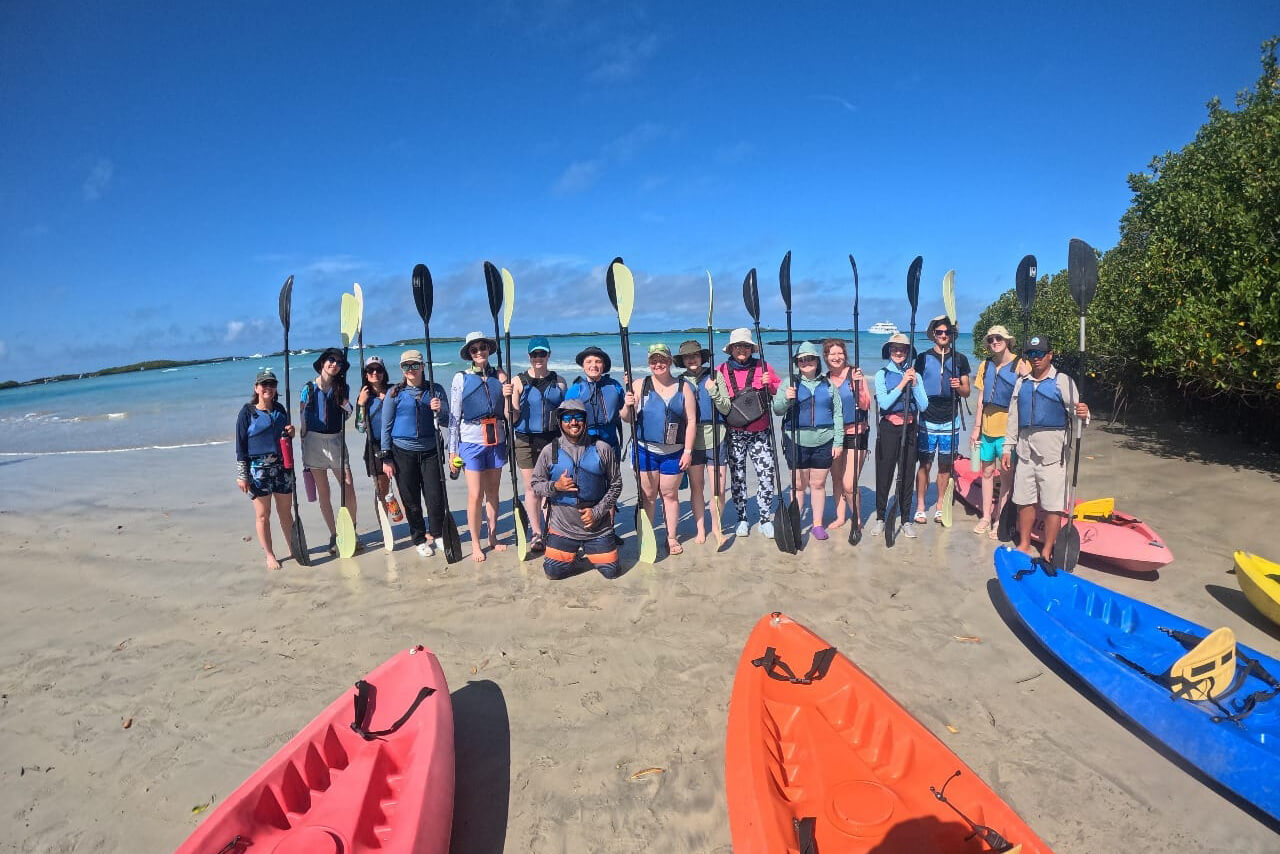
After finishing a hectic week of spring semester finals, the group of Otterbein students was excited to hike volcanoes, snorkel with sea lions, and restore native ecosystems 3,000 miles from home. The Galápagos Islands are home to species that cannot be found anywhere else on Earth. With the effects of invasive species on already threatened ecosystems becoming harder to ignore, these students stepped up to help protect this unique ecosystem.
Before departing, the Otterbein students completed a spring course that covered topics such as island geology, evolution, environmental threats, and tourism. “At the end of the term, before we traveled, students each gave a presentation on a plant and animal of their choosing,” Bouchard said. “Everyone became excited to find their organisms on the islands.”

On Isabela Island, students joined two projects: removing invasive Kikuyu grass and rewilding endangered Scalesia trees. “The plant removal was set along the beach, about a 30-minute walk out from where we were staying,” said Sydnee Goff. “The invasive plant we were removing was Kikuyu grass, which was originally from East Africa. Since the plants make dense mats, they choke out competing vegetation and prevent sea turtles from digging nests.”
At the Juan Chavez Ruiz Forest Nursery, they assisted in moving saplings and preparing them for reintroduction to the wild. “Once the saplings begin to strengthen, they are placed right outside the nursery to assess whether they are ready to be rewilded,” Goff said.
Students were immersed in local culture. “We engaged with the community the entire trip; we slept in their hostels, ate at their restaurants, walked with them on the streets, snorkeled and boated with them, and learned something new about their culture every day,” Goff said. They spent one afternoon with island elders, sharing empanadas, singing songs, and playing bingo.
Daily adventures had moments of challenge and growth. “We biked eight miles to the Wall of Tears, where we learned about the history of a penal colony on the island,” Bouchard said. “We also did a 10-mile hike to the top of a volcano and through a vast lava field. Some students worried they wouldn’t be able to finish those excursions and were especially proud when they did.”
The experience taught that sustainability could be built into everyday life. “By being immersed and living their lifestyle for a week, I’ve learned many new sustainable practices that can be implemented in the United States as well,” Goff said. “Water usage is conserved on the islands. Although it is not a limited resource, they use tap water very sparingly. Since there is a landfill on the island, they try to compact their trash and dispose of as little as possible.”
“Because the economy is so heavily dependent on tourism, there is an extreme emphasis on island conservation,” Bouchard said. “The students were impressed with how conservation seemed to be a way of life on the islands, much more so than in the United States.”
The experience left a lasting impression. “Ultimately, I believe this trip has radicalized me,” Goff said. “The islanders’ perspective and respect for biodiversity and nature have made me realize that a healthy Earth is not an unimaginable concept, but it takes advocacy and practice.”


Carnegie Hall Came Calling for Flute Instructor Lindsey Goodman

Lindsey Goodman, Otterbein adjunct professor of flute, made her Carnegie Hall debut to a sold-out house in New York City’s Weill Recital Hall on Jan. 24, 2025. The recital, presented by PARMA Recordings and performed with pianist Clare Longendyke, was the release concert for her fourth solo album, in the company of music, which was released on Sept. 6, 2024.
Goodman knew she wanted to be a flutist long before most people find their calling. “My father played flute in high school, and he played songs he remembered to help lull me to sleep as a small child. My first memory is of the flute,” she shared. “As they say, ‘the wand chooses the wizard!’”
She went on to earn degrees from the Manhattan School of Music, Northwestern University, and Duquesne University and perform across three continents, including notable venues like the Edinburgh Fringe, the world’s largest performing arts festival. She joined the Otterbein Music Department faculty in 2023.
In the classroom, Goodman encourages each musician she teaches to explore what distinguishes them from other musicians. “Helping the student in front of me at any given time is endlessly engaging,” she said. “Every flutist has a unique personality, goals, strengths, and challenges, and assisting them on their individual paths is a privilege.”
For her part, Goodman has performed more than 215 world premieres, due to her unique, steadfast preference for the work of living composers. “I specialize in the work of living American composers, as their music speaks directly to the shared world we live in and experience daily. If there’s no music of today, there will be no music of tomorrow,” she said.
For her Carnegie Hall debut, Goodman performed a selection of new compositions. “My record label, PARMA Recordings, put out a ‘Featured Recording Opportunity’ asking composers to submit works for solo flute and flute and piano,” she explained. “Selected works were recorded for my fourth solo album, in the company of music, and the album release concert was at Carnegie Hall’s Weill Recital Hall.”

Goodman performed two preview concerts in central Ohio, including one at Otterbein, before her Carnegie Hall performance. She also practiced rigorously for six weeks outside her teaching duties. Then the day of the concert arrived.
“The concert was sold out, and the audience was filled with family, friends who are like family, happy composers and their entourages, colleagues from my record label, and more. People flew in from all over the country and from abroad, and when walking on stage the first time, the audience cheered because they were as happy to be there as we were,” Goodman said.
While Carnegie Hall is a dream venue for most musicians, Goodman tells her students that there is something to be learned from every performance. “Undergraduate students get a taste of this preparation level with their senior recitals. Like anything, the more you practice a skill, the easier it becomes, so passing along my recital preparation experience enhances their preparedness,” she said.
When asked what she learned from her Carnegie Hall performance, Goodman looked to the future. “Society sometimes expects women in mid-life to fade into the background. Instead, I’m in my masterwork stage, playing better than at any other time in my career and continuing to improve and achieve. Expect much more from me!”
Indeed, Goodman’s fifth solo album, transporting bright, will be released on Nov. 7, 2025, thanks to support from the Ohio Arts Council and the Greater Columbus Arts Council.
A free, public album release concert will be held at 2 p.m. on Nov. 9 in Riley Auditorium at the Battelle Fine Arts Center with support from the Johnstone Fund for New Music.
Goodman would like to extend a warm invitation to the entire community: “The #OtterFlutes will be there, and I hope that you, reader, will be, too!”
Daniel Cho Reframes Concept of Genius in New Book
What if you had the opportunity to be a genius? Once thought to be natural talent or exceptional intelligence, the concept of genius has long been seen as exclusive and rigid. For Daniel Cho, a professor in Otterbein University’s Department of Education, genius is not inherited or reserved for tech billionaires and artists. It is a process that anyone can pursue.
Cho has published widely on psychoanalysis, education, and political theology. His recent book, Genius After Psychoanalysis: Freud and Lacan (2024), reframes genius as a constant drive toward knowledge and an enjoyment of frustration. His earlier book, Psychopedagogy: Freud, Lacan, and the Psychoanalytic Theory of Education (2009), examines how psychoanalytic concepts can transform our understanding of learning.
Cho rejects the idea that genius is inherited through a special combination of genes. Instead, he turns to the psychoanalytic theory of sublimation, Freud’s idea that internal drives are transformed or acted out through behaviors. In the case of genius, those behaviors point toward intellectual or artistic knowledge.


People can transform these drives in many ways; typically, choices that require less effort, have a lower chance of mistakes, and have the least amount of unknowns. “The difference between the genius and the non-genius is that frustration for the genius is very satisfying. They love that feeling, and that’s what keeps them going in the research,” Cho said.
Rather than instant success, Cho argues, geniuses thrive on revision, failure, and not-yet-answers. This approach, he says, can be cultivated by anyone, especially students learning to value the process as much as the outcome.
Genius After Psychoanalysis also examines how cultural history has shaped ideas of genius. Cho revisits Freud’s psychobiography of Leonardo da Vinci, in which Freud analyzed da Vinci’s childhood memories and creative drive. While Freud defined da Vinci as a universal genius, Cho uses psychoanalysis to show how da Vinci’s insatiable curiosity and willingness to embrace anomalies reveal a broader theory of genius itself. For Cho, the story of da Vinci demonstrates that genius is not a rare inheritance but a way of working through frustration and failure toward new knowledge.
Historical measures of intelligence, such as standardized tests and eugenics, leave much to be desired, Cho said. Once stripped of both biological and environmental claims, he argues, what remains is the process of learning itself.
“When accounting for things like test scores, financial success, or even IQ, it’s found that environmental factors play a much larger role than any biological indicators do,” Cho said.
When grades or achievements become the sole focus, the need for true understanding is stripped away, Cho added. Over time, this can weaken both education and practical knowledge.
Psychoanalysis invites people into a broader community of knowledge and challenges academia to use curiosity and persistence as its true measures of genius. Making genius more egalitarian by reshaping learning environments, he argues, would not eliminate excellence but uplift everyone.
Cho’s scholarship also extends into politics and theology. He is co-editor of the forthcoming book, Political Theology and Its Discontents, with colleague Boštjan Nedoh, a research associate (PhD) at the Institute of Philosophy, which brings together leading voices to explore how psychoanalysis can open new ways of thinking about authority, law, and ideology. He is also editing a special issue of the journal Psychoanalysis, Culture, and Society and working on a self-authored book, Political Theology of the Two: Monotheism After Freud.
Through this work, Cho continues to demonstrate how psychoanalysis can offer more inclusive insights into education, creativity, and the cultural challenges of today.
Megan Chawansky Explores the Power of Sports in Post-Conflict Communities
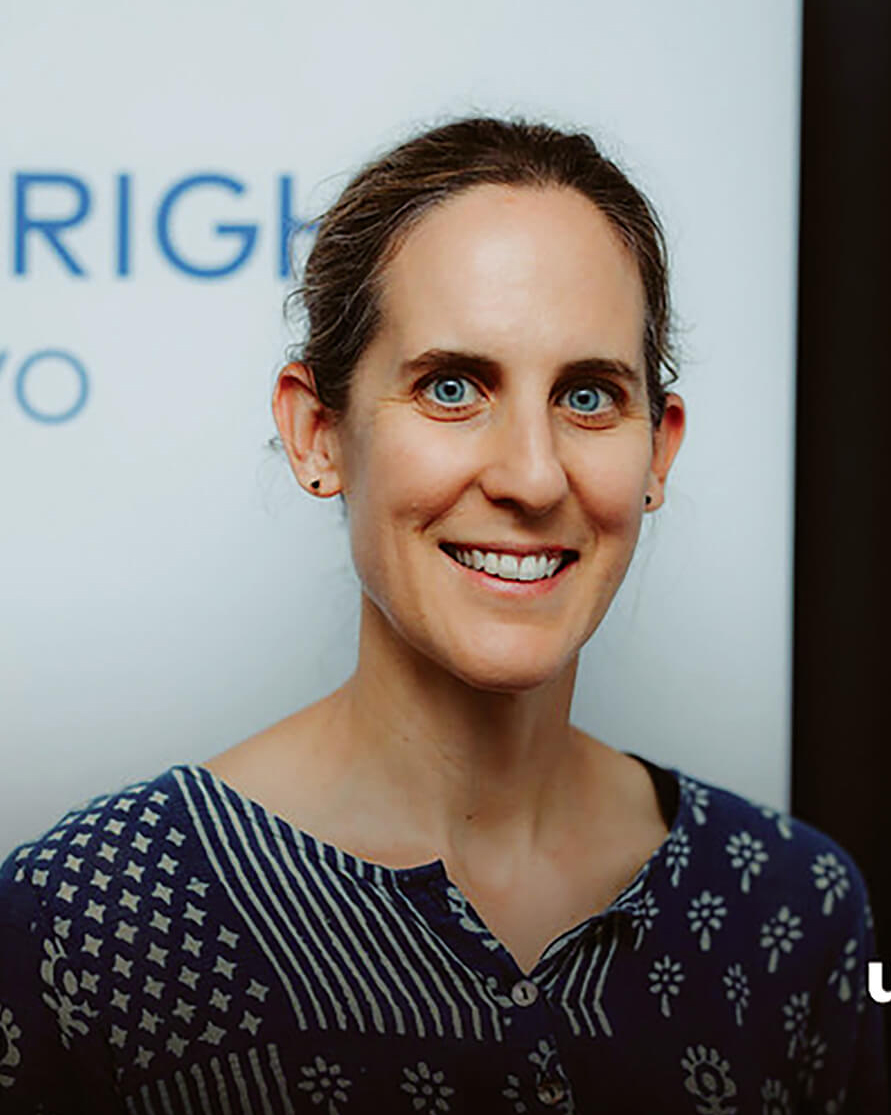
Associate Professor Megan Chawansky, Department of Health and Sport Sciences, grew up surrounded by sports. Her father was a coach and physical education teacher, and athletics became a central part of her identity.
For years, she thought she would play sports as long as she could or coach at the college level. But she began to feel pulled in another direction. “I got to the point that, while it is great to help elite athletes become better and push themselves, I just kind of started falling out of love with that,” Chawansky said. “I was more interested in the other experiences I was having; I would look back and think about the people I met through my teams or the places I got to travel.”
Her interests led her to research and become involved with programs utilizing sport for peace and conflict resolution. “It felt more like my calling to help with those kinds of programs versus helping an athlete to jump higher,” Chawansky said.
Her family history deepened this interest. Chawansky’s father immigrated to the United States from Ukraine, and his stories of physical activity in displaced persons camps after World War II shaped her perspective.
“I was waiting for these horrible family memories to come through, but he talked about skiing and some of the sports stuff he did. That stuck out to me when I became interested in where I came from and what my family history was all about. What keeps people going in times of war? What gives them hope when everything is uncertain? I think sports and physical activity gave their lives some meaning,” Chawansky said.
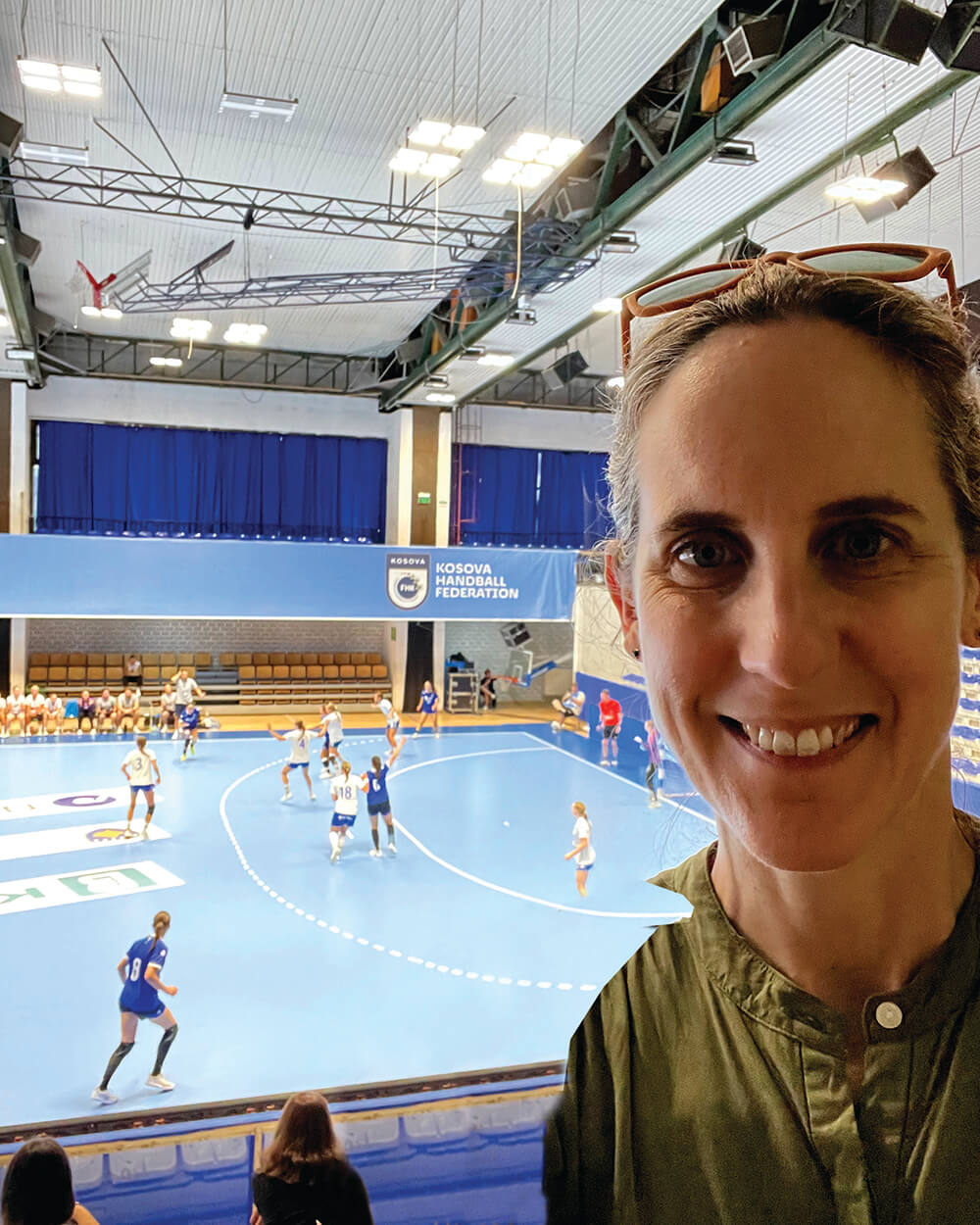
Now Chawansky has earned a prestigious Fulbright Fellowship to travel to Kosovo in fall 2025 to study how sport can be used in post-war communities. Her original plan was to conduct research in Ukraine, but the opportunity in Kosovo allows her to explore related questions in a post-war environment.
“When I saw this direct commitment to translate findings to Ukraine and make partnerships with Ukrainian universities, I think it is the closest I can be to helping Ukraine without being there. The people of Kosovo have their own struggles, their own legacy of conflict, so I think there are things that can translate and can be applied in Ukraine,” Chawansky said.
Her research will focus on women and girls.
“They have always been my focal point just because I think sport is still very gendered and we still have a lot of work to do to understand women’s experiences. There is something about the conflict in Kosovo that has been gendered as well. How do you regain strength when you have been through something like this? For a lot of people, physical activity, sport, and exercise can be a way to feel stronger physically and then mentally, as well,” Chawansky said.
Chawansky plans to bring her experiences back to Otterbein through classes, presentations, and student engagement.
“I am excited to represent Otterbein in Kosovo. I hope people feel like their story and what they are doing is really important. And for my students, I hope they become curious about the sporting world. A lot of times we can be U.S.-focused in sports, but there is a lot of other stuff going on out there,” Chawansky said.
Andrew Calinger-Yoak Develops Non-Lethal Rabies Test to Save Bats
Over 25,000 bats are euthanized every year in the U.S. to test for rabies. This testing is incredibly important as once symptoms appear, the disease is invariably fatal. Currently, the only accurate detection is done through decapitation and brain tissue analysis. With bats being one of the main carriers, testing is necessary, but it comes at a severe cost to the ecosystem.
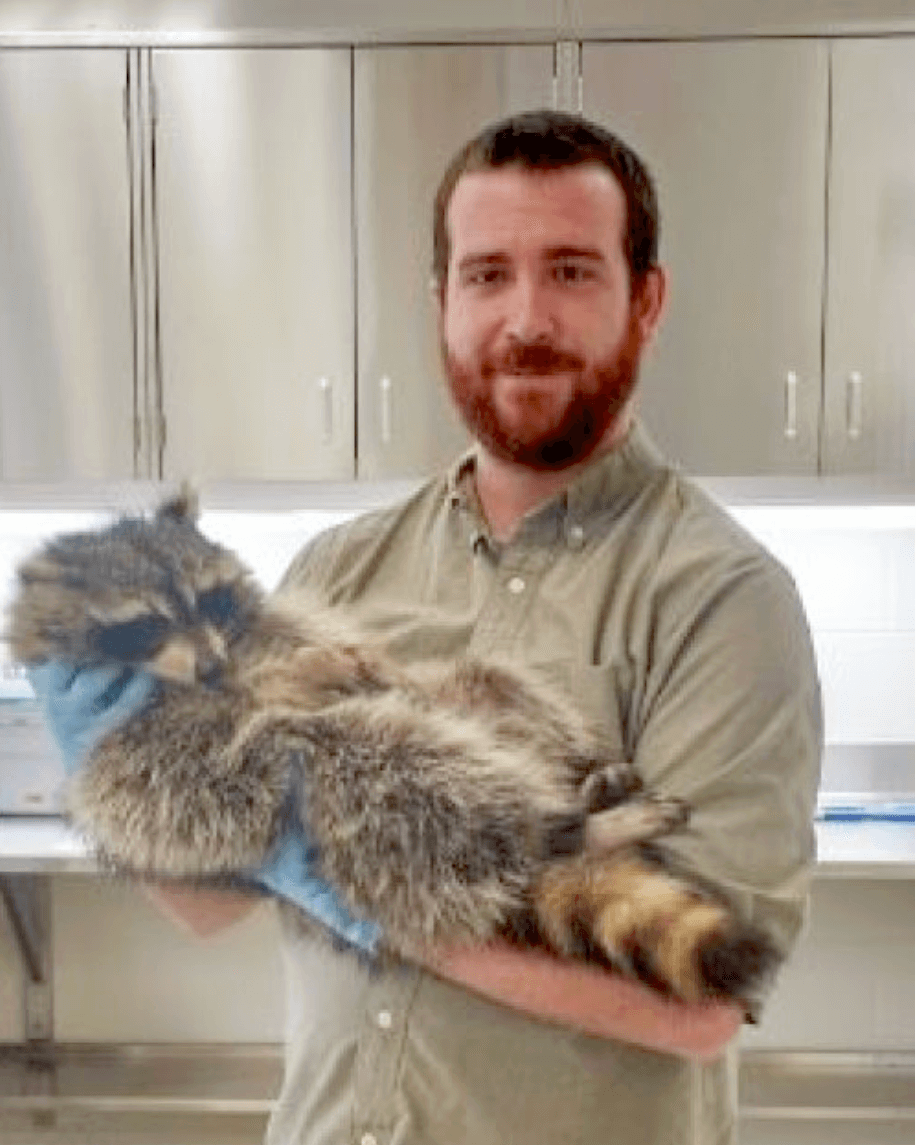
But now, one of Otterbein’s very own faculty members, Andrew Calinger-Yoak, is making strides in changing the game with the help of students, rehab centers, and bat lovers everywhere. Their research goal is to build ARID (Acoustic Rabies Identification), a non-invasive screening method that uses the unique sounds of bats to detect the virus without killing the animal.
“Our project hopes to reduce (the number of bats euthanized for rabies testing) by producing a pre-mortem screening tool using audio recordings of both rabid and non-rabid bats in partnership with the Ohio Wildlife Center and approximately 20 wildlife rehab organizations around the U.S.,” said Calinger-Yoak, director of Otterbein’s Zoo and Conservation Science Program.

Silver Haired Bat
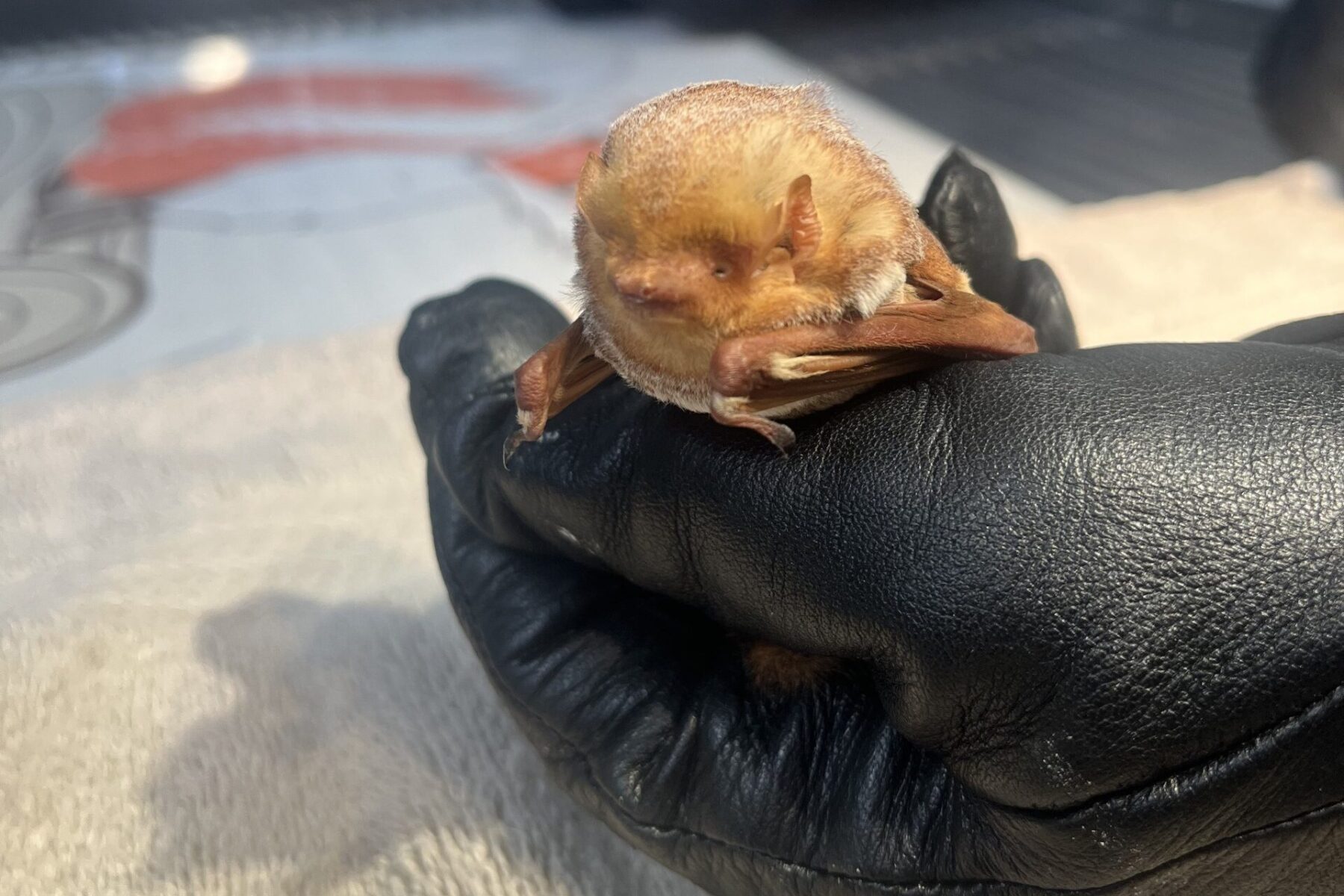
Red Bat
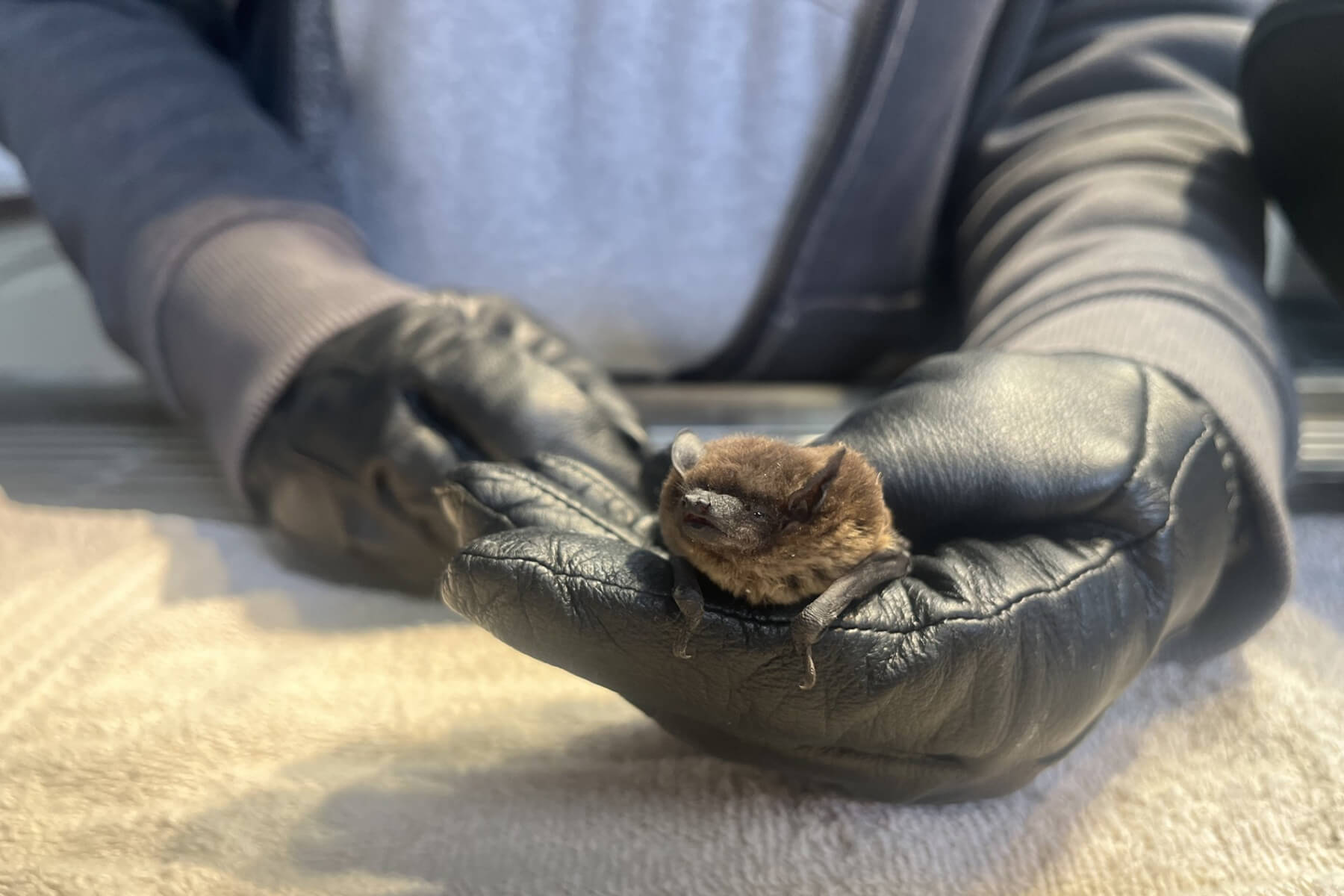
Big Brown Bat
How it Works
Bats communicate in frequencies above human hearing, with special sounds for echolocation and communication. Because the rabies virus changes the physiology of the brain’s control on throat muscles, changes to calls could be a possible signal of infection, according to Calinger-Yoak.
Using a small, affordable microphone called an Audio Moth, researchers and rehab experts can record just a snippet of audio from each bat. These sounds are paired up with rabies test results from local labs or Chloe Goodwin, DMV, Calinger-Yoak’s research partner at the University of Georgia, to confirm infection status. Machine learning models can use this database of bat calls to identify the potential signature sounds of infected bats.
Rehab centers across the U.S. and Canada have participated in this project, helping to create this bat language database and a potential new testing method.
The Impact
Their unfortunate link to rabies gives them a negative reputation, but bats play an important role in the ecosystem. They control insect populations, help pollinate plants, and are a critical species in the Ohio environment, according to Calinger-Yoak.
For wildlife centers, a non-lethal test would potentially save many animals and protect humans and bats at the same time, in the safest and most humane way possible.
“This would give a tool to wildlife rehabbers to make better decisions about quarantine and non-invasively investigate rabies epidemiology in the field,” Calinger-Yoak said.
Get Involved/ Learn More
With a growing number of rehab centers participating, feel free to get involved with this research. Recordings can be submitted using this form.
If you would like to ask questions or get involved with this project, email yoak1@otterbein.edu.