Educating Students for Democracy

Education, and Democracy On Campus

According to the Fair Election Center’s Campus Votes Project, young adults historically have voted at lower rates than older cohorts. Why? They face many obstacles to voting, including frequent address changes, confusing voter ID laws, and lack of transportation to polling locations, among other things. That’s why there are efforts at Otterbein to educate student voters about the voting process and to remove those obstacles that might prevent them from practicing their civic rights.

Peer-to-Peer Outreach

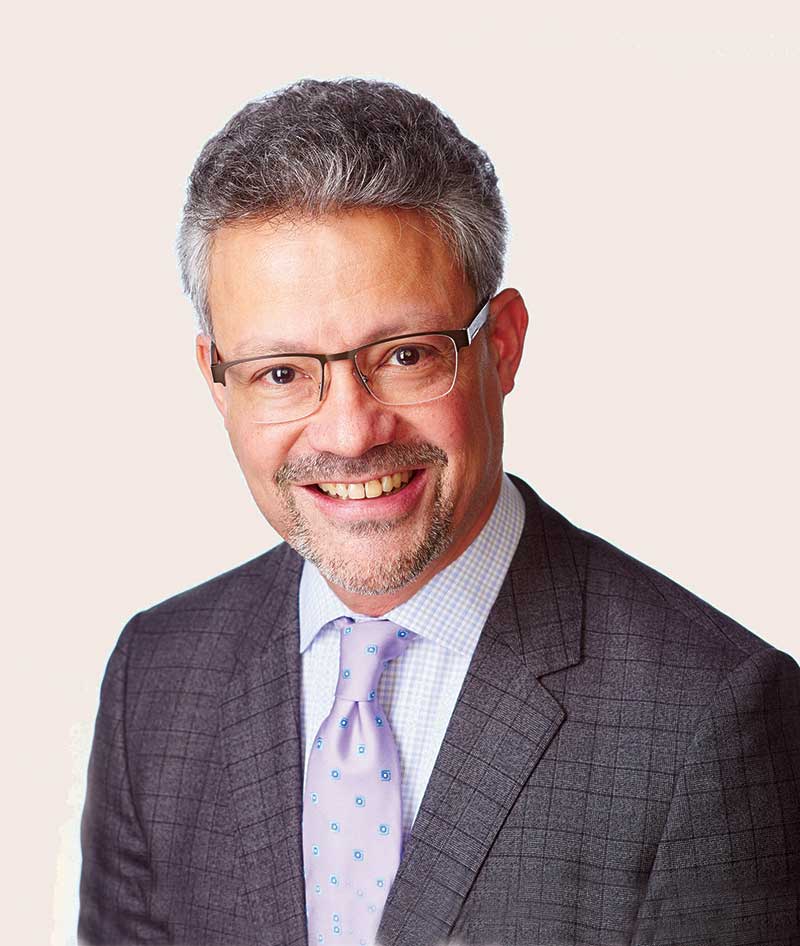
BY GRACE SIMS ’25 Sociology, Psychology, and Women’s, Gender, and Sexuality Studies triple major; CardinalCorps Co-Leader of Raise Your Voice; and Democracy Fellow*

*Note: Democracy Fellows are selected by the Campus Vote Project of the Fair Elections Center. Democracy Fellows talk to their peers about registering to vote, educate them on election laws and what’s on the ballot, and make sure students at their campus are ready to engage with democracy. Fellows implement programs on each of their campuses that will remain long after they graduate and make an impact on students for years to come.

Civic engagement is not only our right as U.S. citizens, but also an essential component of our democratic process, and education is a crucial part of every person’s voting journey.

From local issues to state elections and, this year, the presidential election, voters will be presented with a lot of information in November. So it is essential that they submit their vote, confident that they understand their ballots. After all, our vote has a variety of real-world outcomes that impact everyone from college students to families and retirees.

These outcomes matter to young people, who have been making their voices heard in increasing numbers. Young voters had record turnout in the 2020 and 2022 elections and Otterbein students have been no different. In 2020, Otterbein students registered to vote and then voted at higher rates than the national average and at a higher percentage than previous classes at Otterbein. Raise Your Voice, Otterbein’s non-partisan, student-run, voter education group, hopes to continue this legacy and improve our registration rate and voting rate in 2024.

Raise Your Voice has hosted events throughout the semester including on national civic holidays such as National Voter Registration Day (Sept. 17), National Voter Education Week (Oct. 7-10), and Vote Early Day (Oct. 29) to bring students together to learn about and celebrate the voting process.

At past events, students have enjoyed casting a mock ballot with the Franklin County Board of Elections, Q&As with local politicians, and discussions with various community partners including the League of Women Voters and Rank The Vote.

As a Democracy Fellow and college student, I recognize the apathy and dispiritedness prevalent among my fellow college students when it comes to voting. It is vital for me to educate my peers on the importance of not only voting in November, but voting down the ballot in an educated, informed, and confident manner. You can see our action plans, awards, and voting achievements at allinchallenge.org/campuses/otterbein-university.

In the Classroom

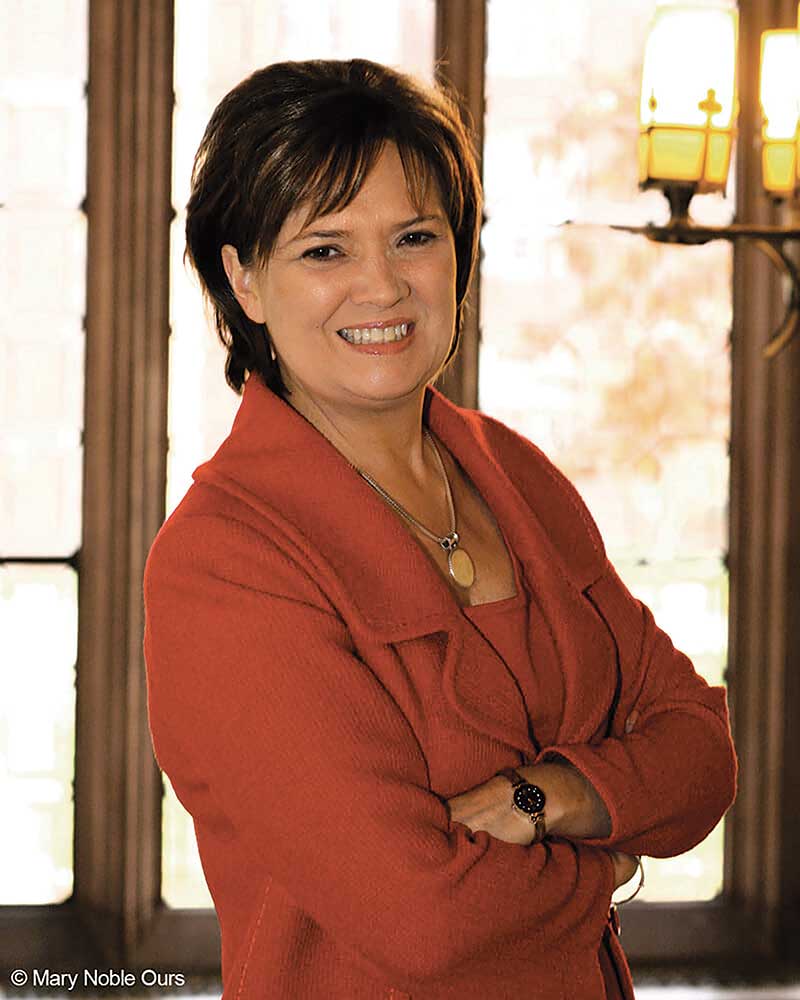
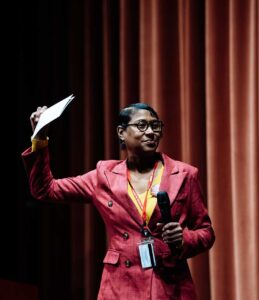
BY LEESA J. KERN, PH.D. associate professor, Department of Sociology, Criminology and Justice Studies

Many students are like me when I was in college. Traveling home to vote was impossible. I didn’t know how absentee ballots worked. I didn’t know how to find useful information about candidates and issues — well before social media and the Internet. To combat this, in 2008 I approached a colleague in History and Political Science, and we developed a Senior Year Experience course, “High Stakes: The 2008 Presidential Election.”

This year’s election has already had its share of twists and turns, but in many ways the challenges facing new voters are similar to those in 2008. Today we have access to a great deal more information, but it is harder to know what is “good information.” Students can be wary of asking questions or sharing ideas in a climate where discussion can become divisive.

The goal of my class is to help students navigate:

  • practical aspects of elections, like how to register to vote and where to go;
  • informational aspects, including where to find information about candidates and issues, and what the “down ballot” races are;
  • educational aspects, including what the electoral process is and how we get candidates; and increasingly
  • the relational aspects, talking with people who disagree with you and understanding where your own viewpoints come from.

Civic engagement is not only our right as U.S. citizens, but also an essential component of our democratic process, and education is a crucial part of every person’s voting journey.

In class, we will learn together how to talk about poli tical issues with respect and compassion.

If I’ve done my job right, they won’t be able to tell which candidate I have voted for. (In years past, I’ve been really successful at that!)

My hope is that they take away a new appreciation for the importance of participatory democracy. I hope they understand how their education allowed them to cultivate the skills to collect, evaluate, and use information. And lastly, I hope they aspire to maintain respectful dialogue and participation in any political setting.

Homecoming & Family Weekend 2024

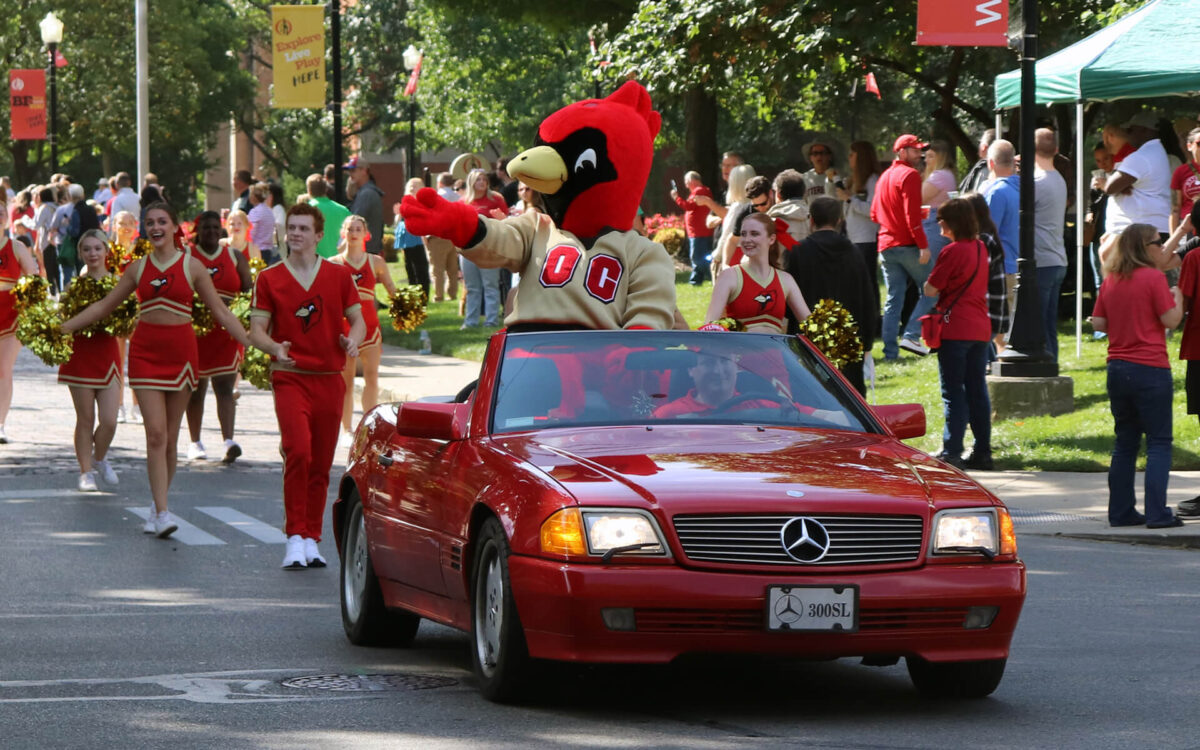
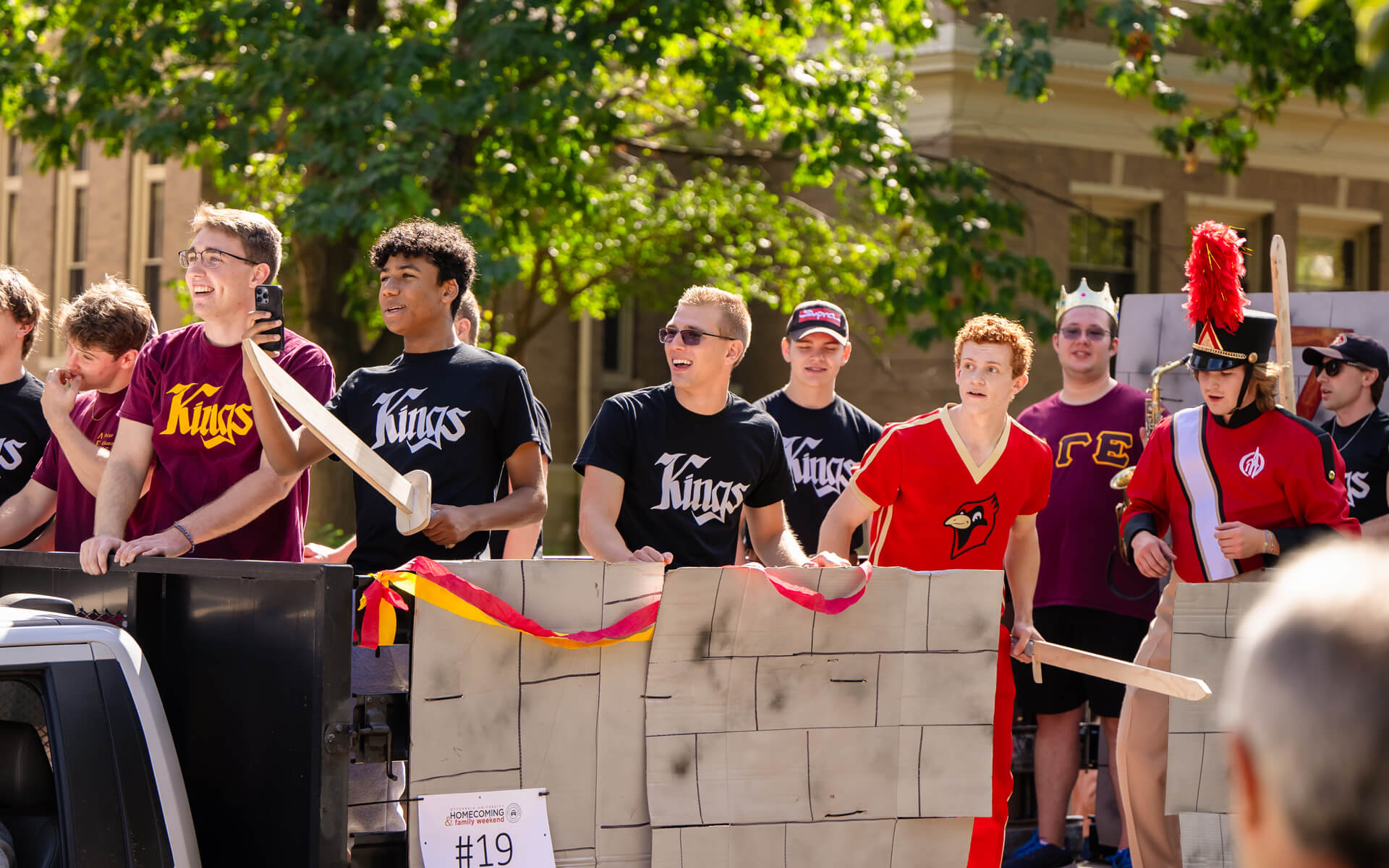
Homecoming & Family Weekend 2024 was a celebration like no other, as the annual event shifted from the Campus Center grounds to the beautiful, shaded canopy of trees on the lawn of our iconic Towers Hall.

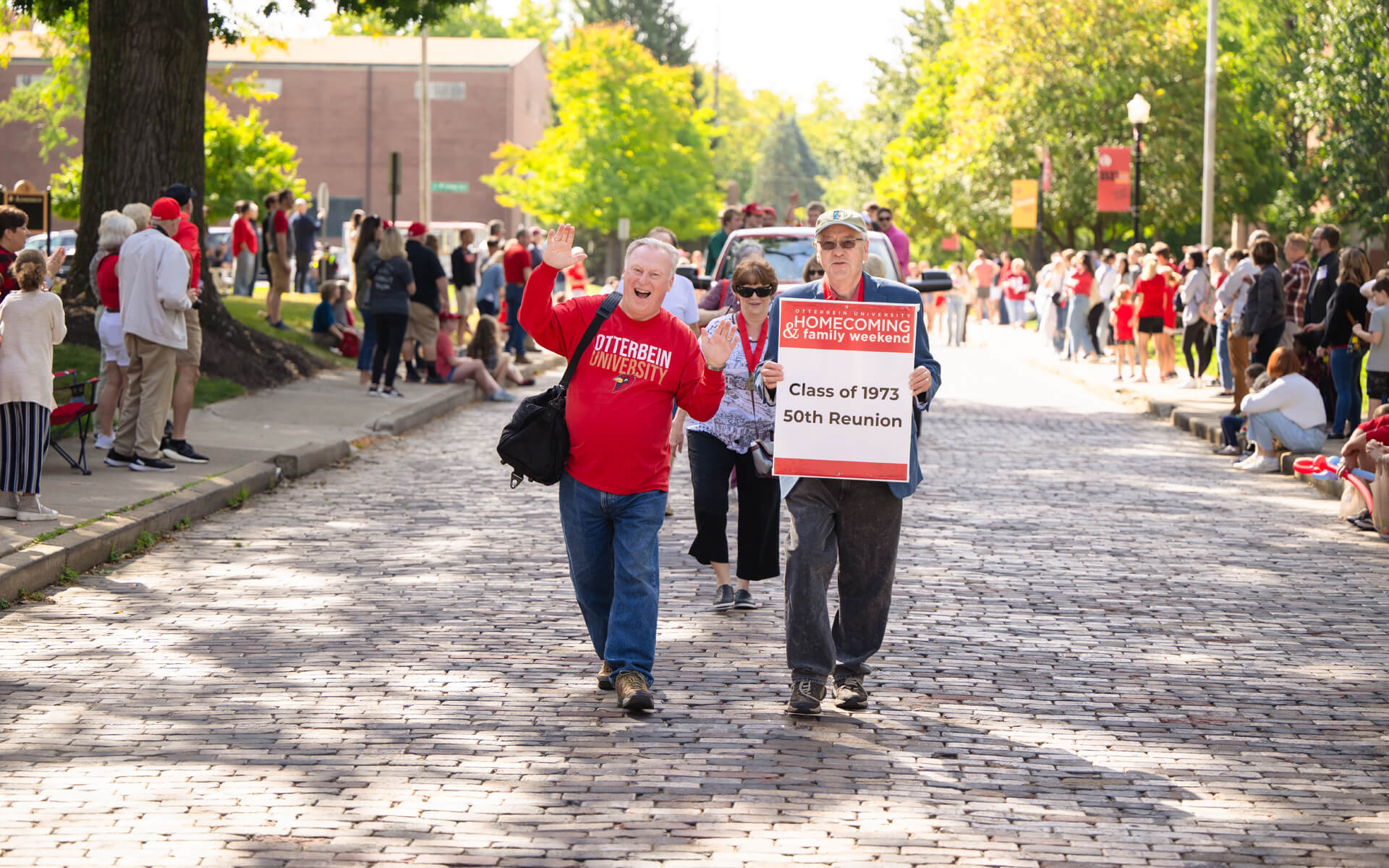
The Class of 1974 celebrated its 50th Golden Reunion as well as the Class of 1969 coming home for its 55th reunion milestone. In addition, several other alumni groups came back to the ‘Bein this year, including the Alumni Choir, ’80s Theatre Alumni, Greek Alumni, Equine Alumni, and more.

The Class of 1968 celebrated the dedication of its 50th reunion legacy gift – the restoration of historic windows saved by Dean Joanne Van Sant from the old Association Building – which are on display in Roush Hall, where the “Sosh” building once stood.

The Department of Communication celebrated the life and legacy of Professor Emerita Christina Reynolds (who also received Honorary Alumna recognition, posthumously) along with the 100th anniversary of the Speech and Debate program.

Eight exemplary alumni received awards from Otterbein this year, along with the Austin E. Knowlton Foundation receiving the university’s highest honor, the Mary B. Thomas ’28 Commitment to Otterbein Award

2024 Homecoming Photo Galleries

HOMECOMING & FAMILY WEEKEND
ALUMNI AWARD
CLASS OF 1974 GOLDEN REUNION
CLASS OF 1969 55TH REUNION

See More Otterbein Galleries →

CLASS OF 1980 THEATRE REUNION

100 Years of BAE at Otterbein

CELEBRATING 100 YEARS

The Evolution of Business, Accounting, and Economics

As one of the largest departments at Otterbein University, the Department of Business, Accounting, and Economics (BAE) has a rich history that spans over a century.

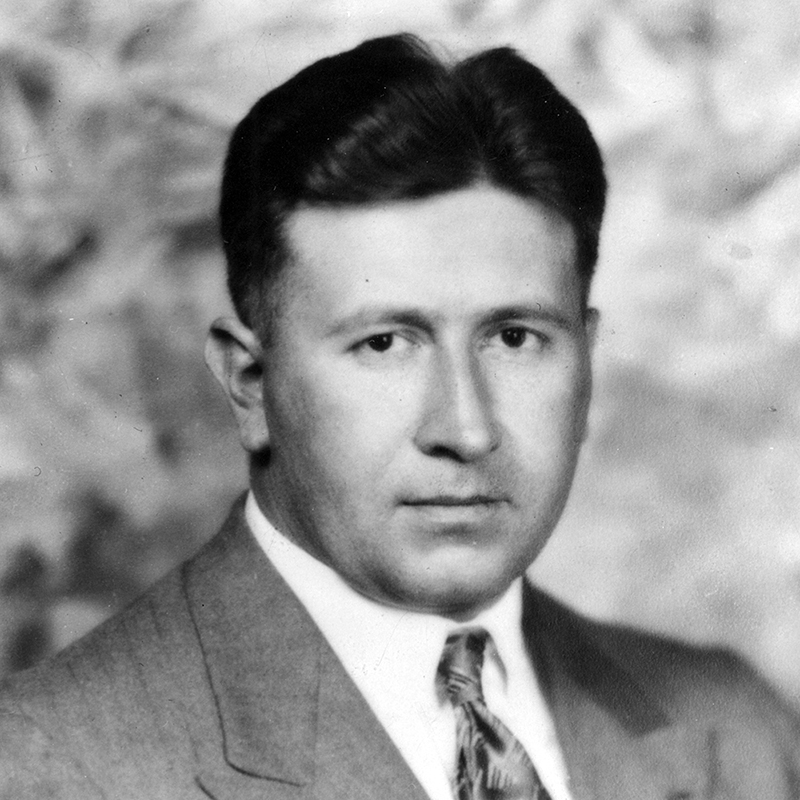
The first mention of a business-related department at Otterbein was in 1864, but it wasn’t until 1924 that the Department of Business Administration was established, initially focusing on business fundamentals. Since 1930, the department has undergone a significant evolution with a greater emphasis on economics. Under the leadership of Professor Horace W. Troop, Class of 1923, who served as chair from 1924-1952, the department’s name was changed to the Department of Economics and Business Administration in 1938, reflecting its expanding scope.

100 YEARS OF CHAIRS

Dr. Harance Troop

1924-1952

Dr. Ralston Scott

1952-1958

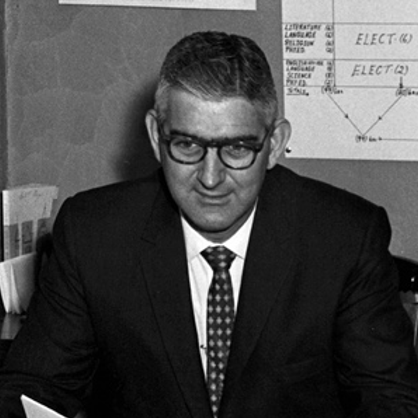
Dr. Bert Glaze

1958-1962

Dr. Stanley Hart

1963-1967

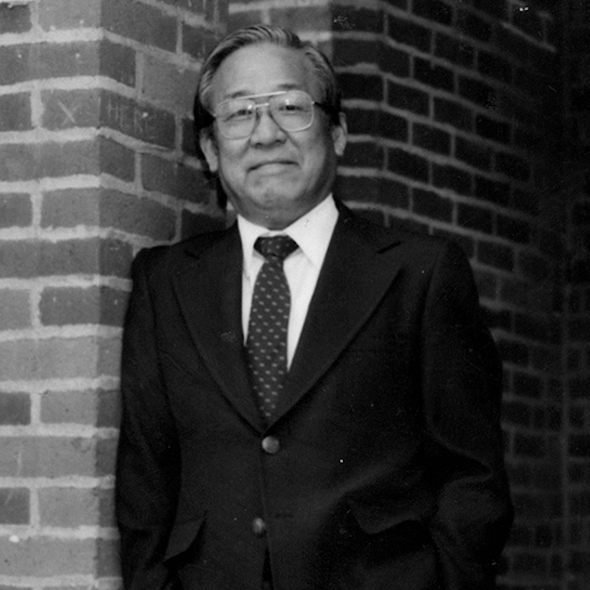
Dr. Young Whe Koo

1969-1978, 1985-1989

Dr. Gail Miller

1979-1984

Dr. Gerald Brown

1990-1994

Dr. Kamel Abdullah

1993-1997

Dr. Allen Prindle

1997-2000

Dr. Charles G. Smith

2000-2008

Dr. Don Eskew

2009-2016, & 2019-2023

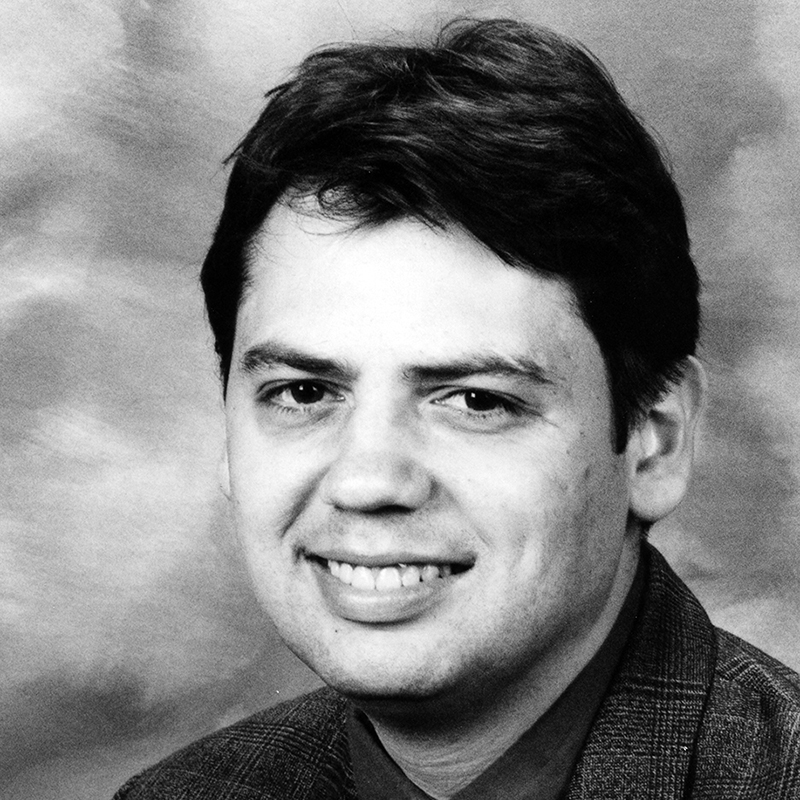
Dr. Michael Levin

2017-2019

Steve Osborne

2023-current

100 Years

1924
The Board of Trustees approved the establishment of the Department of Business Administration under the first Department Chair, Horace W. Troop, class of 1923.

1963

Ralston D. Scott (1952- 58)

Chair Ralston D. Scott (1952- 1958) introduced courses in typing, shorthand, and commercial subjects when the department was housed in Towers Hall.

1969

BAE Society of Advanced Management

1993

BAE moved to Roush Hall in 1993.

1998
The MBA program earned accreditation in 1998.

2013
With the transition from quarters to semesters and the shift from business concentrations to majors, BAE continued its curriculum innovations. New majors and courses enhanced its interdisciplinary interactions with mathematics and computer science programs.

The department briefly merged with business education from 1952-1961, when it changed course under the leadership of Bert Glaze and became a pioneer among liberal arts colleges by revising its curriculum to include more mathematics. A statistics laboratory was established in 1965. In 1990, Young Koo and Gerald Brown led the work to rename it the Department of Business, Accounting, and Economics.

The curriculum has continued to evolve to meet the demands of an ever-changing business world, expanding across disciplines such as accounting, business administration and management, business analytics, economics, finance, and marketing.

Today, the BAE department remains a cornerstone of Otterbein’s academic landscape. Committed to its legacy of innovation and academic rigor, it continues to shape the future of business education and nurture the next generation of entrepreneurs and business professionals as it enters its second century.

For a look back at a century of memories and photos, visit www.otterbein.edu/business-accounting-economics/100th-anniversary-history/

Department faculty and staff 2024 (L-R): Kyriacos Aristotelous, Allison de Nijs ’96, Kristina Medvedeva, Don Eskew, Brian Weikel, Yiyuan (Ava) Liu, Maria Tarbell, Brian Day, Hyuk Kim, Sergei Chuikov, Takeshi (Mike) Tsuyuguchi, David Riepenhoff ’99, Stephen Osborne

Rike Center Turns 50

RIKE CENTER TURNS

RIKE CENTER TURNS 50

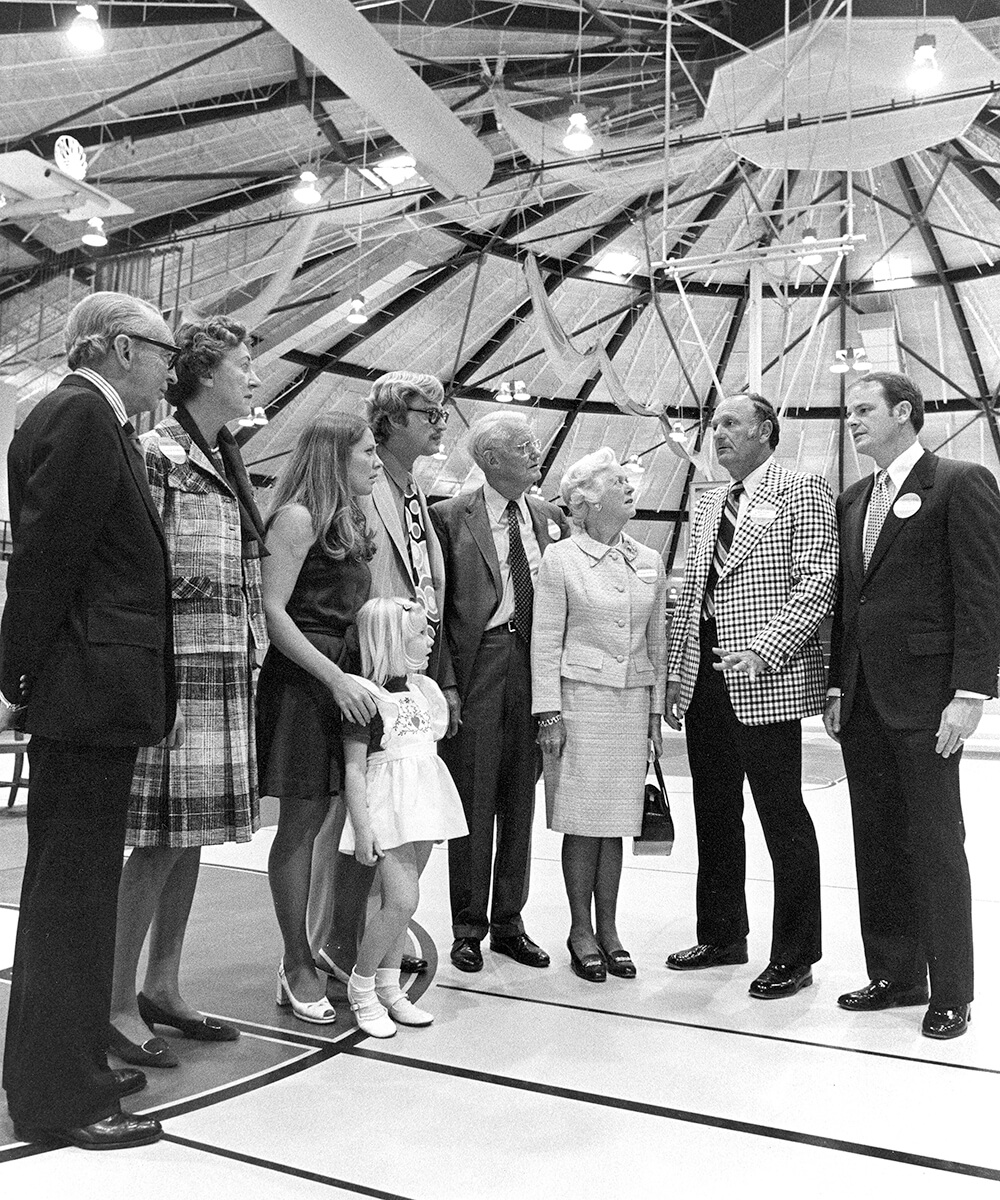
When it was dedicated on May 17, 1975, few could have predicted the incredible stories that would be set at the Rike Physical Education Center.

Prior to 1975, men’s indoor athletics took place in the Alumni Gymnasium – now Battelle Fine Arts Center. But a lead gift of $300,000 from the Rike family of Dayton, OH, allowed Otterbein to build a new, $1.5 million, state-of-the-art athletics facility. Fondly called “The Otterdome,” the Rike Center was considered the envy of the OAC at the time of its dedication. It is now the home of women’s and men’s basketball, volleyball, and men’s and women’s wrestling.

ABOUT THE Rike Family

David L. Rike served on the Otterbein College Board of Trustees from 1879-1895. His son, Frederick H. Rike, class of 1888, held the same position from 1906 to 1947. Susanne Rike MacDonald, class of 1890, taught music at Otterbein from 1894-1895. Generations continued their relationship with Otterbein through the establishment of the Rike Family Foundation.

THANK YOU TO ALL OF THE DONORS

who have invested in the Rike Center over the past 50 years, including these leadership level donors who recently supported the replacement of the court floor and upcoming bleachers.

The Vida S. Clements Foundation Mark R. Thresher ’78, P’05, and Deborah Scott Thresher ’77, P’05, Roush Family Foundation, “O” Club Foundation, Elmer “Bud” Yoest ’53, P’77, P’80, Phil J. Susi ’05, Steve Moeller ’66, P’97.

Rike Center - Dedication

May 17, 1975 DEDICATION DAY. David L. Rike served on the Otterbein College Board of Trustees from 1879-1895. His son, Frederick H. Rike, class of 1888, held the same position from 1906 to 1947. Susanne Rike MacDonald, class of 1890, taught music at Otterbein from 1894-1895. Generations continued their relationship with Otterbein through the establishment of the Rike Family Foundation.

The design has allowed the facility to be adapted to address changing needs over the past 50 years, thanks to the open-area concept championed by former Director of Athletics Elmer “Bud” Yoest ’53, P’77, P’80. The Rike Center has hosted commencements, college fairs, and even the October 2019 Democratic Presidential Debate, presented by CNN and The New York Times.
For its 50th anniversary, the Rike Center received some upgrades, including two indoor golf practice facilities (a simulator and space for putting practice) and, most importantly, a new, state-ofthe-art floor.

The maple hardwood floor covers 12,200 square feet and has a 61% force reduction, which means that athletes using the floor absorb 39% of the impact, while the floor absorbs the rest of the impact. The new floor replaces the one installed in 1992, which was also maple hardwood, but only had a 40% force reduction. Tony Stalford, the president of The Final Floor, Inc., is also part of Rike Center history; he has installed every floor the Rike Center has had, starting when he was a teenager helping to install the center’s first floor.

To celebrate its 50th anniversary with some exciting new updates, here’s a look back at the history of “The Rike.”

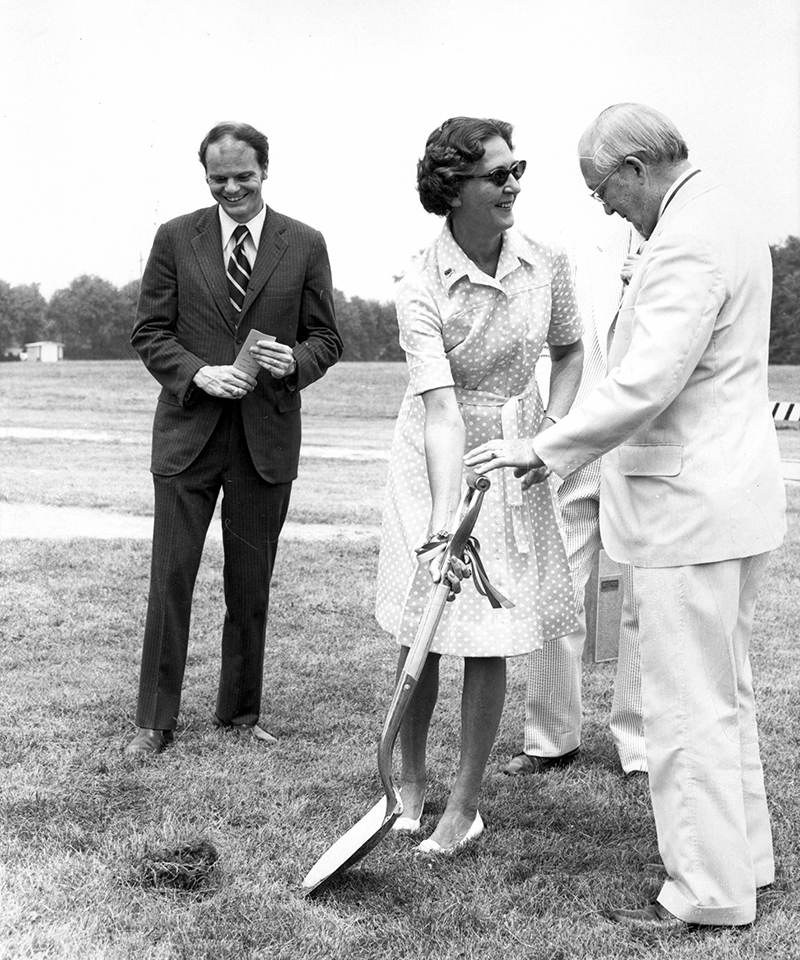
July 19, 1973

Suzanne Rike Kircher hands the ceremonial shovel to Board

Groundbreaking. Suzanne Rike Kircher hands the ceremonial shovel to Board Chair Harold Boda, as President Thomas J. Kerr IV looks on.

June 1, 1974

Board Chair Elmer Funkhouser Jr. at the cornerstone laying ceremony.

Board Chair Elmer Funkhouser Jr. at the cornerstone laying ceremony.

1975

Rike Center The Curved Roof

The curved roof, which had already earned the building the nickname “Otterdome,” takes shape over top of the Rike Center.

May 22, 1975

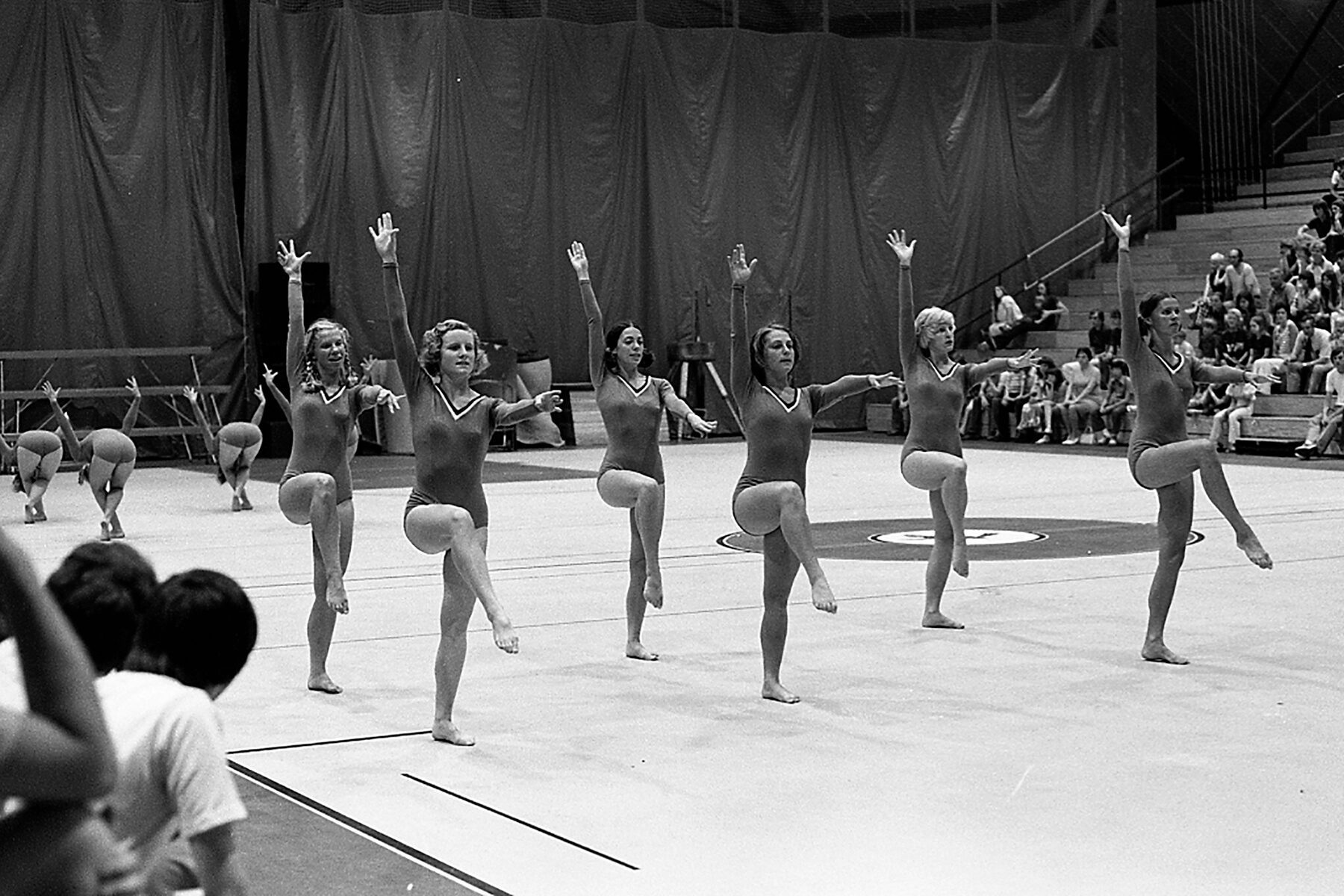
Danish Gym Team

The Danish Gymnastics Team presented the first public performance in the Rike Center as part of the events of the Rike Center dedication week.

1975 to 1992

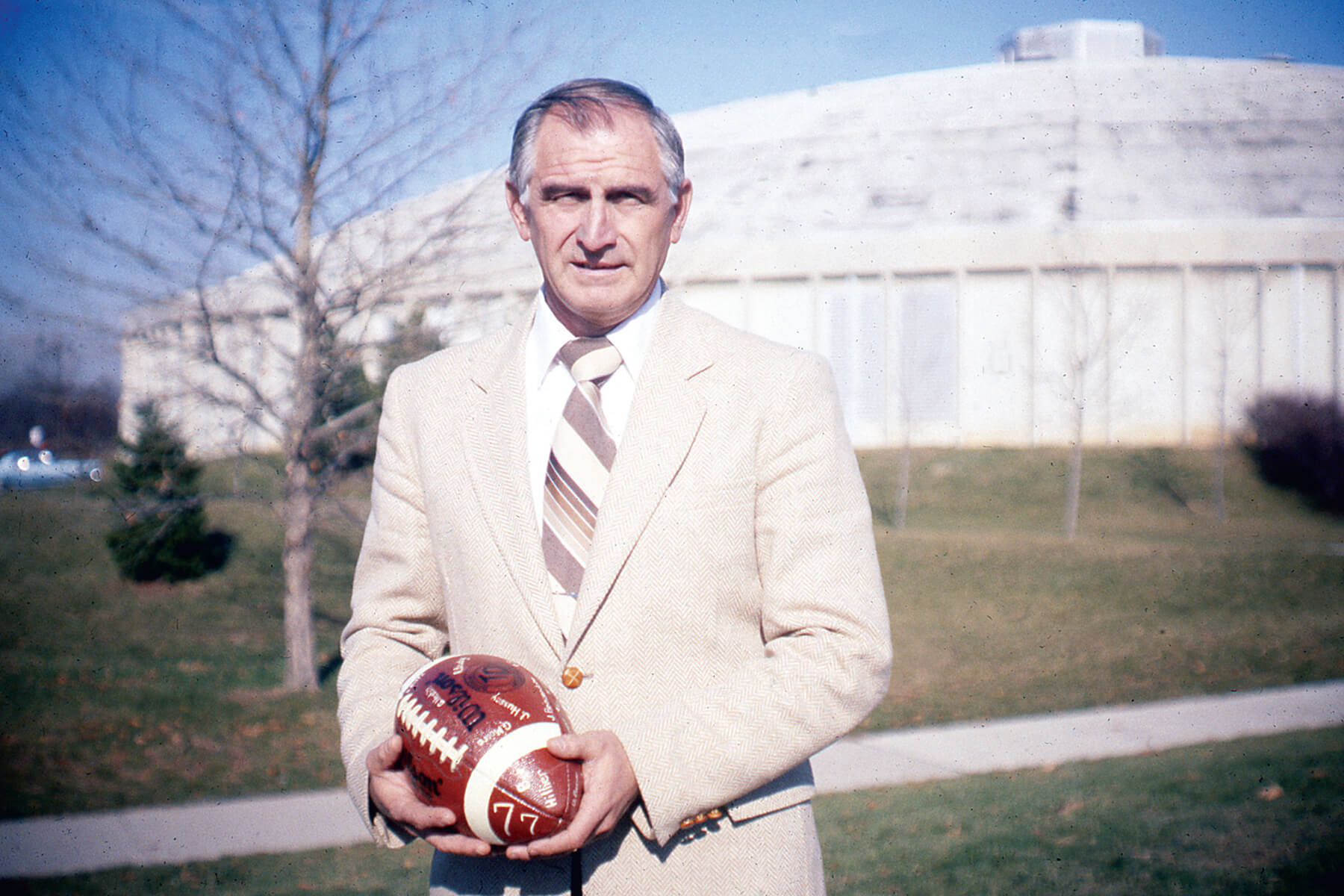
Elmer “Bud” Yoest ’53, P’77, P’80 s

Elmer “Bud” Yoest ’53, P’77, P’80 served as athletic director. He taught and coached at Otterbein for 36 years. His push to make the Rike Center an open area, multi-use structure allowed the facility to grow to meet the changing needs of Otterbein students and athletic programs.

Coach Dick Reynolds ’65 Leadership Era

Reynolds_CapOtter_color copy_1982-83

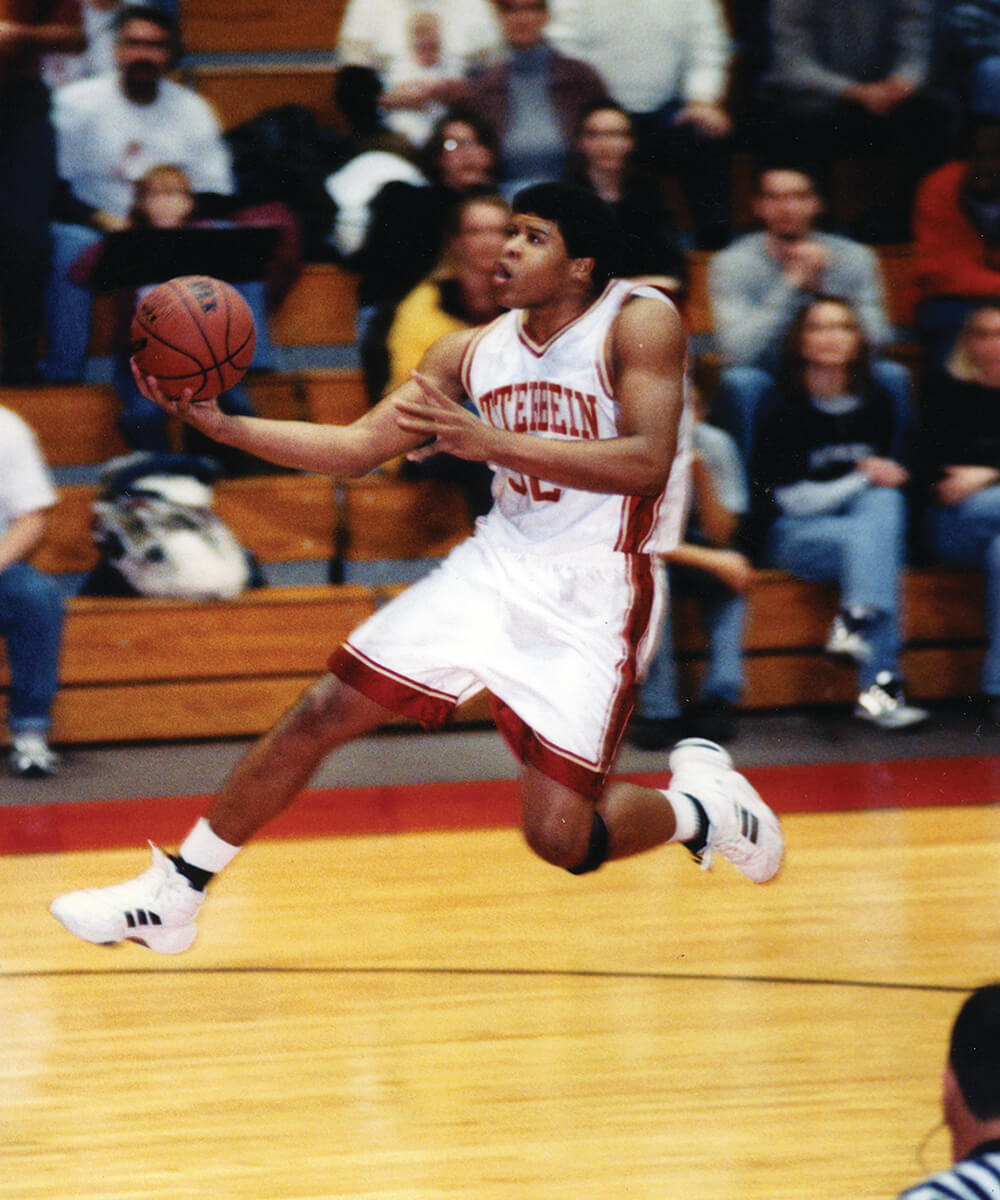
Coach Dick Reynolds ’65 guided the men’s basketball team for 40 seasons from 1972-2012. Reynolds is the most successful basketball coach in the history of the Ohio Athletic Conference, with all but three years of his coaching under the Rike Center dome. In 2002, he led the Otterbein Men’s Basketball Team to win the NCAA Division III Championship. He also served as athletic director from 1992 to 2012.

1976

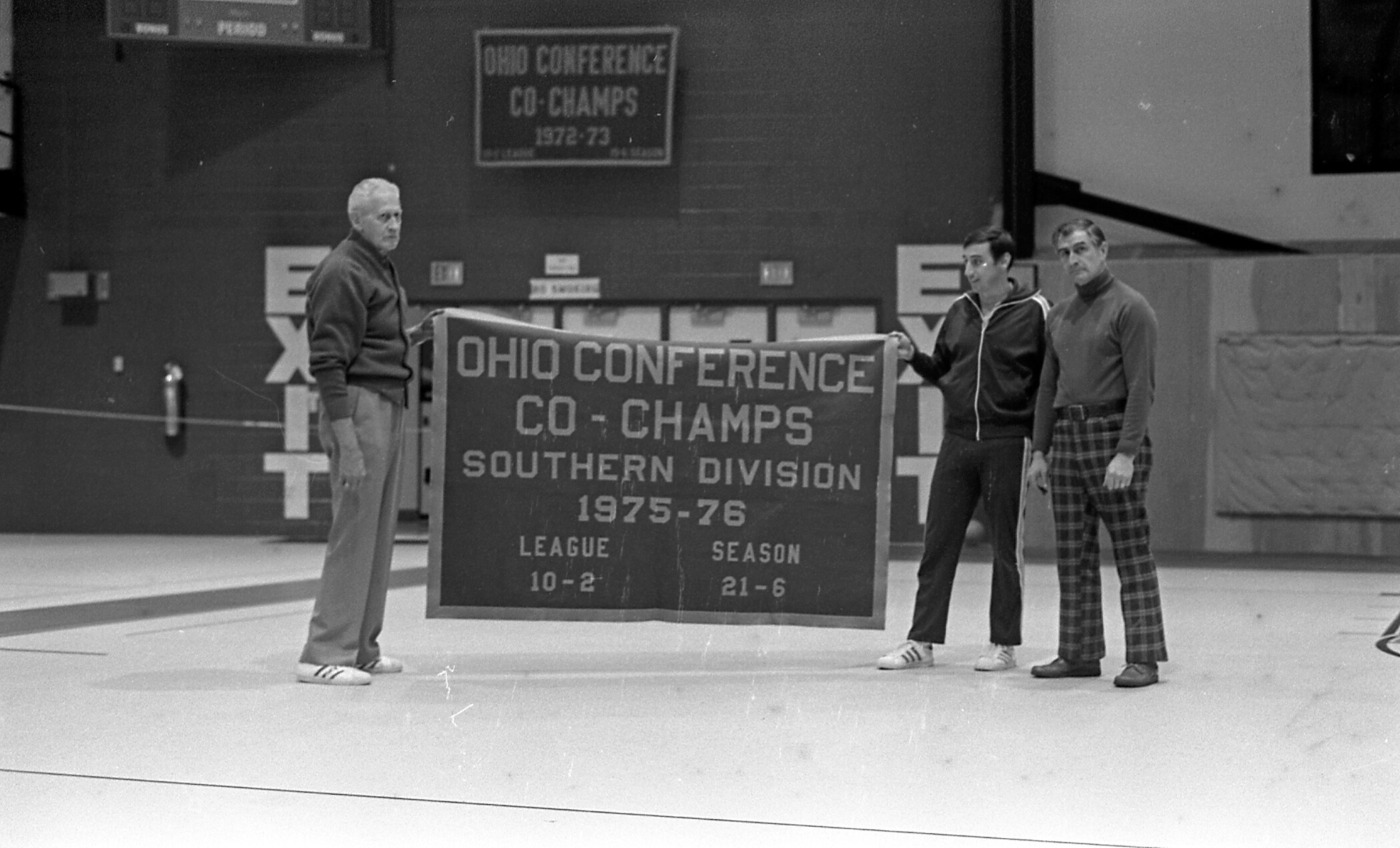
Otterbein “O” Club founding member Dwight “Smokey” Ballenger, Coach Dick Reynolds ’65, and athletic director Elmer “Bud” Yoest ’53, P’77, P’80 a

Otterbein “O” Club founding member Dwight “Smokey” Ballenger, Coach Dick Reynolds ’65, and athletic director Elmer “Bud” Yoest ’53, P’77, P’80 add the first championship banner earned in the Rike Center to the historic banners brought over from the old Alumni Gymnasium.

1985

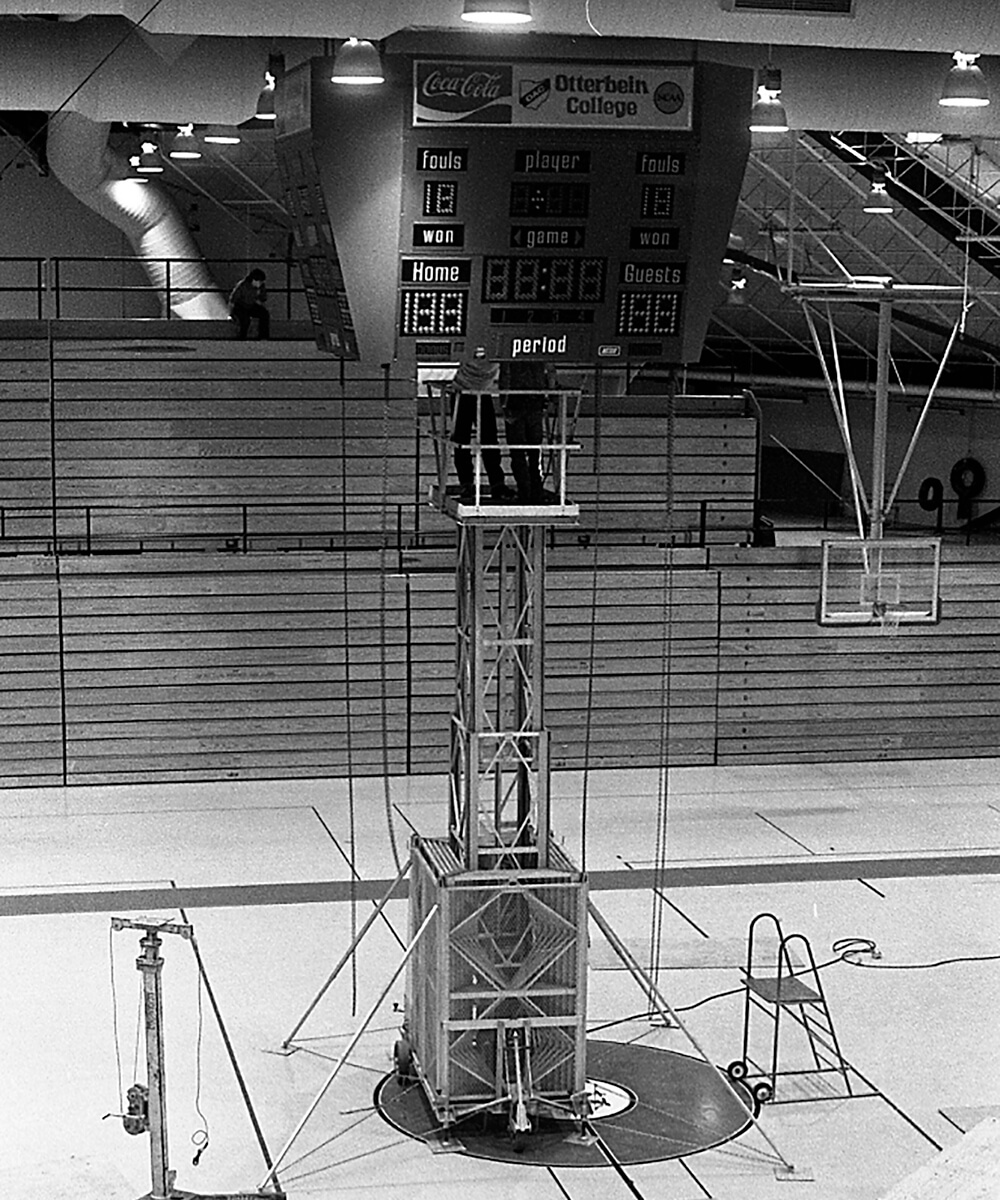
Scoreboard

The Rike Center received a major upgrade when a new scoreboard was installed over the basketball court.

Fall of 1996

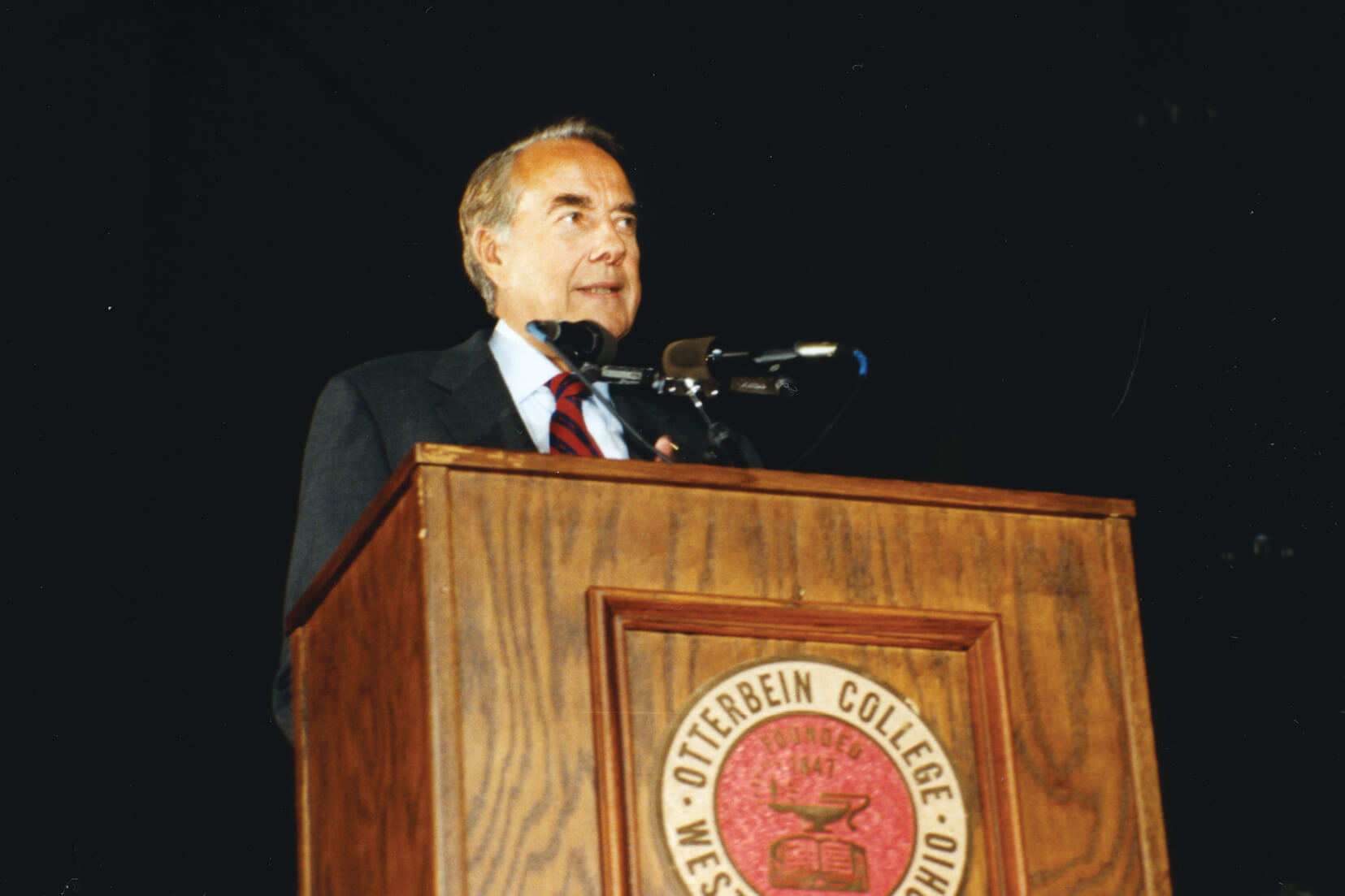
Senator Robert Dole of Kansas

Senator Robert Dole of Kansas spoke at Otterbein in the Rike Center while on the campaign trail. Over the years, Otterbein has played host to numerous national and international dignitaries.

2001-02 season

Basketball Court

The most exciting Men’s Basketball season to date in which Otterbein won the NCAA Division III Championship. Though the final game was played in North Carolina, students were treated to a truly spectacular season at home in the Rike Center.

2002

Basketball_Player

Jeff “Mr. Incredible” Gibbs ’02 led the Men’s Basketball Team to the championship. He averaged 23 points and 16 rebounds per game that season, and was named Division III Player of the Year for his hard work.

2008

Arizona senator John McCain

Arizona senator John McCain joined the ranks of presidential hopefuls who spoke to Otterbein and Westerville under the Rike Center dome.

Photo by Lauren Rothermel McClor ’10

2019

The Rike Center hosted the October 2019 Democratic Presidential Debate

The Rike Center hosted the October 2019 Democratic Presidential Debate, presented by CNN and The New York Times.
2024

For its 50th anniversary, the Rike Center installed a new, state-of-the-art floo

For its 50th anniversary, the Rike Center installed a new, state-of-the-art floor. The maple hardwood floor covers 12,200 square feet and has a 61% force reduction.

Letter from President Comerford, Fall 2024

​Dear Alumni and Friends,
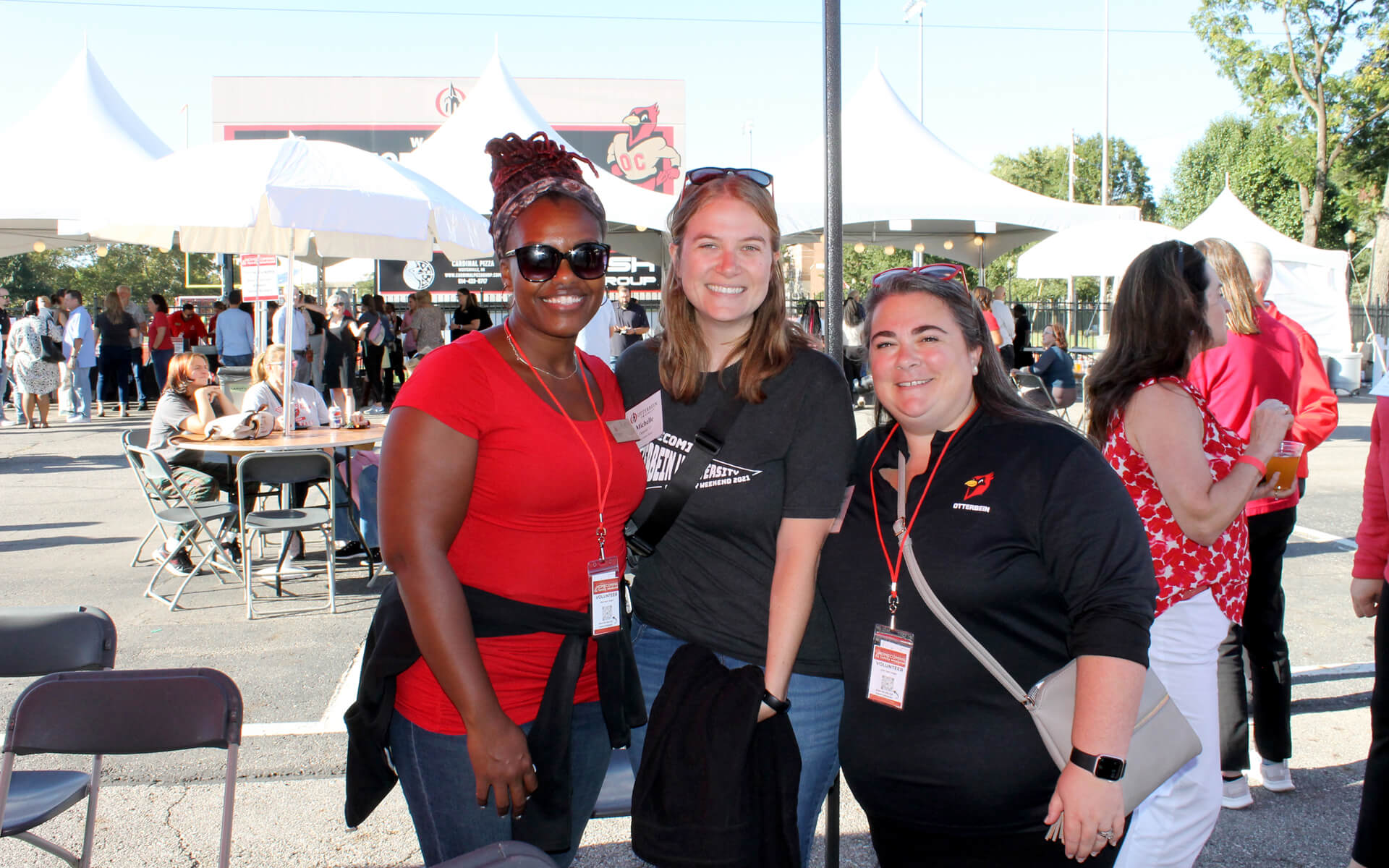
What a spectacular Homecoming Otterbein celebrated this year! If you missed it, you missed a good one. Music, tents, activities for families, and conversation sprawled across Towers lawn. There was a new parade route with floats and entrants not only from our student organizations but from enthusiastic alumni groups, too. I loved seeing the Classes of 1974 and 1969 in the parade. I don’t think their reunion fun ever slowed down!​

Somehow, the Offices of Engagement and Development partnered to help organize and host even more events this year — a full house for the Alumni Awards, a gala to mark 15 years of the Austin E. Knowlton Center for Equine Science, an ’80s Theatre Alumni Reunion, an Alumni Choir concert, and the Black Student Union’s All-Star Weekend. While much was new for the 2024 Homecoming, the constant was the spirit of Cardinals back home to celebrate the place that gave you lifelong friends, a strong start in life, and a host of memories.
I also had the chance to share my annual State of the University Address over the Homecoming weekend, which I did again online for alumni who couldn’t join us in person. What I shared with them and what I want you to know is this: while things are looking dire for a lot of higher education right now with college closures averaging almost one per week along with other schools experiencing painful cuts in faculty, staff, and academic programs and enrollment shortfalls — Otterbein is standing strong.

We were in the enviable position to have welcomed a large and diverse class of entering first year students to campus. (You can see the new class statistics on pg. 3.) While other schools gauge their exclusivity on their ability to deny students admission, Otterbein honors its role as a College of Opportunity. Not only is it the right thing to do — we’re seeing strong indicators in student success, retention, and persistence. Otterbein knows that creating diverse learning environments positively impacts the outcomes of all students.
We’re doubling down on the power of integrative and experiential education. We’ve already realized growth thanks to the addition of an Esports team, a women’s wrestling team (the fastest growing sport in the state), new recruiters for Equine and Nursing programs as well as for the Marching Band, and we’re planning the first all-campus READY Day as part of our four-year professional and career-readiness preparation program for all students. I always tell families if you want to watch life unfold — go to another school. If you want to DO — come to Otterbein.

Finally, we’re honoring our commitment to advance the common good. Our work in co-founding the Coalition for the Common Good is allowing us to serve new models of workforce development directly to employers in our region. We’re also expanding opportunities for Otterbein students with access to Graduate Early Admission Pathways, giving students a chance to shorten time and expense to a graduate degree. It’s clear that there is power in the partnerships we’re building.

My whole update, along with thoughtful questions from alumni, is available online on the Alumni/Family Engagement website at www.otterbein.edu/alumni, as well as the online version of Towers at www.otterbein.edu/towers. I invite you to listen if you’re excited about the direction Otterbein is headed.

And if we missed you at Homecoming, I hope we’ll see you back on campus soon — for a game, a theatre or music production, a lecture, the Holiday Tree Lighting, or any other great Otterbein tradition. We’re counting on your involvement and support as a proud member of our Cardinal Nation!

Sincerely,

John L. Comerford, Ph.D.

Signature Series Scholars Engage Audiences

Otterbein’s Signature Series packed the seats this spring, engaging audiences in discussions on some of the most relevant topics of the day.

The George W. and Mildred K. White Science Lecture Series

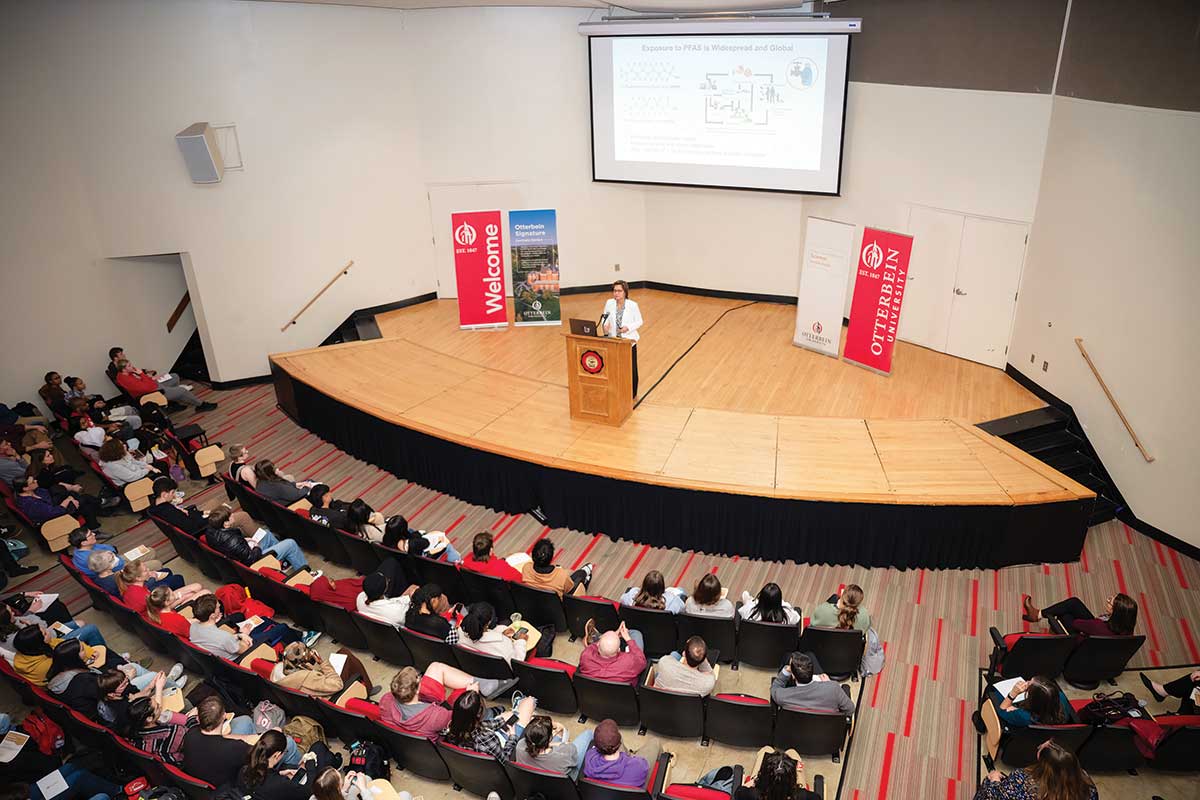
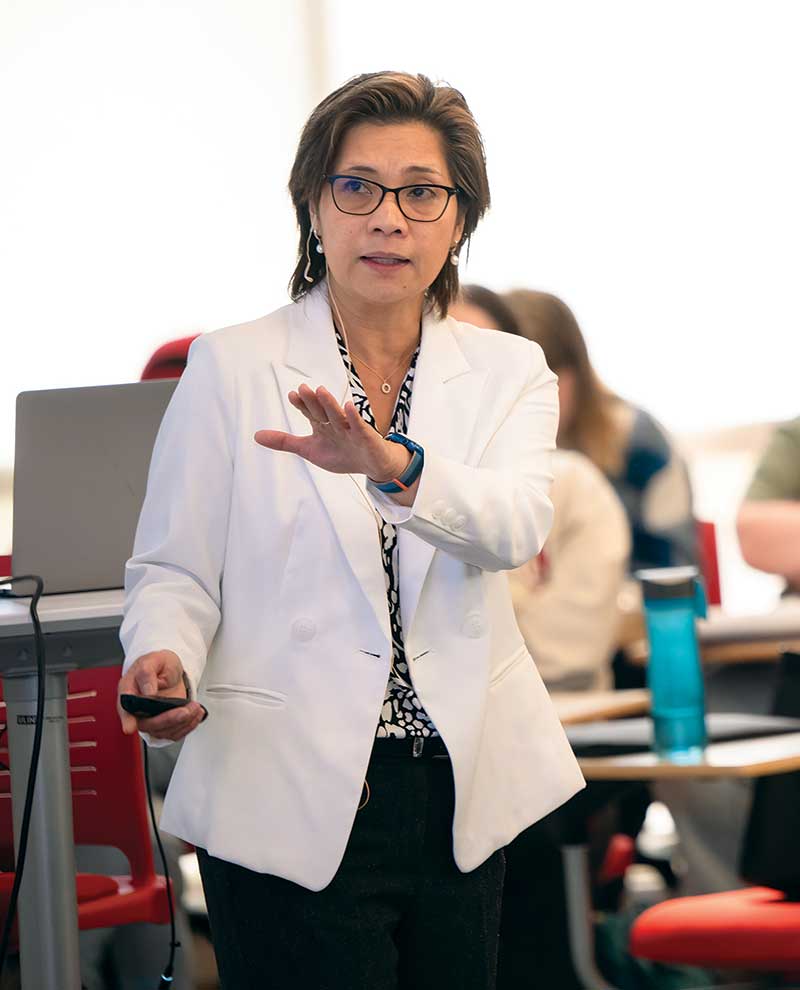
What happens when the pharmaceutical drugs we take end up in wastewater? How do “forever chemicals” from consumer products end up in surface water? And what will we do about the emergence of “superbugs” that are resistant to treatment? Renowned environmental chemist Diana Aga answered those questions and more when she visited campus for the George W. and Mildred K. White Science Lecture Series.

Aga is the Henry Woodburn Professor of Chemistry and a State University of New York (SUNY) Distinguished Professor at the University at Buffalo (UB). She also serves as the director of RENEW (Research and Education in eNergy, Environment and Water) Institute at UB.

On Feb. 21, Aga packed the seats at two special talks for STEM students before presenting her public lecture, “Free Drugs,” “Superbugs,” and “Forever Chemicals” in the Environment: Occurrence and Implications, that evening.

Watch the lecture at www.otterbein.edu/sls.

Diana Aga

Donja Thomas

Lynn Pasquerella

The Kathy A. Krendl Distinguished Lecture Series

On March 19, the Kathy A. Krendl Distinguished Lecture Series welcomed Lynn Pasquerella, president of the American Association of Colleges and Universities (AAC&U), for a lecture about Educating for Democracy. Pasquerella is one of the country’s most prominent public voices and forceful advocates for the value of liberal education, the importance of access to resources and pathways, and the need for career training for jobs and citizen education for justice.

Her most recent book, What We Value: Public Health, Social Justice, and Educating for Democracy, examines urgent issues — moral distress, access to resources, and the conflict over whose voices and lives are privileged — and argues that liberal education is the best preparation for work, citizenship, and life. Pasquerella is a member of the board of directors for the Coalition for the Common Good and a past-president of Mount Holyoke College.

Vernon L. Pack Lectures

April is Minority Health Month, and to address the important issue of equity in the American healthcare system, Otterbein hosted Brian D. Smedley for the Vernon L. Pack ’50 Distinguished Lecture on April 4.

In addition to his public lecture, Place, Race, and Health: Addressing the Root Causes of Health Inequities, Smedley met with Otterbein students in public health, allied health, nursing, and other health-related majors to discuss what they can do as healthcare professionals to ensure equitable care for their patients.

Smedley is an equity scholar and senior fellow at the Urban Institute, a Washington, D.C.-based think tank, where he conducts research and policy analysis to address structural and institutional forms of racism that impact the health and well-being of people of color.

Learn more at otterbein.edu/pack

Brian D. Smedley

Building a Foundation for Healing

“Pick up the baton and LEAD this community with courage”
— Shawn Harper

Racial Healing Circles Serve as the Foundational Work to Build Upon Diversity, Equity, Inclusion, and Belonging.

When Otterbein was selected by the American Association for Independent Colleges and Universities in 2020 as the first university in Ohio to host a Truth, Racial Healing and Transformation (TRHT) Campus Center, it challenged its community to begin the difficult work ahead.
Shawn Harper

Since then, the TRHT program has trained facilitators, hosted Racial Healing Circles and other programs, and completed an oral history project. Four student fellows, working with faculty mentors, recorded interviews with alumni of color about their Otterbein experiences. The Otterbein University Alumni of Color Oral History Project embodies the “Truth” component of TRHT in seeking to look honestly at the ways educational institutions have embodied racial hierarchy. The goal of the project was to assemble the fullest, most honest account of Otterbein’s history, because understanding its history is necessary in order to dismantle racial hierarchy and transform the culture of its campus and community.

Last summer, Otterbein’s co-founding partner in the Coalition for the Common Good, Antioch University, was named a TRHT Campus Center. With that addition, Otterbein’s TRHT team saw an opportunity to serve even more people through collaboration. On Jan. 16, 2024, the joint team held a day of coordinated conversations online, reaching 100 participants in Ohio and at Antioch’s campuses in Los Angeles, Santa Barbara, Seattle, and Keene, New Hampshire.

“We held an all-day TRHT event in honor of the seventh National Day of Racial Healing that incorporated a number of faculty, staff and students participating in Racial Healing Circles from both Otterbein and Antioch,” said Otterbein’s Chief Diversity Officer Frank Dobson Jr., Ph.D. “That was a great 2024 starting point for more TRHT-related programming in collaboration with Antioch.”

Racial Healing Circles are discussions that allow participants to work toward equity and inclusion. The Coalition held Racial Healing Circles from morning to evening, scheduled to accommodate everyone who wished to participate regardless of their location.

“This experience allows community members to listen for understanding. In addition, healing circles­ — a form of restorative practice­ — serve as a safe space where individuals can freely express their emotions, fostering connection, empathy, and understanding among participants,” said Dobson.

“Racial Healing Circles serve as the foundational work to build upon Diversity, Equity, Inclusion, and Belonging,” added Lemuel Watson, Ed.D., Antioch’s senior associate vice chancellor for academic affairs and vice provost for community engagement.

Selethia
Selethia Benn, Ed.S.

Selethia Benn, Ed.S., director of Otterbein’s Office of Social Justice and Activism, has worked extensively to plan programming around issues of TRHT,  including Otterbein’s annual Martin Luther King  Jr. Convocation.

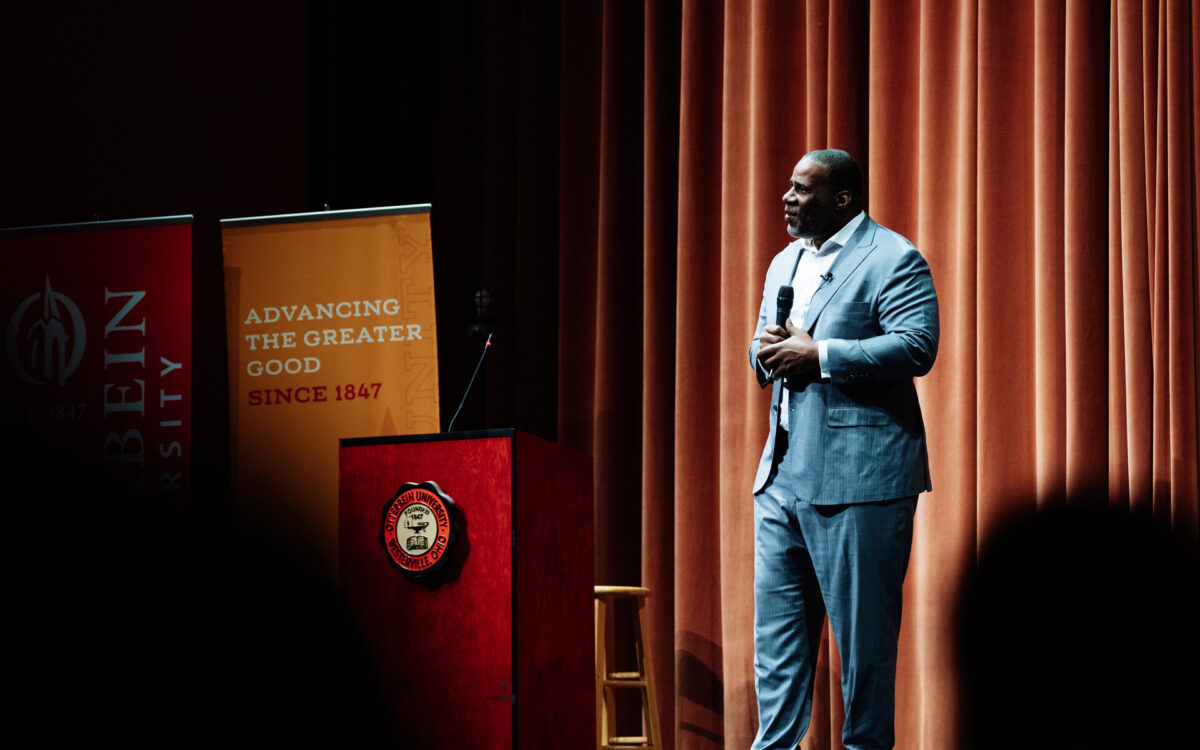
This year’s convocation featured Shawn Harper, a former NFL offensive lineman and motivational speaker. Harper invites individuals to find their own purpose as they fulfill a calling to serve others.

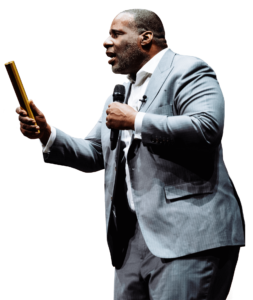
“My encouragement for you today is to pick up the baton … and lead this community with courage,” Harper told the campus community, holding up a baton to emphasize the importance of his sentiment. “I will not go with the flow. I will fight injustices and be a superhero. The darker the night, the brighter the light.”

Harper’s passion for helping others is a reflection of King’s legacy.

The 2024 Pack Scholar-in-Residence, Brian Smedley, also has connections to upcoming TRHT programming. April is National Minority Health Month, which coincides with the visit of Smedley, an equity scholar and senior fellow at the Urban Institute in Washington, D.C. He has studied unconscious bias and stereotyping among healthcare providers in the U.S., which lead to lower quality of care for patients of color.

Otterbein is continuing to explore these and  other issues of social injustice independently and collaboratively with Antioch University through Otterbein’s TRHT programs and initiatives, continuing the University’s rich history of confronting issues of equity dating back to its earliest days.

Watson said he is encouraged by Otterbein and Antioch University’s shared commitment to education for a more just society — including building and preserving democracy. “College campuses serve as the ideal setting for students to develop skills and connect with others from diverse backgrounds. Through active listening and understanding, students can create meaningful relationships and foster a sense of community that promotes healing and growth.”

Teaching Awards

TEACHING AWARDS

Each year, Otterbein honors outstanding teachers for their impact on their students, colleagues, and the University. These dynamic and dedicated full- and part-time faculty contribute so much to the Otterbein community both in and outside the classroom. They help students find their calling and grow as young professionals; celebrate their colleagues’ achievements; and show their support for the staff who are often working behind-the-scenes.

Teacher of the Year – David Sheridan

David Sheridan, Biology, Teacher Of The Year

“One thing I want my students to take from my classes is to be inquisitive and always keep learning. I always learn something new every time I teach a course.”

David Sheridan

Associate Professor of Biology

“Sheridan made his animal systems physiology class especially interesting and engaging by using a variety of teaching methods to discuss a normal and diseased state. He described asthma, gave a demonstration, and then had students simulate the experience by providing small straws to breathe through. It was obvious that he held the interest of all students in the classroom.”

– from nomination

How would you describe your teaching style?
Fast paced, energetic, mostly flipped-classroom model. Students do the readings and take a pre-quiz prior to discussing the material in class. It allows us to tackle the difficult subject matter in class with mini-lectures and then follow up applications like a case study.

What inspires you to teach?
Most of my students are going into nursing, medicine, veterinary medicine, physical therapy, dentistry, etc. I remember taking anatomy and physiology and was fascinated by it. I hope I am helping them start their journey into their future careers that are heavily rooted in anatomy and physiology with that same fascination and base knowledge.

What do you hope your students take from your classes?
An appreciation for the body and its processes, be it human or animal, and the fact that we are all similar, but the uniqueness of each person or species is amazing.

Why are you passionate about the subjects you teach?
Anatomy and physiology are at the crossroads of so many disciplines — biology, chemistry, physics — and we can see these structures and functions and processes in our own bodies.

What is your favorite class to teach?
All of them, but mostly whichever one I am currently teaching. I always learn something new every time I teach a course.

What do you think students get from Otterbein faculty that they can’t get anywhere else?
Access.

What is one lesson you want students to carry with them not related to the subject matter?
Be inquisitive and always keep learning.

New Teacher of the Year – Bennett Grooms

“When I teach a course, I view it as an opportunity to connect with future peers and colleagues. My teaching style is very discussion- and application-based. I focus on providing students opportunities to take what they have learned and use that knowledge in real-world scenarios tied to their career interests. I want my class to be a space of mutual learning, where I ask questions and have conversations to guide students into new areas of thought.”

Bennett Grooms

Assistant Professor of Biology

“Dr. Grooms is most likely one of the best things to have happened to the Zoo and Conservation program just because he is so passionate about what he is teaching. His attitude and devotion to animal work is contagious and makes me want to be a better student.”

– from student course evaluation

David Sheridan, Biology, Teacher Of The Year

How would you describe your teaching style?
When I teach a course, I view it as an opportunity to connect with future peers and colleagues who will be joining the field shortly. Under that mindset, my teaching style is very discussion and application based, and I work to go beyond just “learning the material.” Instead, I focus on providing students opportunities to take what they have learned and use that knowledge in real-world scenarios tied to their career interests. Additionally, I prioritize discussion and tying material to previous experiences. I never want a class to be just me talking “to” students, rather, I want my class to be a space of mutual learning, where I ask questions and have conversations to guide students into new areas of thought.

What inspires you to teach?
Mostly it’s the passion and enthusiasm I see from the students. I’m very fortunate to work in a field where there are so many opportunities for students to pursue individual interests. Having a student share about their favorite animal to work with or about their internship experiences is so enjoyable to hear. Similarly, hearing the aspirations these students have for helping wildlife and conservation, and witnessing their immense talent while working in class makes teaching a truly enjoyable experience that I look forward to doing every day.

What do you hope your studentS take from your classes?
One of my primary goals for students who take my classes is help them understand that success is so much more than just a grade or title. I believe success is progressive movement towards a worthy goal, and I try to emphasize to my students how worthy of an endeavor it is for them to think about what they want to do with their lives and trying their best to achieve those goals. If students leave my classes more confident in their knowledge of the world, as well as feeling more confident in themselves, then I consider that a very successful class.

Why are you passionate about the subjects you teach?
I truly love working in conservation, and think it is critical to the health of our planet to connect people to wildlife and nature. I come from a family that is wildlife-oriented and spent much of my time growing up visiting zoos, state parks, and going camping. There is so much diversity in the animals and plants we share this planet with, and I find it fascinating to work with students in understanding how those animals behave, and what we can do to best conserve them. It’s a very rewarding experience to come full circle with my passion for wildlife conservation, and now be on the side of engaging students in this material and work.

What is your favorite class to teach?
My Animal Behavior (BIO3050) course; it’s so much fun between the in-class discusses, lab experiences, and film project that I have students do. I’m constantly thinking of topics and field experiences for the course.

What do you think students get from Otterbein faculty that they can’t get anywhere else?
Compared to other universities, I would say Otterbein students receive an awesome benefit of becoming part of a professional community almost immediately in their program. Considering my department alone, we have students as early as their freshman year working with faculty to take care of aquariums and animals, conduct research, collect field data, and present their own research at conferences. Faculty also see students regularly through organizations, events, and research projects, which makes it feel like we are building connections vs. just pushing students out into the workforce.

What is one lesson you want students to carry with them not related to the subject matter?
That their self-worth goes far beyond their grades or academic performance. I hope students will remember that everyone is worthy of feeling confident in themselves without judgement or comparisons, and that everyone has something worthwhile to share and learn.

Excellence in Part-Time Teaching – Amy Karns

David Sheridan, Biology, Teacher Of The Year

“Teaching is more than the simple transfer of knowledge from one individual or group to the next. As a classroom leader, it’s my job to create a learning environment in which students belong — feeling valued and respected. A sense of classroom community is crucial to form a safe learning environment where students may consider other perspectives with growth, empathy, and kindness.”

Amy Karns

Psychology Instructor

“I would advise any student, psychology or not, to take this course because it really solidified my understanding of the topic of development, and it was a very fun and interactive course!”

– from student course evaluation

How would you describe your teaching style?
My teaching style is student-focused and highly interactive. I believe learning happens through various methods, including lecture, discussion, problem-solving, and real-life situational labs. I strive to engage the class while giving many opportunities to learn from one another.

What inspires you to teach?
I am motivated by the shared experiences in the classroom integrating course content to real-life application. I enjoy helping students problem-solve, think critically, and challenge their own perspectives while encouraging them to try something new or step out of their comfort zone. I hope my love and excitement for the field of psychology encourages personal growth and lifelong learning as it relates to their personal career goals.

What do you hope your students take from your classes?
I hope that students leave my class feeling accomplished in their knowledge of how human behavior and mental processes affect their lives each day. I hope they look back and remember how fun the process of learning can be even if it requires them to think past the traditional way of college teaching.

Why are you passionate about the subjects you teach?
There is a common myth that psychology only encompasses the diagnosis and treatment of mental health disorders. I love teaching how human behavior and mental processes are relevant in day-to-day interactions through relationships, motivation, emotion, attention, and our abilities (intelligence).

What is your favorite class to teach?
This is tough as I enjoy different classes for various reasons. My favorite is probably introduction to psychology for many of the reasons listed above. I get excited to debunk many of the myths associated with the field of psychology — especially with students who take psychology to check off a requirement.

What do you think students get from Otterbein faculty that they can’t get anywhere else?
We care about the whole student. Otterbein is a family. Faculty and employees care about each other and the well-being of students.

What is one lesson you want students to carry with them not related to the subject matter?
You do not have to be perfect to be successful.

Exemplary Teaching Award, United Methodist Church General Board of Higher Education – Cynthia Laurie-Rose

“I’m inspired by seeing the satisfaction on students’ faces when they have worked through a complex set of ideas, and they suddenly show understanding. I can see the students gain confidence in that moment and I know that they will begin to trust their ability to understand concepts or complete tasks that they may have previously felt were too difficult.”

Cynthia Laurie-Rose

Professor of Psychology

“It is staggering how dedicated she is to this high-impact practice of experiential learning. She does this work because research is essential for our students who wish to pursue graduate study, and Cindy wants to support them in that endeavor.”

– from nomination

David Sheridan, Biology, Teacher Of The Year

How would you describe your teaching style?
My teaching style is a hybrid of the traditional classroom lecture with a healthy mix of activities that illustrate the concepts I am teaching. When appropriate, I include independent research activities within the class. In an Honors course I teach, I ask students to conduct independent research using archival data; in my last seminar course on working dogs, the class conducted a study with college-aged participants and therapy dogs from Pet Partners.

What inspires you to teach?
I’m inspired by seeing the satisfaction on students’ faces when they have worked through a complex set of ideas, and they suddenly show understanding. I can see the students gain confidence in that moment and I know that they will begin to trust their ability to understand concepts or complete tasks that they may have previously felt were too difficult.

What do you hope your students take from your classes?
The excitement and fun of learning.

Why are you passionate about the subjects you teach?
I teach courses in experimental psychology. I enjoy showing students that research methods and core experimental courses such as physiological psychology and perception have relevance outside the classroom. As an example, I teach a unit on dyslexia in my physiological course, exploring its basic neurological underpinnings. I then introduce students to the surprising controversy of using dyslexia as a diagnosis in public schools. Owing to the tireless effort of grassroot parent organizations lobbying states to recognize the science, we end this unit discussing the new “dyslexia laws” requiring schools to use dyslexia as a specific diagnosis.

What is your favorite class to teach?
I love to teach perception. Perception is a topic students know very little about coming into the class. It is interesting that humans do not routinely reflect on how or why we see or hear the world the way we do. I enjoy introducing topics that are brand new to them and help them make connections between what they see and hear and the science behind those experiences. Students enjoy the many fun demonstrations in this class, including optical illusions.

What do you think students get from Otterbein faculty that they can’t get anywhere else?
Owing to our small classes, a community often emerges from our close work together. That sense of community persists long after the semester is over. We will see many of these students in other classes we teach, and some will work alongside us in our labs. We build long-lasting relationships with our students well beyond graduation. We continue to serve as mentors to our students and continue to help them in their professional endeavors.

What is one lesson you want students to carry with them not related to the subject matter?
In my classes, I emphasize the relationship between science and authority — whether that authority is religious, political, or societal. I want students to understand that science can be trusted and that they must become informed consumers of science and engaged citizens.

Investing in Their Future

Scholars and Scholarships are a bright pairing for these seniors from the Class of 2024.

These scholars have bright futures. Each admits to feeling a little overwhelmed right now, but mainly, they’re just excited about the future. They’ll tell you their hopes to better their communities and to make a difference in their professions. Each will also explain how the support of donors helped them discover their passions at Otterbein and how that has made all the difference.

Congratulations to the Class of 2024!

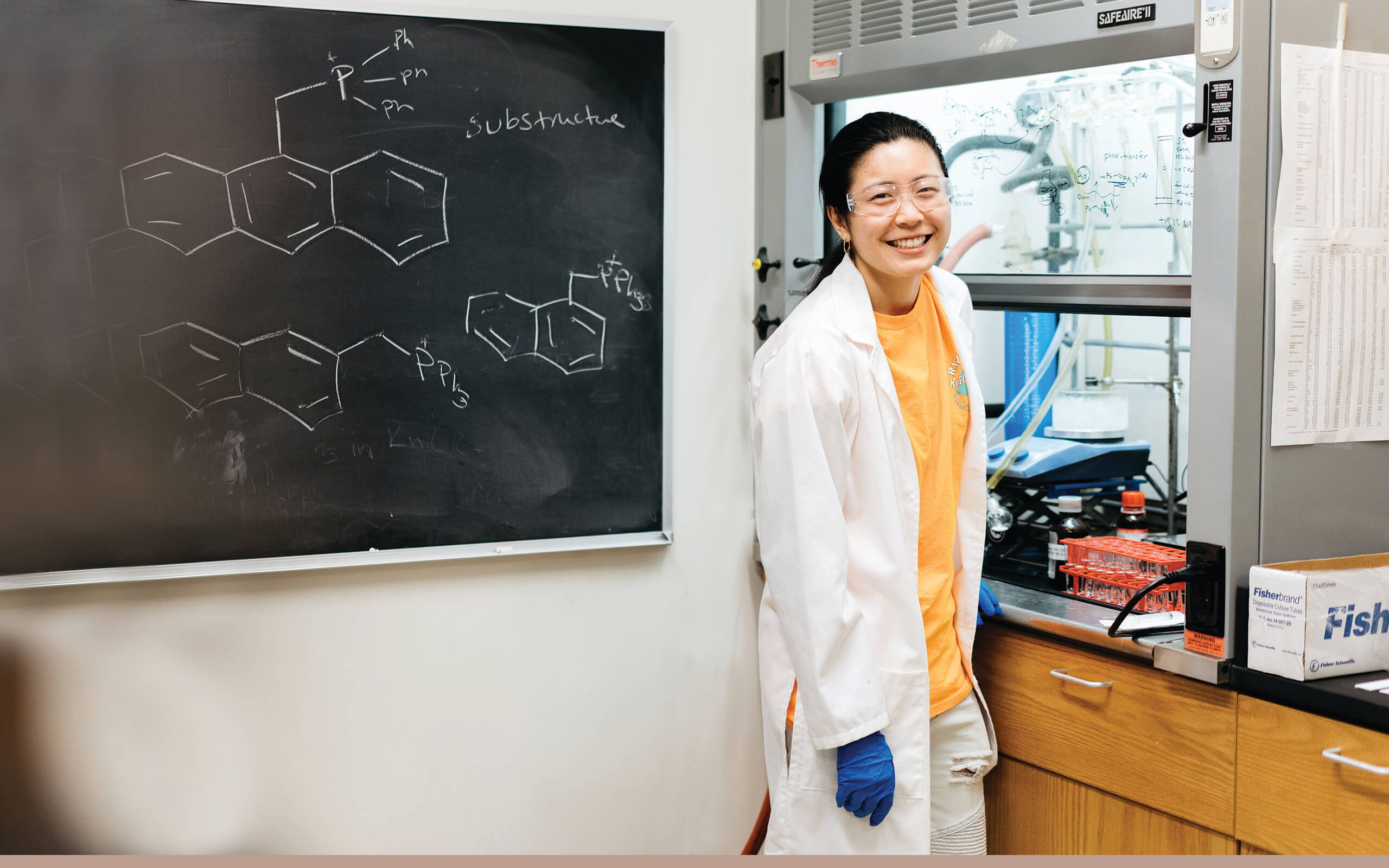
Olive Schnittker, whose pronouns are they/them, was set on medical school until they fell in love with organic chemistry. Their love of research followed during the summer between their sophomore and junior year. “If I wouldn’t have had the chance to do research, I wouldn’t have been able to discover what I want to do with the rest of my life.” Schnittker knows research is the focus of their future. “I’m extremely grateful for our donors, their support, and the awards that made it possible for me to do research.” They are the first member in their immediate family to earn a bachelor’s degree and an advanced degree in the sciences.

OLIVE SCHNITTKER ’24, Chemistry and Biochemistry/ Molecular Biology

Schnittker has already been accepted to four graduate school programs. They are deciding between a master’s degree or doctorate degree pathway with long-term plans to join research and development industry work in medicinal or pharmaceutical chemistry.

Olive Schnittker, whose pronouns are they/them, was set on medical school until they fell in love with organic chemistry. Their love of research followed during the summer between their sophomore and junior year. “If I wouldn’t have had the chance to do research, I wouldn’t have been able to discover what I want to do with the rest of my life.” Schnittker knows research is the focus of their future. “I’m extremely grateful for our donors, their support, and the awards that made it possible for me to do research.” They are the first member in their immediate family to earn a bachelor’s degree and an advanced degree in the sciences.

OLIVE SCHNITTKER ’24, Chemistry and Biochemistry/ Molecular Biology

Schnittker has already been accepted to four graduate school programs. They are deciding between a master’s degree or doctorate degree pathway with long-term plans to join research and development industry work in medicinal or pharmaceutical chemistry.

Did you Know?

Individual endowed
scholarships = $2.6 million

Otterbein works to match students with scholarships that support individual educational goals.

“My work with the New Student Transition Team ignited a spark in me to help introduce others to the potential they may not see in themselves.” Angel Proehl said she’ll miss the relationships she established here. “They saw something in me. It meant a lot to know the staff had faith in me.” An advocate herself, Proehl also works to make sure more students know about Otterbein’s Opportunity Scholarship.

ANGEL PROEHL ’24, Criminology and Justice Studies and Psychology

Proehl will begin work on a master’s degree in Social Work at Slippery Rock University in Pennsylvania. She plans to spend her career advocating for children in foster care and adoption services.

Lily Cowie says her Otterbein professors were spectacular. “They make me want to keep on learning.” She plans to work in a research position while she decides which graduate psychology program to pursue. Cowie also said were it not for all the scholarship support, she likely wouldn’t be here. “Thanks to our donors, I had an incredible experience.”

LILY COWIE ’24, Psychology and Women’s, Gender and Sexuality Studies

In addition to her studies, Cowie is a trained and certified OhioHealth Sexual Assault Response Network of Central Ohio (SARNCO) advocate and Coordinated Community Response Team member. She proudly served as the president of the Psi-Chi Honor Society and as co-president of Tri-Iota Honor Society.

“The experiences I’ve had really make you think how science rotates the world in a new direction. It’s enlightening to be around people who share the same goals.” Last year, Mason Nolan was inducted into the national honor society of the American Society of Biochemistry and Molecular Biology. This year, he’s in medical school. “I want to thank donors for giving us experiences, professional opportunities, and the chance to see things we ordinarily wouldn’t be able to see.”

MASON NOLAN ’24, Biochemistry and Molecular Biology

As part of the Early Assurance Program, Nolan will be finishing his first year of medical school at Ohio University’s College of Osteopathic Medicine around the same time he graduates from Otterbein. His 3+4 pathway is giving him an amazing experience and an early start on medical school.

“There is nothing better than the smile of an athlete after their first game back following an injury,” Conner Ruff said. “It’s very gratifying.” Ruff’s proud of the work he’s done on his clinical rotations in area high schools and with Otterbein’s trainers. “I want to thank the donors for giving me the opportunity to do what I love. Without their support, I wouldn’t be here.”

CONNER RUFF ’24, Athletic Training

Ruff will continue his studies at Otterbein to complete his master’s degree in Athletic Training. He hopes to return to his hometown to support his school’s athletic trainer who he regards as a vital role model.

The gift that continues ..

“Fourteen years ago, my family and I came to the United States as refugees from Nepal where we were living in refugee camps. All we had were some clothes and photographs. It feels unreal that I went from no hopes of finishing college to now having graduated with two majors. Today I am in my dream job. Donors don’t know how impactful they can be. Not only have they given me a life, they’ve given my family a life.”

BHAWANA KHATIWADA ’23, Computer Science and Communication

Khatiwada graduated a year early. She is an IT programmer analyst at Denison University in her dream job. She says without Otterbein’s support she wouldn’t be where she is today.

Otterbein Homecoming and Family Weekend September 20-21, 2024

HOMECOMING

& Family WeekendSeptember 20-21, 2024

Mark Your Calendar for Homecoming & Family Weekend!

Save the date to come back to the “nest” for every Cardinal’s favorite weekend on campus! This year’s celebration will feature many of your favorite events and more, including:

  • Class of 1974 Golden 50th Reunion.
  • Class of 1999 25th Reunion.
  • Alumni Awards and President’s State of the University Address.
  • Homecoming Parade, OtterFest, Cardy Zone, and Cardinals Football.
Homecoming Image

Make sure you have the latest Homecoming details by updating your email at: www.otterbein.edu/alumni/update-my-information.

Home coming Class of 1973 Reunion
Homecoming Gathering

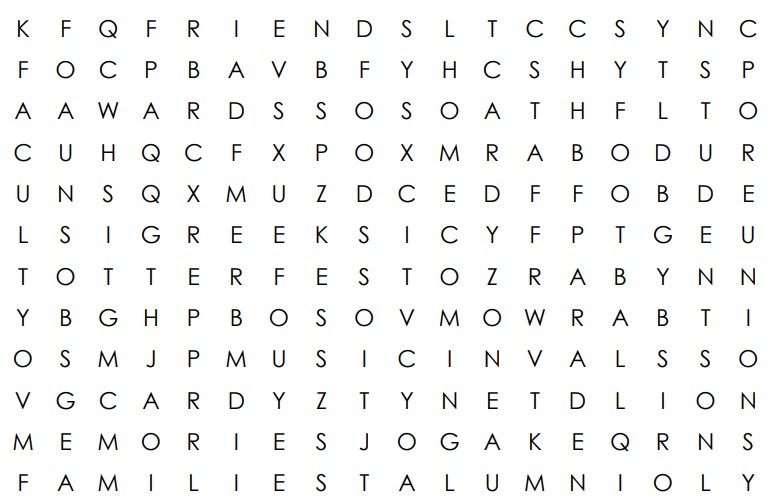
Cardy’s Homecoming & Family Weekend WORD SEARCH

Puzzle Word List:

  • FOOTBALL
  • OTTERFEST
  • CARDYZONE
  • AWARDS
  • STUDENTS
  • FRIENDS
  • CARDY
  • ALUMNI
  • HOMECOMING
  • FACULTY
  • MUSIC
  • FAMILIES
  • PARADE
  • GREEKS
  • REUNIONS
  • STAFF
  • FOOD
  • MEMORIES

The first five readers to send us your completed Word Search will receive Otterbein swag bags! Send to: Otterbein Office of Engagement, ATTN: Alumni Office, 1 S. Grove St., Westerville, OH 43081. *Be sure to include your address!

HOMECOMING & FAMILY WEEKEND
FRIDAY AND SATURDAY
SEPT. 20-21

Learn more at www.otterbein.edu/homecoming