
The More Things C H A N G E the More They Stay the S A M E
Association Building and Roush Hall
The site of Roush Hall was once the Association Building, which was unique for two reasons. It was the first Christian Association building west of the Allegheny Mountains, and students of the YMCA and YWCA led the drive to raise funds for it. It held religion classes, the campus health center, and athletics for both men and women until 1929. In 1975 it was determined it would be too costly to renovate the structure, and it was razed. When Roush Hall was built, the architect was careful to include certain design similarities to the much beloved “Old Sosh.” Some of the original stained glass from the “Old Sosh” are now on display in Roush Hall, restored by the Class of 1968.
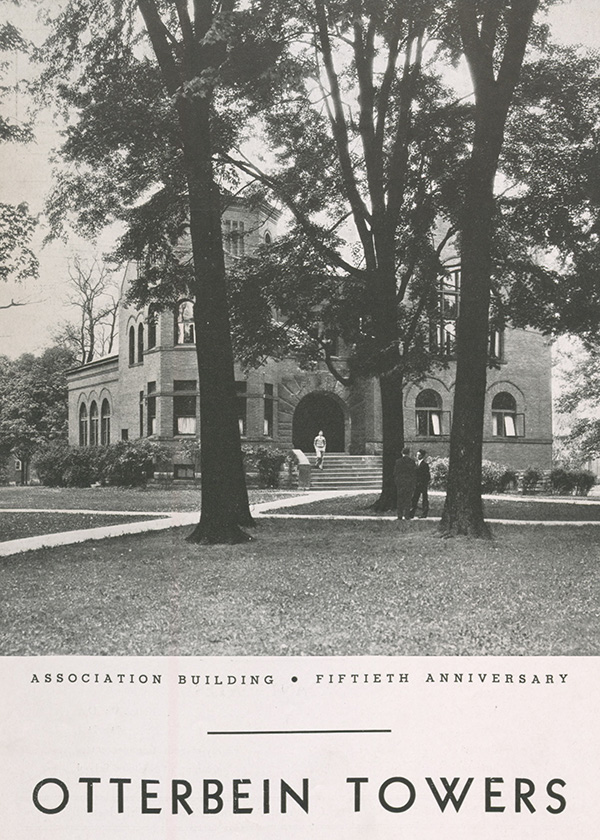
1943
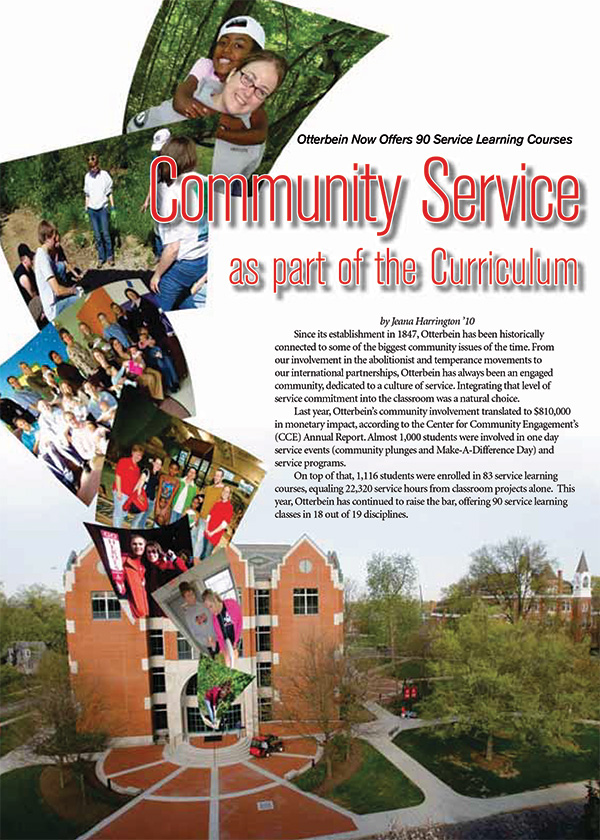
2009
Cochran Hall and The Rock
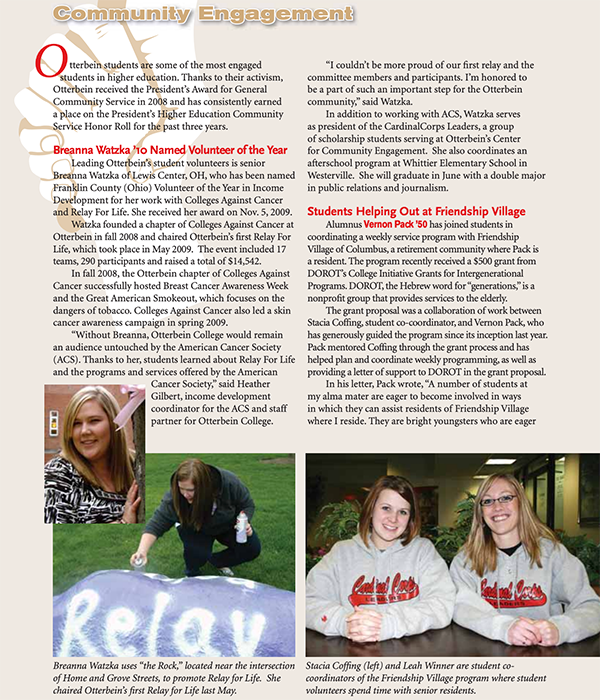
On the former site of Cochran Hall sits The Rock, which new students sign during First Flight and student organizations paint throughout the year. Cochran Hall caught fire on April 6, 1976. That day “volunteer fireman John Bokros, who works in the College service department, (rescued) freshman Karen Sgarro (Gregory ’78) of Fairborn, Ohio, from the second floor of the building. Both Karen and John were treated for smoke inhalation.” (Read about the historical items found in the Cochran Hall cornerstone in the Fall 1977 issue and about the reunion of Sgarro Gregory and Bokros when he retired as Westerville’s chief fire marshal in the Fall 2012 issue.)
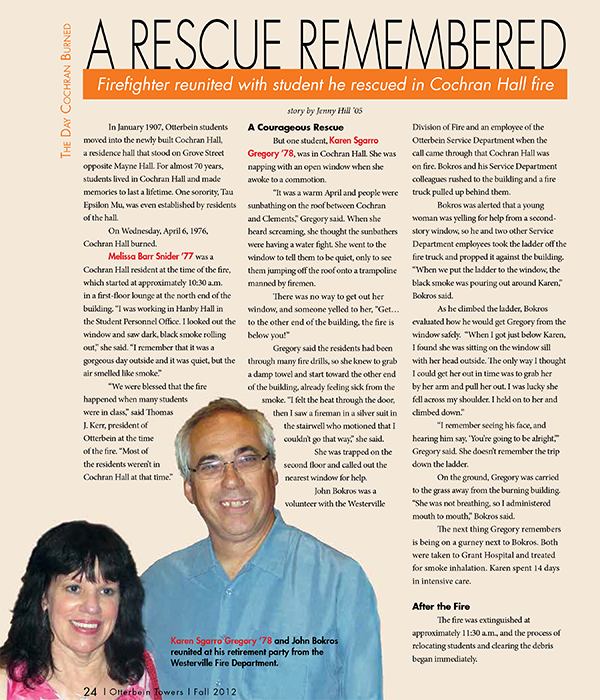
2012
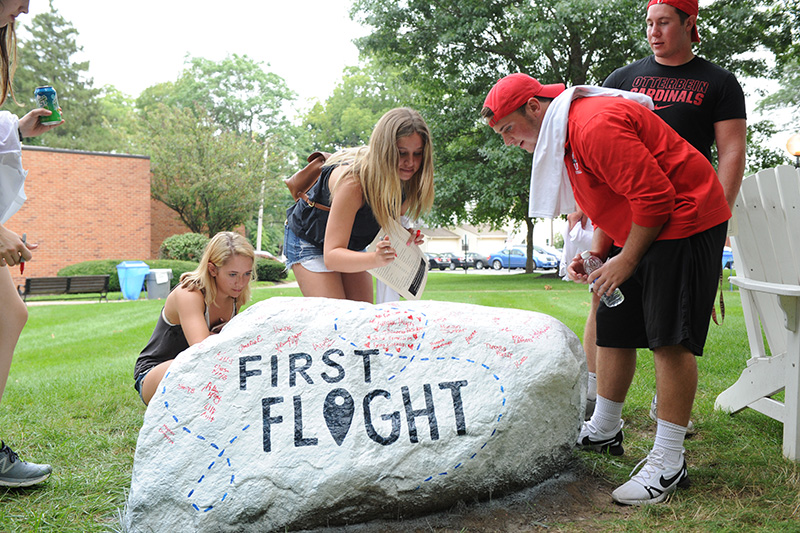
2018
2010
Cochran Hall and The Rock
On the former site of Cochran Hall sits The Rock, which new students sign during First Flight and student organizations paint throughout the year. Cochran Hall caught fire on April 6, 1976. That day “volunteer fireman John Bokros, who works in the College service department, (rescued) freshman Karen Sgarro (Gregory ’78) of Fairborn, Ohio, from the second floor of the building. Both Karen and John were treated for smoke inhalation.” (Read about the historical items found in the Cochran Hall cornerstone in the Fall 1977 issue and about the reunion of Sgarro Gregory and Bokros when he retired as Westerville’s chief fire marshal in the Fall 2012 issue.)
Centennial Library and Courtright Memorial Library
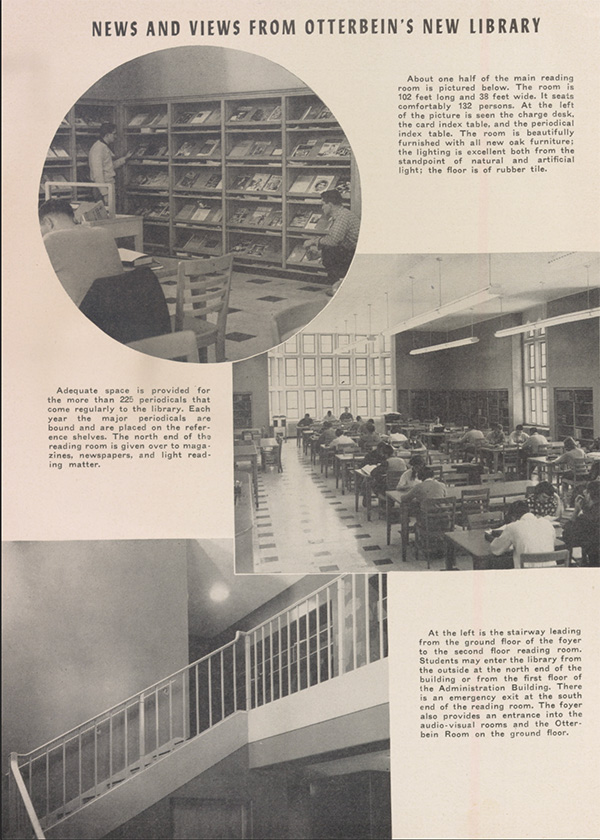
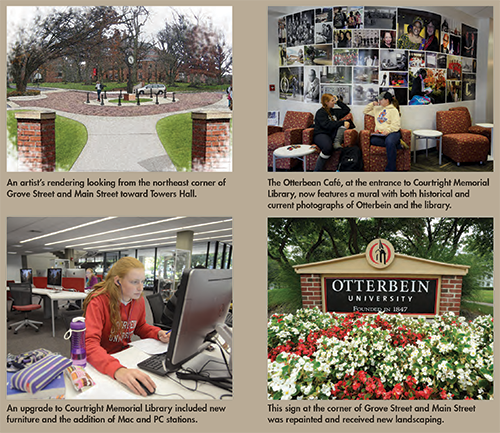
Centennial Library opened on the back of what is now Towers Hall in 1953. In December 1971, the library staff and 20 students moved 94,000 books, 75,000 government documents, 25,000 loose periodicals, and 3,000 rolls of microfilm to the new $2.2 million library. Today, the Courtright Memorial Library is a member of consortia that give users access to hundreds of electronic databases and millions of books, eBooks, and journals. The library’s physical collection now includes games, DVDs, and equipment like laptops, cameras, and bikes.
1953

2013
1972
SOUL and the Black Student Union
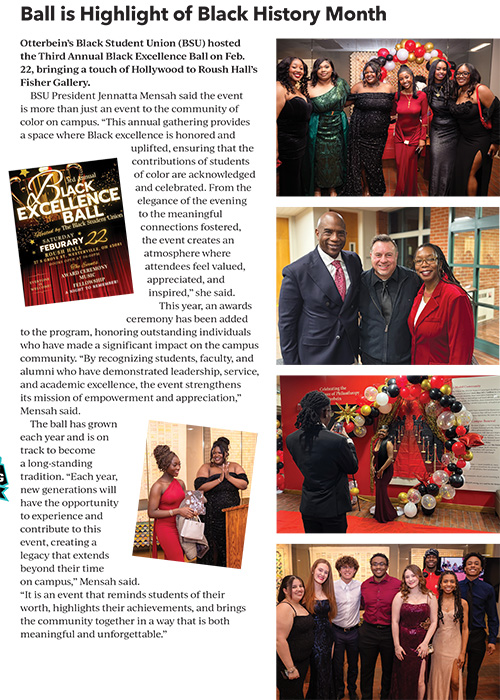
SOUL was formed in 1969 to address racial issues and create a community for Black students. Today, Otterbein’s Black Student Union (BSU) hosts a slate of annual programs, including the Black Excellence Ball.
2025

SOUL and the Black Student Union
SOUL was formed in 1969 to address racial issues and create a community for Black students. Today, Otterbein’s Black Student Union (BSU) hosts a slate of annual programs, including the Black Excellence Ball.
2022
SCOPE and the Center for Student Engagement
The site of Roush Hall was once the Association Building, which was unique for two reasons. It was the first Christian Association building west of the Allegheny Mountains, and students of the YMCA and YWCA led the drive to raise funds for it. It held religion classes, the campus health center, and athletics for both men and women until 1929. In 1975 it was determined it would be too costly to renovate the structure, and it was razed. When Roush Hall was built, the architect was careful to include certain design similarities to the much beloved “Old Sosh.” Some of the original stained glass from the “Old Sosh” are now on display in Roush Hall, restored by the Class of 1968.
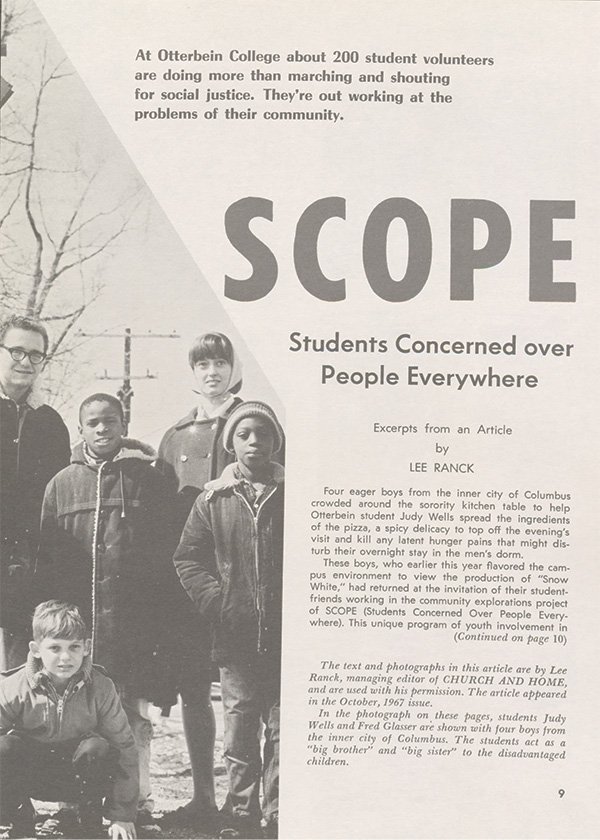
1967

2010
Homecoming
The parade has been a highlight of Homecoming Weekend for decades — and while the cars pulling them have changed a lot, the floats haven’t changed much.
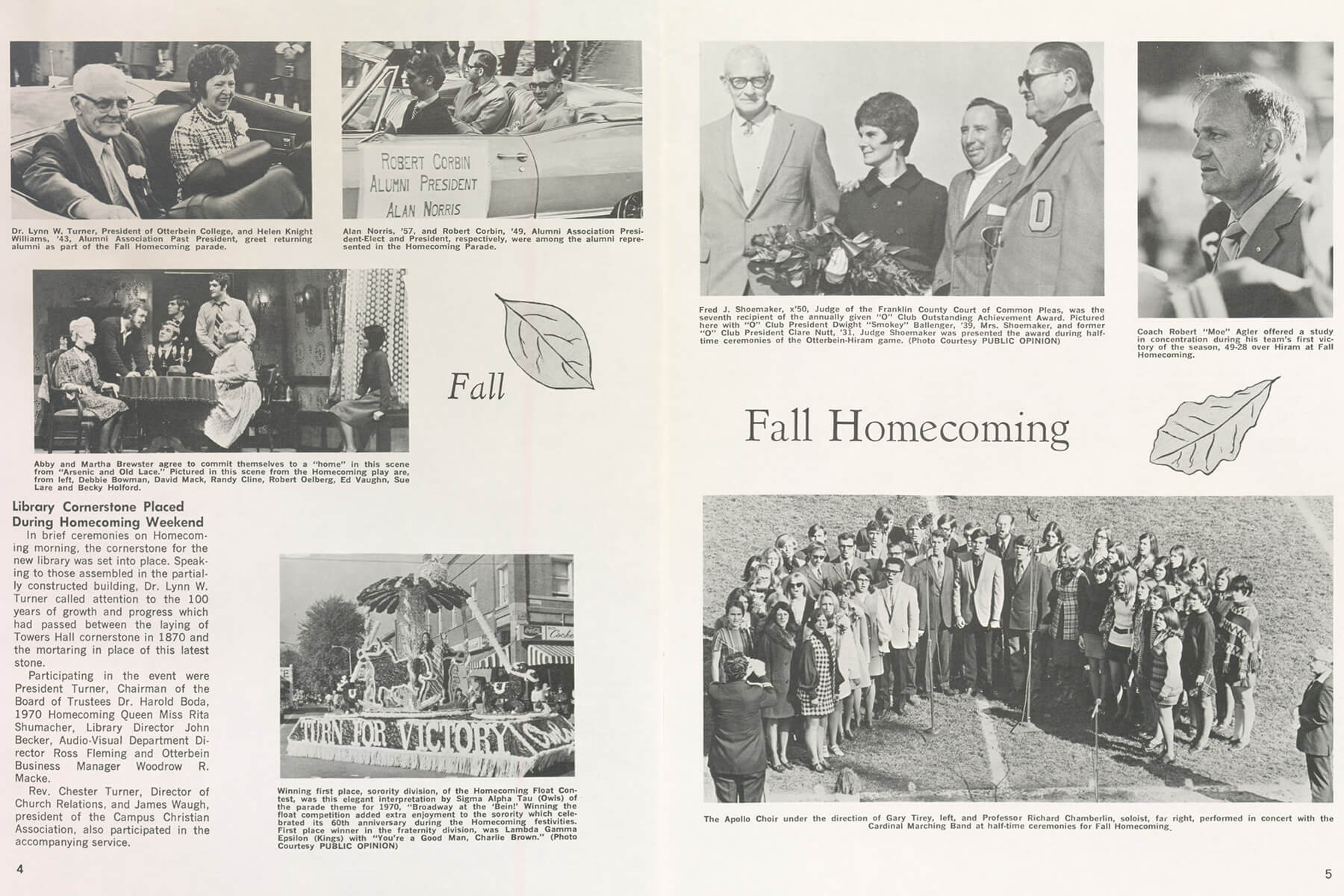
1970
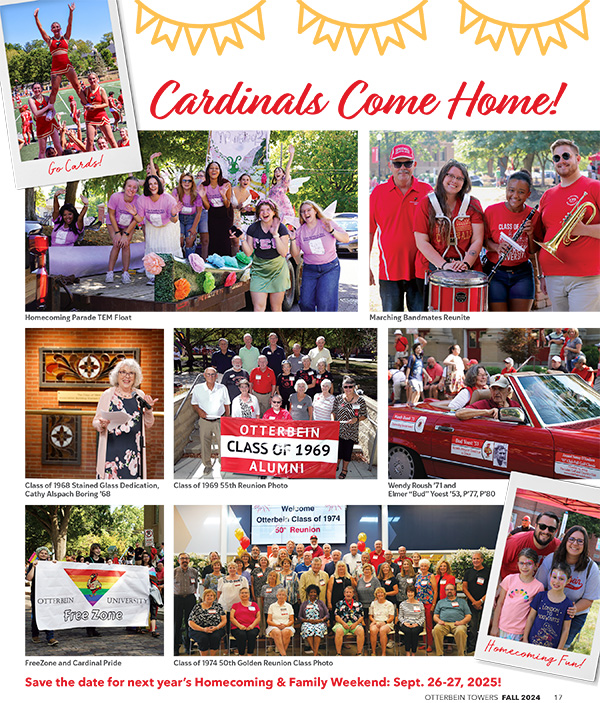
2024
Homecoming
The parade has been a highlight of Homecoming Weekend for decades — and while the cars pulling them have changed a lot, the floats haven’t changed much.
Cardy the Cardinal
Officially named “Cardy” in 2007, Otterbein’s Cardinal mascot has had some upgrades since his debut.

2024
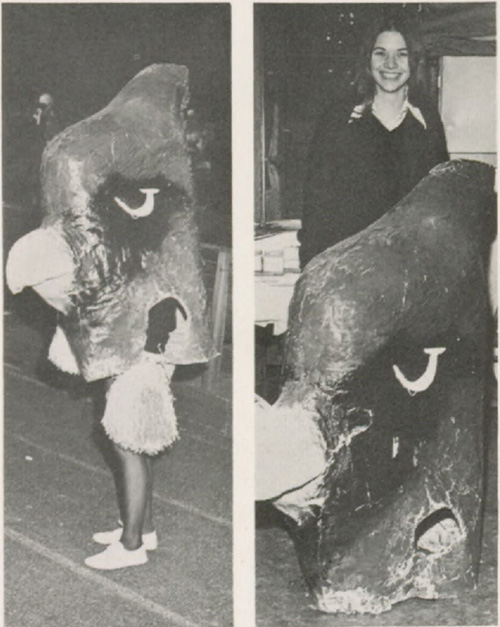
1972
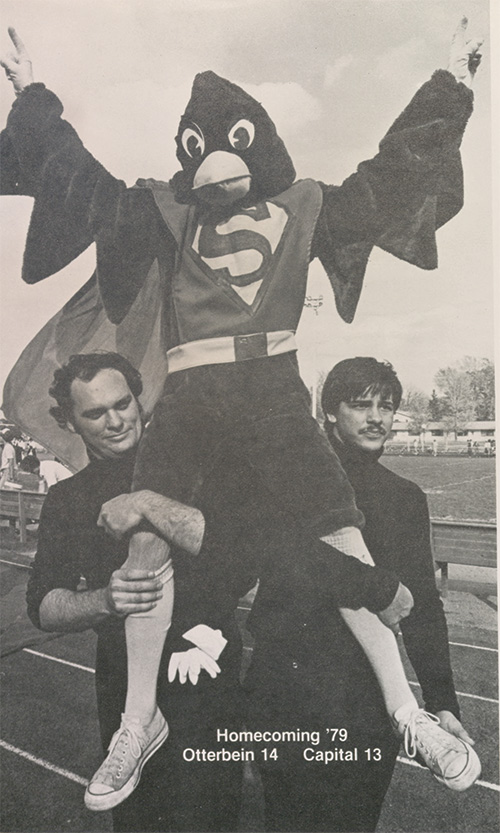
1979
2024
Marching Band
Although 1909 is formally recognized as the starting year for marching bands at Otterbein, there was a brass band as far back as the 1850s. In 1930, the marching band raised money for its first uniforms and has been a fixture at football games ever since. (Read “100 Years of Marching Bands at Otterbein” in the Summer 2009 issue of Towers.)
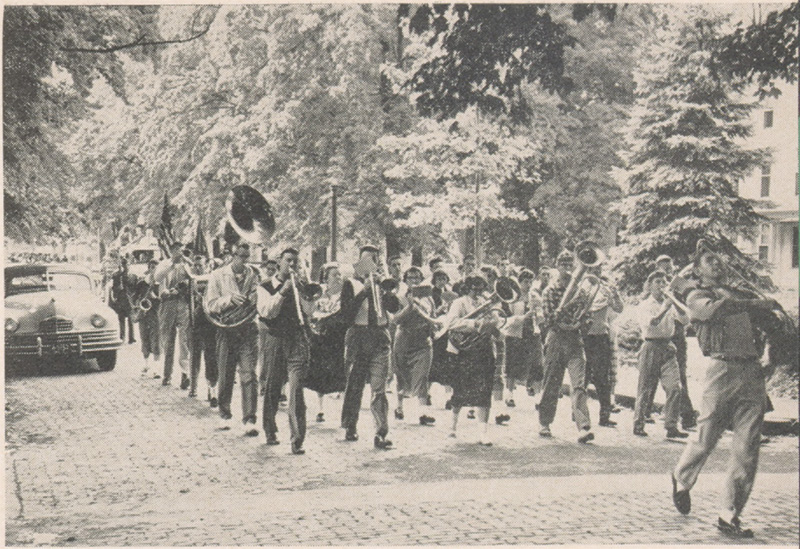
1955
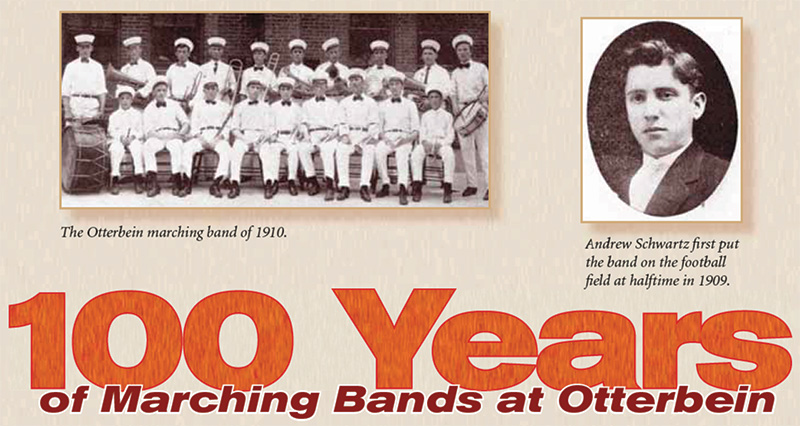
2009

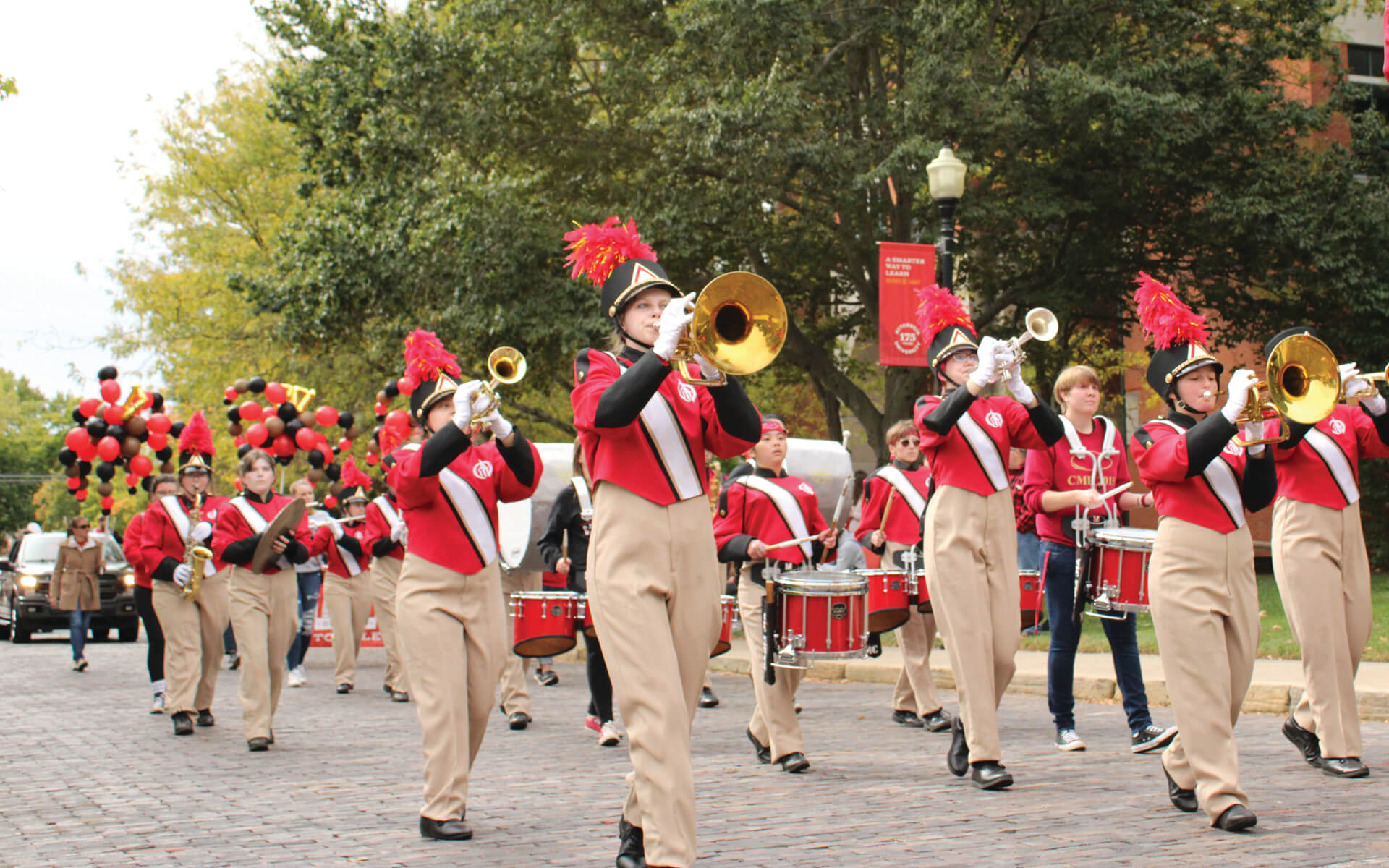
2009
2022
Marching Band
Although 1909 is formally recognized as the starting year for marching bands at Otterbein, there was a brass band as far back as the 1850s. In 1930, the marching band raised money for its first uniforms and has been a fixture at football games ever since. (Read “100 Years of Marching Bands at Otterbein” in the Summer 2009 issue of Towers.)
Battle for the Oars
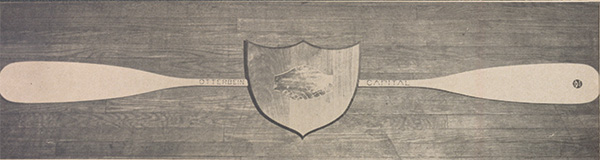
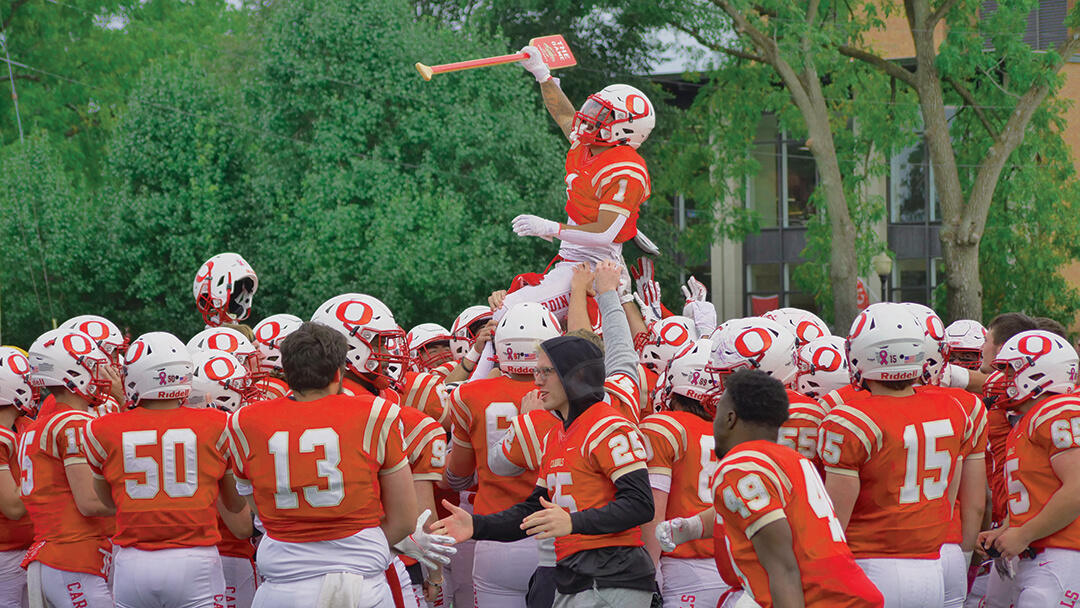
Otterbein and Capital Universities competed in canoe races in the 1890s on Alum Creek. In 1932, the first trophy was awarded for a game between the rivals’ football teams; it featured two paddles and a shield with a friendly handshake depicted as a nod to the historic canoe races and friendly rivalry between the schools. In 2021, the Battle for the Oars series of rivalry games was revived.
1954
2022
Maypole Dance
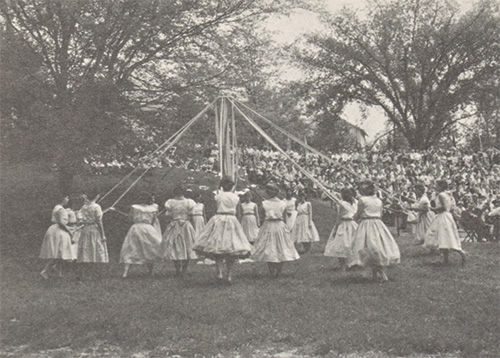
Otterbein used to celebrate May Day and the start of spring each year with the traditional European custom of a Maypole dance. The custom continued at least through the early 1990s.

1942

1966
1985
Maypole Dance
Otterbein used to celebrate May Day and the start of spring each year with the traditional European custom of a Maypole dance. The custom continued at least through the early 1990s.