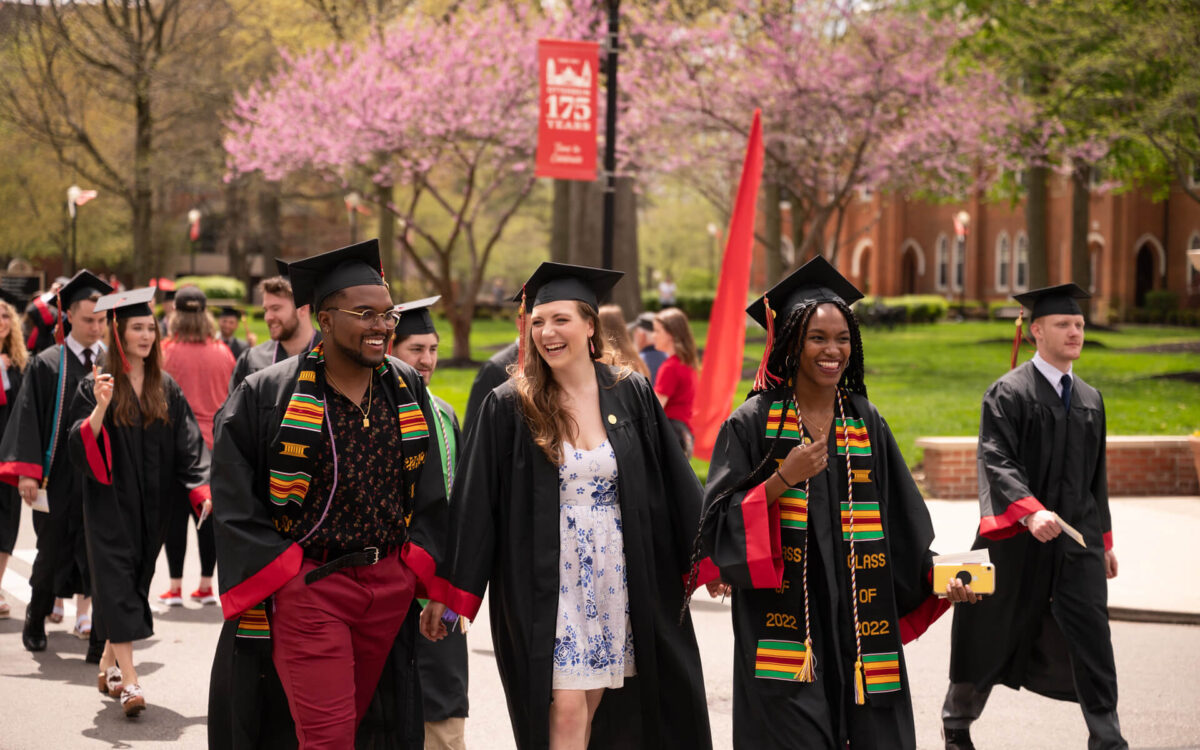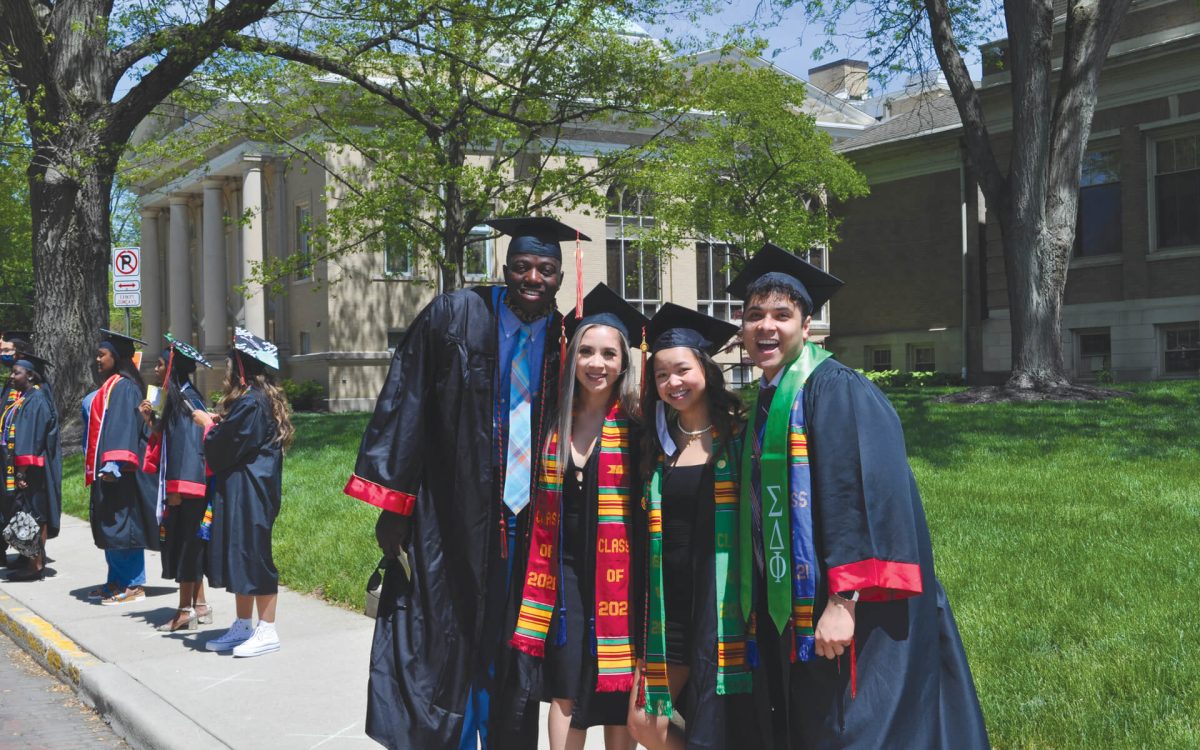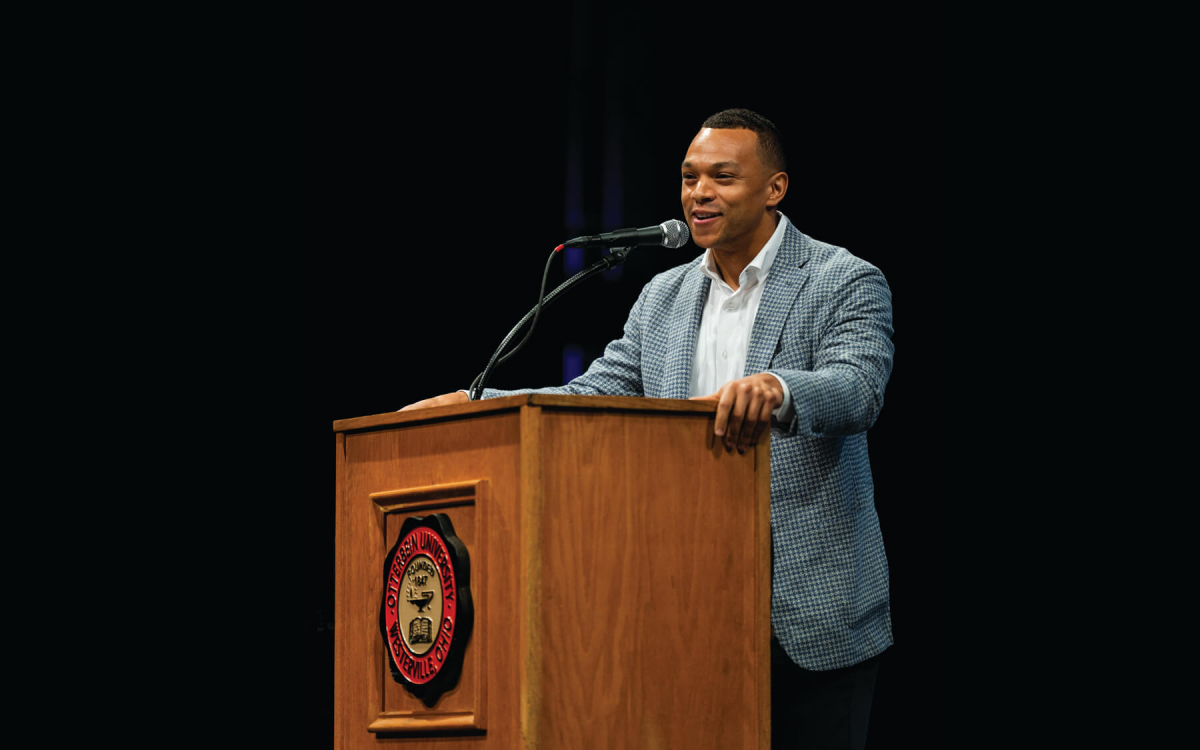
A new career and professional development program at Otterbein University will prepare students for their futures by promoting academic and career exploration; immersive, hands-on experiences; and professional development skills like networking and goal mapping.
Understanding how critical it is for students to make these connections between their academic studies and their career aspirations, Otterbein is making the commitment that every student will go through four years of exploration, advising, and planning.
“We want our students to be ready for life after graduation,” said Jennifer Bechtold, assistant provost and executive director of Student Success and Career Development. “This four-year plan will give them the confidence and the skills they’ll need after Otterbein.”
Keeping that commitment front and center is the reason behind its name: Every Student Will be READY.
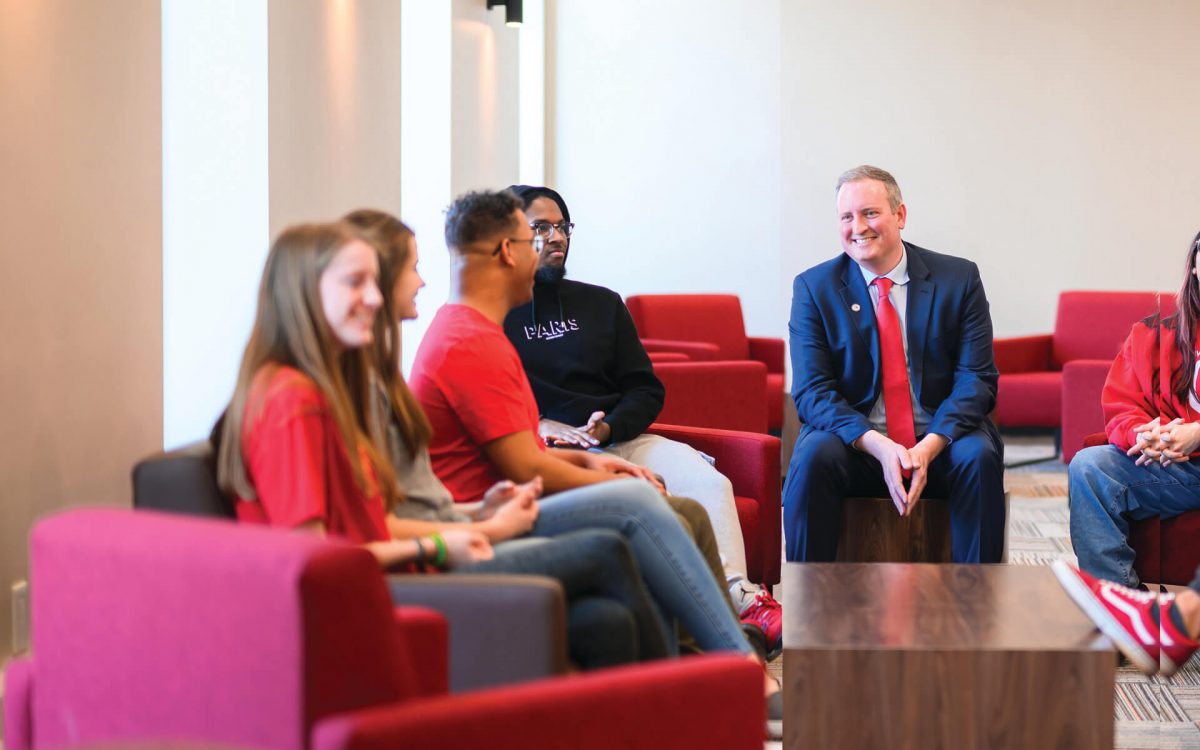
Bechtold explained that Otterbein’s signature First Year Experience (FYE) seminar courses have been reimagined with a team approach. FYE faculty will continue to help students transition to college-level learning, and now an Otterbein staff coach will join the first-year team to help students navigate time management and explore personal interests, goals, and career paths.
But the big ideas don’t end there. In addition to classroom speakers, whether in person or virtual, Bechtold said that alumni and Otterbein friends can support this initiative by offering internships and opportunities to collaborate on projects. “This will add to the program and help serve the entire Class of 2026, the first class to be part of the new Otterbein Every Student Will be READY program,” Bechtold said.
Robin Grote, associate professor of chemistry and director of undergraduate research and creative work, taught an FYE pilot course last year with the new model. She said having a staff partner enhanced the classroom experience. Grote said the students saw a team in action and began to understand that Otterbein is a network with many people across its community who want to help. “It was very representative of what it is like to be at Otterbein,” she said.
Grote believes students will be more engaged earlier in their college experiences. “Some of the best classroom experiences are when students interact with speakers. Anytime we can have visitors share their experiences related to the subject or to life – and do that in real-time – it’s much more interesting than just listening to a lecture from their professor.”
Otterbein leaders have seen first-hand how valuable immersive, hands-on experiences are to a student’s career preparation. While some academic programs like nursing and education already include those opportunities, Otterbein wants all students to have at least one signature immersive experience before they graduate.
Those experiences will vary greatly and will include everything from leadership experience to internships and study abroad. There are some funds currently in place to offset the costs of studying abroad, working a summer internship, or volunteering for community service, but program organizers say more support will be needed as the program expands to the entire student body.
Alumni Jon ’79 and Gretchen Freeman Hargis ’77 understood the importance of the Every Student Will be READY program. The couple runs the Hargis Family Foundation and were early supporters. “We believe a very important part of a college education is to prepare students on how to maximize their ability to gain employment in the field of their studies post-graduation. This initiative will provide all students the opportunity to work on these skills throughout their time as an Otterbein University student.”
According to Leah Schuh ’11, assistant director for experiential learning, the goal is to prepare students for post-graduation by increasing their access and creative focus.
“We want students to find meaning in what they did and how they can utilize that to be more prepared for employers and graduate schools,” she said. A dedicated team will help students to maximize their time at Otterbein and show them how to communicate the experience outcomes.
Schuh explained that Otterbein has a long history of combining hands-on experiences with classroom learning. Getting students READY for their futures will formalize what Otterbein has already focused on: hands-on experiences, mentorship, and guidance.
Alumni and friends can help support this exciting program by supporting the READY Fund to assist with costs for students’ immersive experiences. For more information on ways you or your company or organization could support this program or contribute to student success, please reach out to Kathleen Bonte, executive director of development, Institutional Advancement at 614-823-2707.
Frank is the new director of the


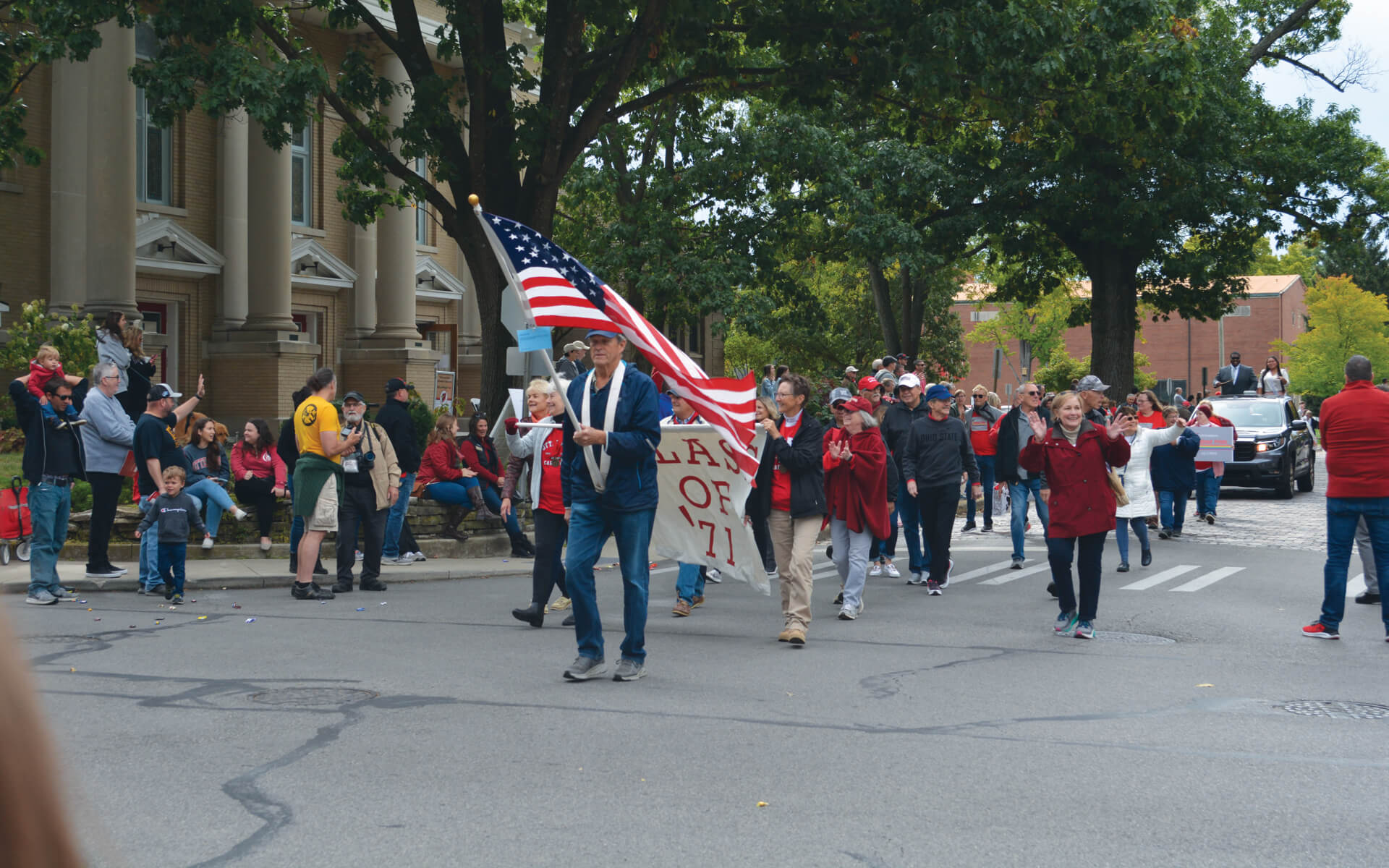
Scrap Day started in 1915 as a day of fun with a series of competitive field events, including tug-of-war across Alum Creek, sack races, and a bonfire. At that time, freshman students were required to wear beanies for group bonding — and as a source of teasing from upperclassmen. If the sophomores won the scrap day competitions, freshmen had to wear their beanies until Christmas, instead of Thanksgiving. The day was usually rigged against the freshmen. In the 1940s and 1950s, popular activities included “Coke dates” in Uptown Westerville and hanging out at the “Otterbarn” – an Army surplus building that served as the first student center. Their options were somewhat limited. Joanne “Dean Van” Van Sant H’70, dean of students emerita, once recalled: “No dancing was allowed on campus. No drinking of alcoholic beverages. Women had curfews and signed out and in. Chapel was held four days a week; attendance was mandatory with five absences allowed per semester. To miss more meant adding hours to your graduation requirement.” Because of the restrictions, students left campus for fun. They attended dances at the Westerville Armory and crossed the border to socialize at a Columbus bar called the Garden Inn, which remained a frequent destination through the 1990s. Since the early 1970s, late-night donut runs to Schneider’s Bakery have been one of the most popular Otterbein traditions. Mary Miller Westfall ’75 told Towers in 2000: “Women had to be in the dorm by midnight. Girls used to sneak out of the basement windows in King Hall at one or two in the morning for donuts.” Otterbein’s signature event, Homecoming, was recorded in The Tan and Cardinal as far back as 1917. In 1933, the first Homecoming queen, Marjorie Bowser ’36, was crowned. Today, Homecoming royalty are nominated by student organizations and voted on by the student body. Guests to Homecoming and Family Weekend celebrate with a parade, class reunions, tailgating, festival food and games, football — and, starting in 2021, a beer garden.


Roush Hall was dedicated in 1993, thanks to a gift of $2 million from Edwin “Dubbs” ’47