Otterbein Students Use Art to Connect with Older Adults Living with Dementia
Posted Nov 06, 2025
By Drakko Harper ’26
Every Monday, students meet with residents of the Westerwood retirement community to transform blank canvases into beautiful paintings, building intergenerational connections in the process. What may seem like a simple craft project serves a deeper purpose for these senior residents dealing with the impact of dementia and the isolation of life within retirement communities.
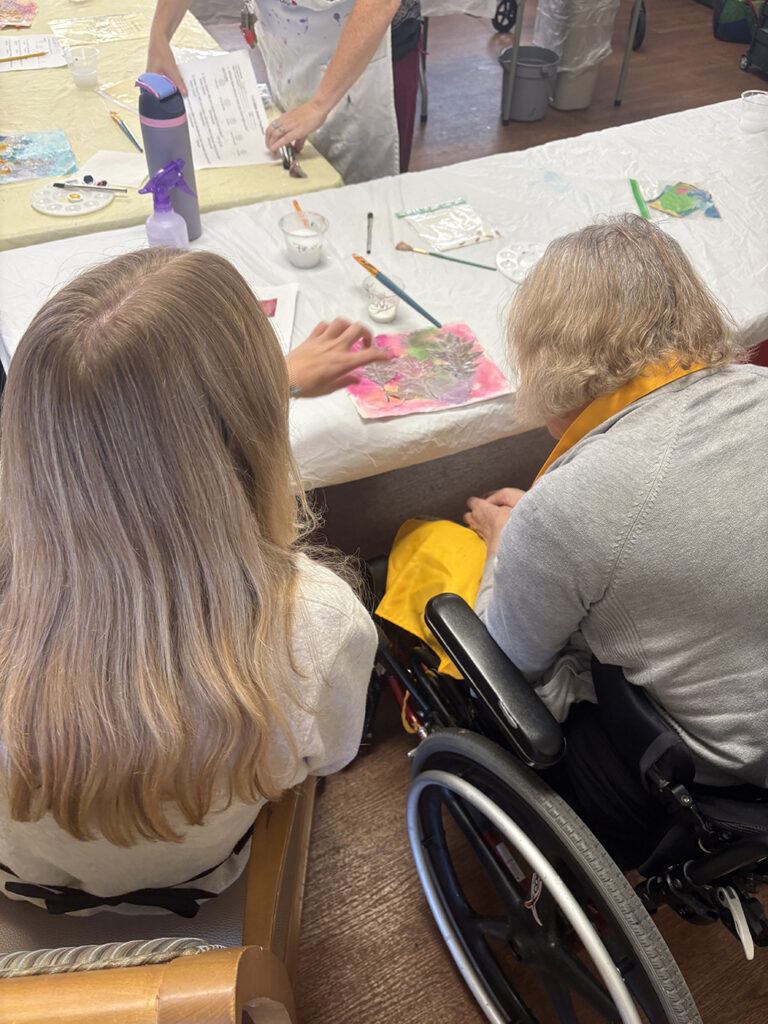
The program, known as Grandma’s House, is one of Otterbein University’s many weekly programs dedicated to community service and engagement. Organized through the government-funded Opening Minds through Art (OMA) initiative, Grandma’s House uses artmaking to connect students with older adults living with dementia, fostering empathy, understanding, and friendship.
OMA has a unique mission to combat isolation for some of the most forgotten people during an age when many feel lonely. “Our goal is to help build a society that values all people, including older adults living with dementia. Age segregation in our society has caused people across generations to see each other as strangers,” program organizers say. “We achieve this by building genuine friendships between people living with dementia and volunteers as they engage in artmaking.”
Unlike other service programs, Grandma’s House has a strong scientific backing. Studies from OMA observed residents with dementia who participate in the program show several benefits: more expression of pleasure, greater engagement, and improved overall well-being. Students themselves report increased comfort, affection, and positive attitudes towards people living with dementia.
Each week, an OMA coordinator introduces a new activity to volunteers. Most often, it’s the resident’s favorite, painting with watercolor or acrylic, but they have also completed crafts such as making floral arrangements for the dining room.
Beyond the art and general benefits, students build real connections with the residents as people. “We get to engage in conversations and build connections with people who may or may not have visitors,” said Kennedi Corthell, student volunteer and program lead. “Many residents say they truly enjoy having us there, and the volunteers love engaging with them.”
For those interested in volunteering, no special skills or background are required, only empathy and openness. “It’s always nice when students are outgoing and able to have conversations with the residents,” Corthell said. “Being patient and understanding of their wishes and limitations is essential, as well as truly wanting to be there and understanding your impact.”
The program helps bridge one of society’s greatest divides: the growing separation between generations. “My hope for this program is to build connections where the residents can gain a sense of community, so they don’t feel so isolated in a place that is supposed to be their home,” Corthell said.
“Regarding the volunteers, I want them to take away the impact they have on the residents, whether that be just socializing the whole time or helping the residents to create something they didn’t know they could still do,” she added.
For Corthell, she takes away the moments of art, music, and unheard memories. “I always enjoy it when the residents tell stories about their lives and feel safe enough to share,” she said. “I also love the songs we sing before and after each project because the music joins everyone together.”
Students interested in joining Grandma’s House can contact the Center for Student Engagement and spend 3-4 p.m. on Mondays making someone’s day special through simply crafting.