-
See Fire Safety/Electrical Appliances
-
Students shall not consume or possess alcohol, illegal and/or illicit drugs. Students shall not possess any containers currently or formerly used for alcoholic beverages (i.e. beer cartons, wine bottles, etc.).
-
Residents experiencing difficulties with their roommates are encouraged to contact a residence life staff member. Roommates shall meet with their Hall Director to try to resolve conflicts before a room change may begin. Residents will not be allowed to force their roommate to change rooms. Residents moving must complete a Room Change Card and submit to the Student Affairs Office prior to beginning a move. Changes may occur two weeks after the start of fall semester or after the first week of spring semester for returning students (two weeks for new residents). An administrative charge of $100.00 will be assessed to any student(s) participating in an unauthorized room change (moving prior to completing the Room Change Card).
-
Students shall store bicycles on racks outside the residence halls. Any bikes chained to other locations (benches, trees, handrails, stairs, etc.) will be removed and confiscated by campus police.
-
Room and Board contracts are legally binding documents for the entire length of the lease. Most contracts are signed for an entire academic year. Housing contracts terminate 24 hours after the student’s last examination or when the residence halls close for the academic year (or whichever comes first). A student is charged a per night fee for staying in the residence halls outside the contract period. Release from the contractual obligation without financial penalty is made only upon graduation or withdrawal from the University (prior to the beginning of a semester.) Release from the contract with financial penalty may be granted for extenuating circumstances provided a written petition is submitted to the Student Affairs Office at least 10 working days prior to the semester for which the release is being sought. The petition must show just cause for a termination (major unforeseen circumstances) with documentation to support the cause and provide information regarding where and with whom the student will live. Petitions are reviewed by the Housing & Meal Plan Subcommittee consisting of students and faculty/staff. The penalty fee is one half of one semester’s room rate.
-
The conditions of student rooms are assessed prior to the student moving in and again prior to the student moving out. Residents shall review the condition of their room immediately upon move-in to assure the room condition report is accurate. Residents shall maintain the condition of all items in their room and hold a collective responsibility for the condition of the common areas of the hall, apartments or theme houses. If student(s) are responsible for damaging an area of the hall, they shall notify staff of the damage and take full responsibility for the damage by paying for the replacement/repair of the item. If damage is not reported by students and is noticed by staff, students will be asked via email or letter to notify the Hall Director of the identity of responsible parties. When the student(s) responsible for damage are identified, the cost of repair will be equally divided and charged to their account(s). Residents are collectively responsible for identifying the student(s) responsible for damage(s). If the student(s) responsible for damage are not identified, repair costs within the student room will be distributed among roommates. Repair costs for common areas of the hall (lounges, stairwells) will be distributed among residents of the floor/building, house or complex. The Hall Director in conjunction with the Service Department will determine whether the repair is to be considered damage or normal wear and tear and, if necessary, who will share the costs. The Director of Residence Life will handle all appeals for assessments of damage. Any appeals must be made in writing within 48 hours of the notification of common area damage being emailed and/or delivered to student mailboxes/rooms. Any appeal for individual room damage must be made in writing within one week of moving out of the room/hall. The appeal must provide documentation supporting why the damage is not the responsibility of the student (i.e. letter from person responsible for the damage).
-
All outside doors to the residence halls are locked 24 hours a day for the security of the residents. Entry to the halls is gained via a card reader located on one or more doors by use of the student’s personal Cardinal Card. After entering or exiting a door, residents are responsible for checking to see if the door locks behind them. Only residents of the specific hall/complex will have access to the building. Students shall keep their Cardinal Card secure and not lend it to other students. Compromising the safety of the hall, by propping open doors (a level III violation) or lending others a Cardinal Card is a violation of the Code of Conduct. Residents shall lock their individual room/bedroom door when they are sleeping or not in the room. Students failing to carry their keys and/or Cardinal Card and locked out of residence halls or their rooms may contact a Residence Life staff member for entry. A small fee will be charged for each room entry.
-
Residents are responsible for any guest they invite into the building and remain with the guest for their entire stay in the hall. Residents shall meet their guests at the building entrance. Telephones on the exterior of the building are provided so guests can call the resident to meet them at the door. Anyone not living in the building is considered to be a guest, including other students, faculty, staff and parents. Residents are responsible for assuring their guest is fully aware of and follows all policies while in the building. Any unescorted guest will be asked to leave the building immediately. The guest and the resident they are visiting will be held responsible for violating the Code of Conduct. Residents are encouraged to assure their safety by inquiring if someone does not appear to be a hall resident and reporting any unescorted guests to the hall staff and/or University Police.
-
In compliance with Ohio State Fire Code, Otterbein University will conduct regular fire drills and fire inspections of all residential facilities, which include residence halls, theme houses, Greek houses and the Commons apartments. As outlined in the Ohio Fire Code, the drills and inspections will take place at unexpected times and under varying conditions to simulate the unusual conditions that occur in case of fire. Residence Life and Student Affairs staff may assist University Police in coordinating compliance with these policies. Any violation of university policy, including Failure to Evacuate, will be documented and forwarded to the Director of Student Conduct.
-
Students are encouraged to exercise extreme care when selecting electrical appliances for their campus housing. Each of these electrical appliances must be Underwriters Laboratory (UL) approved, in good operating condition, and not left unattended when in use. Students should remember the space limitations of many areas and the number of outlets available to them. With this in mind, students may bring the following items into the residence halls, theme houses and Commons apartments:
Air Purifiers, Clocks, Computers, Curling irons/curlers, DVD/VCR, Player/Recorder, Fans, Non-Ionic Hair Dryers & Hair Implements (straighteners, etc.), Holiday lights (not stranded together), Hot air popcorn poppers, Iron (auto shut-off), Lighted make up mirror, Microwave* (800 watts or less), Power strips with circuit breakers, Razors (electric), Reading lamps (excluding Halogen reading lamps without safety grids), Refrigerator * (up to 4 cubic ft., limited to one per room), Sewing machine, Stereo System (small), Surge Protectors with a 14 gauge wire (heavy duty), Television, Video Game System, Ionic hair implements (hair dryer, curling iron, hair straightener) are not allowed because they may cause the fire alarms to activate.
*Refrigerators and microwaves should be limited to one of each per residence hall room. Commons apartments and theme houses may have one microwave per house/apartment located in the kitchen and may not bring additional refrigerators into the facility. Students in the Commons and theme houses ONLY may possess and use toasters, coffee makers and George Foreman grills with extreme caution in the kitchen area only. Only students who have been granted a medical accommodation through the Disabilities Services Coordinator may use a portable air conditioner during fall and spring semester.
Due to the risk of fire when using the following electrical appliances, students shall refrain from possessing and/or using them in the residence halls, theme houses and Commons apartments. If any violation of these items are found the resident will be referred to judicial council.
Any appliance not clearly marked as UL approved, Any appliance with an exposed heating element Air conditioners (unless approved by the Disability Services Coordinator), Broiler ovens Candles (including candle warmers), Electric blankets, Electric potpourri pots, Electric frying pans/griddles/devices, Extension cords (all types), Halogen lamps without safety grids, Heat or Sun Lamps, Hot plates, Ionic Hair Dryers, Oil popcorn poppers, Outlet expander without surge protector, Scented oil burners, Space Heaters, Sun or heat lamps, Toasters, Toaster ovens, Any item which causes the fire alarm to activate.
Any appliance not included in these lists must be approved by a Hall Director before usage. Any use of electric appliance requires that the resident monitor the placement of the electric cords (i.e., do not let cords lie on or next to heating units). Students shall make smart choices to assure their safety and the safety of others in the residence halls, theme houses and Commons apartments.
The following guidelines will help students decrease the risk of a fire hazard in their living area:
• Empty wastebaskets on a regular basis in the dumpsters provided outside, do not place wastebaskets in closets and use metal wastebaskets.
• Dispose of cigarette butts and matches carefully in appropriate containers. • Refrain from playing pranks.
• Assure all items taped to walls are taped at all corners using removable tape/tabs, or small tacks.
• Do not hang anything from the ceiling and/or over a light.
• Do not build lofted beds in halls where furniture is not meant to be lofted.
Due to the community environment and the added risk of loss or damage to life or property, the following items are prohibited in all residence units: vehicle batteries, charcoal, gasoline, and items identified in under the Concealed Weapons policy and Firearms/Firecrackers policy. Please refer to Section 8 – University Judicial Policies Defined for the Concealed Weapons policy and for the Firearms/Firecrackers policy.
-
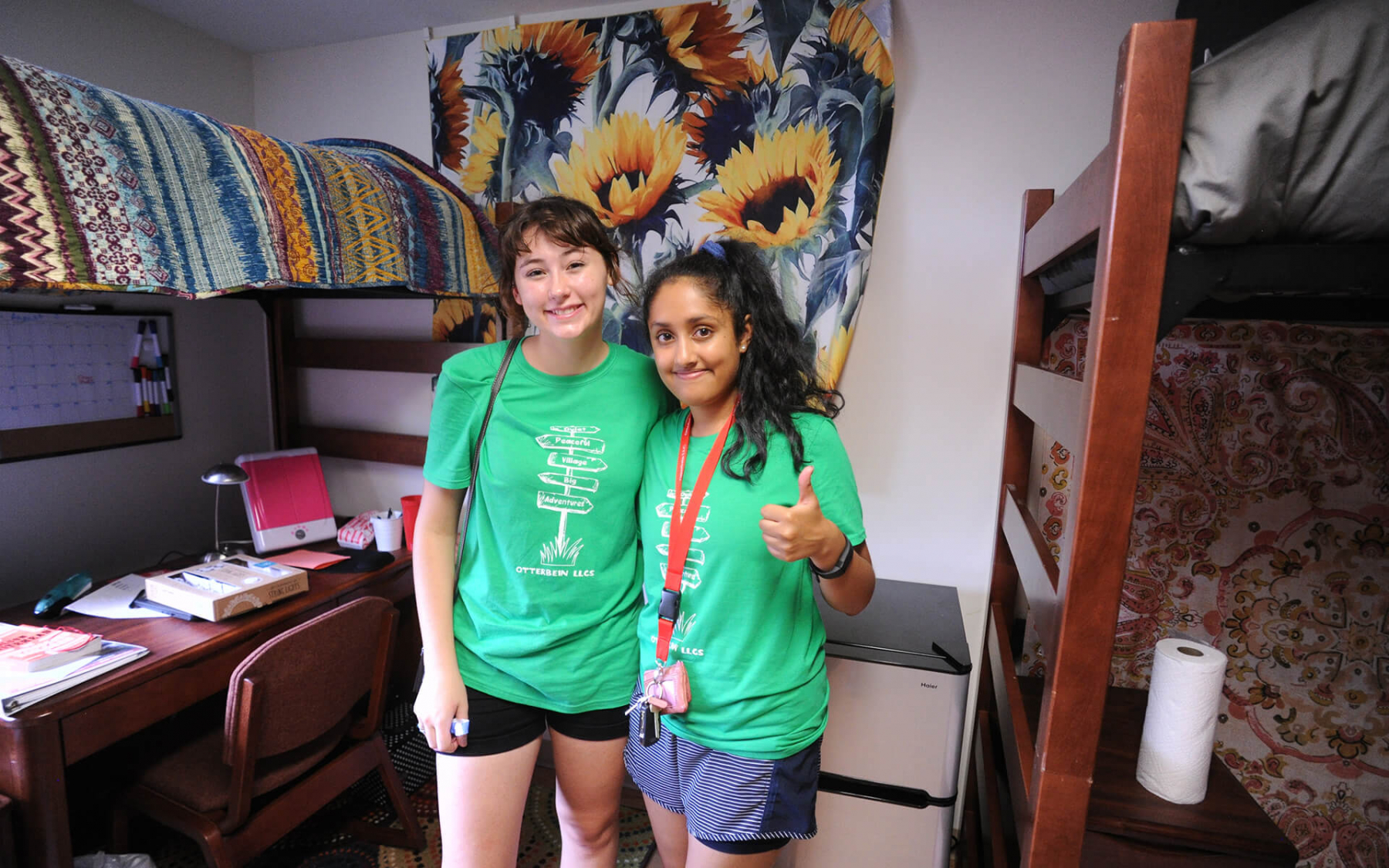
Residents shall keep all furniture supplied to them in the room throughout the year, and may not store or remove furniture. Students in the theme houses, suites and Commons shall keep all University furniture in the same room as originally placed (i.e. sofas in living rooms, beds in bedrooms, etc.) Removal of furniture or other University property from residence hall lounges, rooms or common areas is viewed as theft and may be subject to criminal prosecution and referral to the campus judicial board. All student rooms are furnished with a bed, mattress, desk, chair, and closet/drawer space for each student. Beds in the halls may be bunked, in a standard formation, to increase space. Beds in some halls are able to be lofted and students may loft their beds in a standard formation with a stabilizer bar. Residents unsure if their beds are able to be lofted shall seek assistance from a residence life staff member. Residents are responsible for use and care of University property and shall pay for replacement/repair of any items they damage. Due to the community environment and the added risk of loss or damage to life or property, waterbeds or other water-filled furniture are prohibited in the residence units.
-
The University’s Custodial Department cleans hall common restrooms and common areas (lounges, hallways, lobbies, etc.) on a daily basis. All students are responsible for cleaning their own rooms. Students in the suite-style halls are responsible for cleaning their own restrooms. Students in the Commons and theme houses are responsible for cleaning their whole living areas, including kitchens and restrooms. Repairs and maintenance in all University facilities are made by the Service Department. Residents shall report all needed repairs, maintenance or housekeeping concerns via the Service Department web page. Repairs will be made in the regular work schedule of the Service Department. See Damage section for more information on damages.
-
Otterbein University reserves the right to enter a student’s university residence for administrative, safety and regulatory purposes. The University exercises this right only under specific circumstances. Rooms in University residence halls, the Commons, or theme housing are considered to be private dwellings of those assigned to the room. This right of privacy carries with it the responsibility for students to conduct themselves within the general policies of the University. Authorized University representatives shall have the right of inspection within student rooms for the following purposes: inspection for standard maintenance, reasonable grounds for believing the room is being used for an illegal purpose, and inspections in situations where the student’s well-being appears to be threatened or in which a violation of University or civil regulations seems to have occurred/be occurring. Students shall comply with University personnel seeking entry. Failure to admit authorized University personnel will result in referral to the university’s judicial council. Health & Safety inspections will take place monthly in the Commons and Theme Houses and twice a semester in residence hall, or as needed to assure facilities are being properly maintained.
-
Students are issued a room key when checking into the residence halls. Students in theme houses and Commons apartments receive a room key and apartment/house door key. Students shall keep the key(s) on their person at all times to assure others do not use it. Students shall not lend the key to others nor duplicate the key(s). Unauthorized possession, duplication or use of keys is a Level III violation of the Student Code of Conduct. Students who lose their key may request a re-core of their room lock and new key from their hall director or the Otterbein Police Department. A damage charge will be assessed for each lock re-core and added to the student’s University bill if a student loses or fails to return their key(s) at the end of the year, or when they permanently leave the residence (whichever comes first).
-
Automatic washers and dryers are furnished in all residence halls, theme houses and Commons apartment complexes. Laundry machines are for use by residents of the building only.
-
Members of the Otterbein University community are expected to follow Federal Copyright Laws and policies that govern the screening of films on campuses. Student organizations and/or individuals who are interested in showing a movie on campus (including residence hall space) should first contact the Center for Student Involvement at Ext. 3202, located in the Campus Center. A staff member will meet with the student(s) to explain the process for purchasing public performance rights.
-
Residents shall not paint their rooms or any other space in the residence halls, theme houses and Commons apartments.
-
Otterbein University is not responsible for stolen or damaged personal belongings. This includes items in residence hall rooms, study lounges, laundry rooms, etc. Residents are strongly encouraged to keep their room/apartment doors locked at all times. Students are encouraged to protect their belongings with insurance, either by checking their parent/guardian’s homeowner’s insurance or purchasing renter’s insurance.
-
For purposes of health and sanitation, only aquarium fish, hermit crabs, and small turtles are allowed in any residential area with the agreement of roommate(s). Students are permitted one fish tank of 20 gallons or less per residential room. Residents shall care for their pets and provide a clean, healthy living environment for them. During breaks, students are required to take home any pets. Tanks with lights and pumps must be unplugged during breaks when residence halls are closed, and tanks must be emptied and cleaned. The University reserves the right to mandate the removal of any living creature or plant at the discretion of University officials including the hall director and staff.
-
Residents shall maintain environments conducive to studying and sleeping. Minimum Quiet Hours have been established in the residence halls, theme houses and Commons apartments as 10:00 p.m. to 8:00 a.m. daily. Hall Councils are welcome to extend Quiet Hours to provide additional quiet study hours. Each Hall Council will establish 24-hour quiet hours during exam week, minimally beginning the Sunday before exams begin. During Quiet Hours, residents shall keep all areas of the building as quiet as possible. Residents shall keep their room doors closed and assure noise from TV’s, computers, stereos and musical instruments are not heard in the hallway or other rooms. Consideration needs to be given to persons outside the residence hall if the window is open. Courtesy Hours exist when Quiet Hours are not in effect. During Courtesy Hours, residents shall be courteous to other students and their need for quiet. Students needing another student to be quieter shall ask the student to quiet down. Residents asked by another to be quieter shall honor this request. Failure to honor the request shall be reported to a residence life or Otterbein Police Department staff member. Residents shall be cognizant of the amount of noise they are creating and avoid any activities causing loud noises such as playing sports, yelling, running, etc.
-
Recycling bins are provided in each residence hall, Commons complex and theme house. Students shall recycle all their paper, plastic, glass and aluminum by placing them in the appropriate receptacle. Trash should be not be placed in recycling bins. Inappropriate use of recycling containers will be treated as damage. Theme House residents shall use the recycling bin provided and follow the City of Westerville recycling guidelines and pick-up schedule.
-
As a residential campus, Otterbein University expects all single, traditionally admitted, undergraduate students enrolled for 12 or more credit hours to reside in University residential facilities (excluding Greek houses.) All students residing in the residence halls shall participate in a full board (meal) plan except those with senior academic status prior to the beginning of fall semester who have selected a room-only contract. Students may request an automatic exemption from University housing if they meet one of the following criteria:
• Reside at the principal residence of their parent(s) and/or legal guardians within a 30 mile radius of Otterbein University;
• Will have completed at least 96 semester credit hours by the end of spring semester of the current year and have not signed a housing contract for the following year;
• Will be 22 years of age prior to the first day of classes of fall semester;
• Legally married or single parent residing with their spouse or children within a 30 mile radius of Otterbein University;
• Have lived in Otterbein or other university/university residence halls for three full years (nine quarters or six semesters, excluding summers);
• United States military veterans with 18 months or more of active military service.
Students applying for an automatic exemption should do so via completing the Entering Student Housing Information Form and/or filing a Housing Obligation Exemption Request to the Office of Residence Life stating their reason(s) for being eligible for the exemption.
-
Restrooms and showers on residence hall floors are designated as either male or female. There are no designated co-ed shower facilities in the residence halls. Personal items (shampoo, soap, hairdryers, etc.) are not to be stored in group restrooms. (Residents in Commons, Theme Houses, suite-style halls and rooms with private restrooms may leave personal items in the restrooms.)
-
Students shall refrain from smoking in, or near, any residence hall, theme house or Commons apartment to avoid smoke from entering any door, window or air vent of any facility. Students who smoke shall maintain at least a 20-foot distance between themselves and any University building to assure compliance with the State smoking law.
-
Athletic activities which normally take place outdoors (football, hackey sack, lacrosse, soccer, etc.) or in the gym (basketball) are prohibited in the residence halls. Students should use University sports fields and recreation areas for these activities. Students should not bounce or throw balls in the halls nor hit the outside of residence halls with sports equipment.
-
Students may make on-campus and local calls from their rooms if they have connected a phone. Students wishing to make long distance calls may use a calling card. Phone issues should be reported to the Service Department via their online service request system.
-
Every residence hall room, Commons apartment living room and bedroom, and theme house living room is equipped with a cable TV hookup including WOCC, Otterbein University’s own TV channel. Students need to provide their own coaxial cables to connect their equipment to the cable hook-up. Students with HD capable equipment and those wishing to purchase premium cable channels, pay-per-view or DVR may contact the campus cable provider, Time Warner Cable, to arrange for these services and their payment.
-
Students shall remove trash from their rooms/suites/apartment and place in the dumpsters provided outside. Theme house residents shall follow the trash pick-up schedule provided by the City of Westerville and use the trash cans provided. Students inappropriately disposing of trash or littering will be referred to the campus judicial board and may have damage charges assessed. Students shall not dispose of their room trash in floor restrooms or other common area trash cans. Students shall not allow a large amount of trash to collect in their living space.
-
Traditional & Suite Residence Halls - Traditional residence halls are arranged with student rooms on both sides of a hallway with one or two communal restrooms located in a central location. Most rooms are doubles (two people sharing one room) and a few are singles, triples or quads. Single sex group restrooms are located on every residence hall floor/wing in traditional halls. Suite style residence halls offer more private bathroom facilities with either one or two bedrooms sharing a full bathroom. Each student is provided with a bed, mattress, dresser/closet space, desk/writing table and desk chair. Amenities in all halls include: cable, internet and phone connections in every room, study lounges, laundry facilities and staff offices in each hall/complex. Summer and Break Housing is available in one or more halls each year for an additional fee. Theme Houses - Single sex groups of sophomore, junior and senior full-time traditional undergraduate students who share a common goal and seek a living environment to promote the purpose are invited to apply to live in one of the University’s theme houses. Conveniences of theme houses include fully furnished houses with kitchens, living rooms, laundry machines in each house and optional meal plans. Summer + academic year and academic year only leases are available. Commons Apartments - Students with at least junior academic standing by the beginning of fall term are invited to live in the Commons Apartments as a transition from traditional residence hall life to a more independent lifestyle while remaining on campus. Apartments are available to single sex groups and have two, three or four bedrooms. Conveniences include single bedrooms, fully furnished bedrooms, living rooms and dining rooms, all utilities included (water, heat, electricity, cable, phone, internet), on-campus parking, being within walking distance of everything on campus and optional meal plans. Summer + academic year and academic year only leases are available.
-
The University reserves the right to consolidate (reassign) student housing assignments if a student does not have an assigned full room. When a vacancy occurs and there is not a waiting list for housing, the remaining student is offered the following three options:
1. Find a roommate of their choice within one week. A list of current students without roommates can be provided by the Office of Residence Life or a resident with a roommate may request to move into the vacancy. Moves will be expected to be completed within a week of the consolidation request.
2. Remain in the room and purchase a Super Single. This option allows the student to be guaranteed the room as a super single for the rest of the academic year. By choosing this option, the student will pay 150% of the current room rate and will remain in their current room without a roommate. All University furniture in the room must remain.
3. Be consolidated with another student within your residence hall. By choosing this option, the Office of Residence Life will either have another student move into the vacant space in the room or you will be assigned to move to another vacant space within the residence hall. Moves will be expected to be completed within a week of being notified of the new assignment. Failure to move to a new assignment or refuse a new roommate without purchasing a “Super Single” may be referred to the Director of Student Conduct.
-
Snack and drink vending machines are located in all residence halls. Report any loss of funds to the Campus Center and a refund will be made. Residents shall immediately report any malfunction or damage to the machines to the Hall Director. Any machines subjected to abuse may be removed for the remainder of the semester or year.
-
All hall lounges with external entrances/exits have a 24-hour visitation policy, unless the Hall Council chooses to reduce the hours. Residents and guests are responsible for knowing the hours. Hall Council will post signs in the lounge if it does not have 24 hour visitation. Visitation is prohibited in all hall areas except 24-hour lounges during non-visitation hours. Hall lounges without external entrances/exits (located on residential floors and only accessible by walking through the floor) will have visitation hours for guests the same as the residential floor. Residents of the floor may use the lounges 24 hours a day.
Traditional and Suite-Style Residence Hall, residents may have guests of the opposite sex visit their rooms daily from 9 a.m. until 2 a.m.
Theme Houses, Fraternity and Sorority House residents may have guests of the opposite sex visit their rooms daily from 9 a.m. until 2 a.m.
Commons Apartment residents may have guests of the opposite sex visit their apartments 24 hours a day as long as all apartment residents agree.
Overnight Visitation – Overnight guests may reside with the student in his/her residence hall room, theme house or Commons apartment provided the roommate/house/apartment mates of the resident agree, the overnight guest agrees to follow all housing and campus policies and the resident registers his/her overnight guest with the hall director and/or Office of Residence Life. Residents shall take full responsibility for the actions of their guests including any violations of campus policies. Traditional and Suite-Style Residence Halls, Theme Houses, Sorority and Fraternity Houses residents may only have overnight guests of the same sex (except during Little Sibs Weekend when the policy is slightly adjusted.) Guests may stay for a maximum of two nights in a row with only the approval of their room/suite/house/apartment mates (guest must still be registered with the hall director). Special written permission from the hall director is required for a guest staying up to four nights. Guests staying longer than four nights must have written permission from the Director of Residence Life for a stay up to seven consecutive nights. To request permission, students should email the Director of Residence Life with the name of their guest and dates of requested visitation at least 48 hours before the visit is to begin. Guests may not stay longer than seven nights in the residence halls, theme houses or Commons apartments at any one period of time or stay for more than two periods of seven consecutive nights during an academic year.
-
In cases of withdrawal from the University, the Residence Hall Room and Board Plan Contract is terminated. The student shall vacate the residence hall within 48 hours of withdrawal. The student shall remove all belongings, make arrangements to checkout of their room with a member of the residence life staff and return the room key. A damage charge will be assessed for each lock re-core, and added to the student’s University bill, if the student fails to return the room key when they permanently leave the residence hall. Failure to checkout with staff member and damage to the room or furnishings will result in additional charges.