Department of Education
Join Otterbein’s community of educators who are passionate about teaching, innovating, and changing the future. Your instructors care about preparing teachers, and they will show you how to implement cutting-edge developmentally and culturally responsive teaching methods.
Your field experiences begin with your first class. Otterbein’s ideal location allows you to experience many different schools and classrooms.
Otterbein offers licensure programs in Primary Education (PreK-5), Middle Childhood Education (4-9), Adolescence to Young Adult (7-12), PreK-12 Music Education, and K-12 Intervention Specialist. Licensed teachers can add a license or endorsement or consider a Master of Arts in Education degree.
Request More Information
Programs of Study in Education
B.S.E
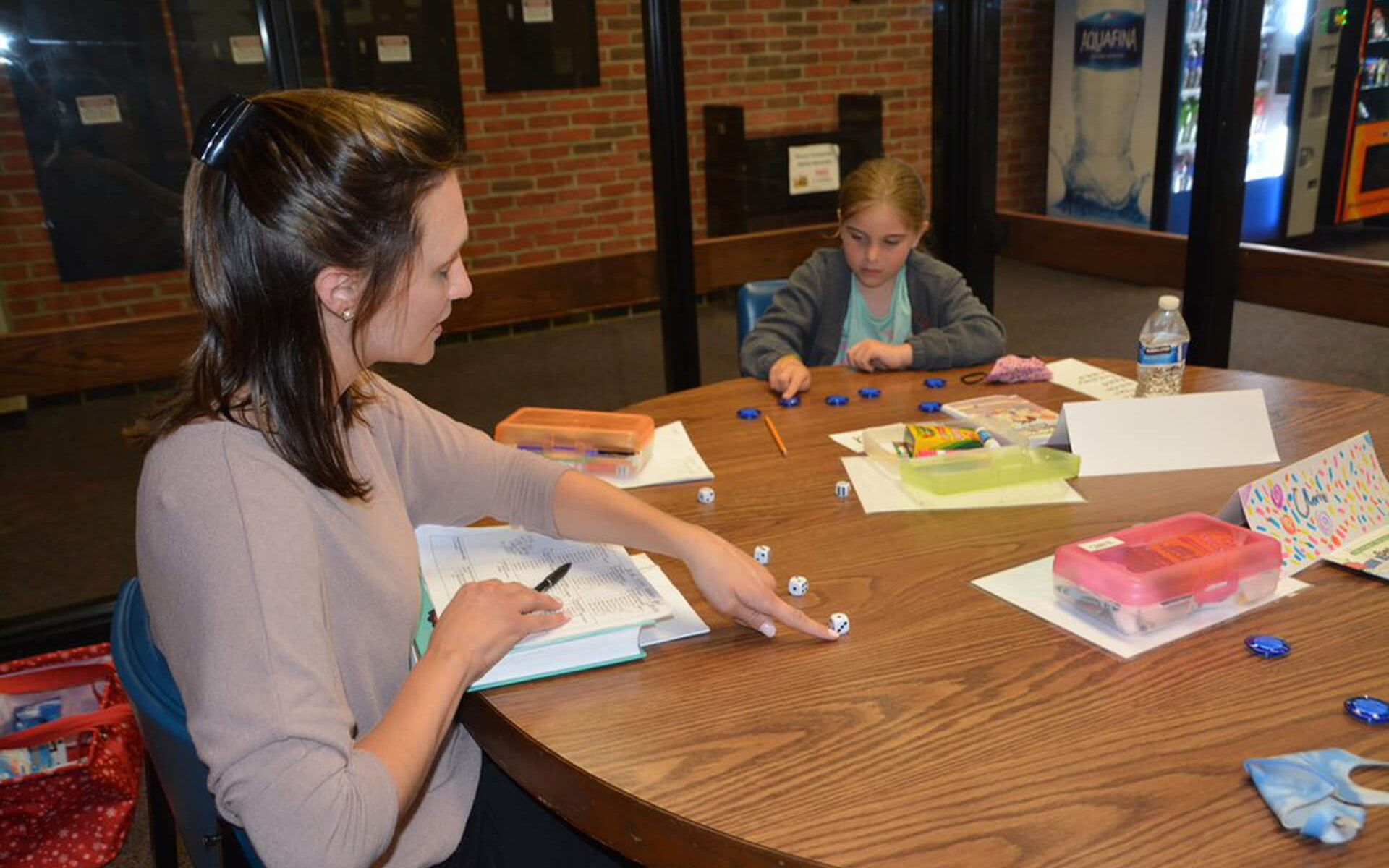
PreK-5 Primary Education with optional PreK-5 Dual License Intervention Specialist
Become an exceptional elementary school teacher. Otterbein’s program emphasizes literacy-reading and writing, as well as technology, science, and mathematics literacy aimed at maximizing every student’s potential. With a few extra classes, students can earn a dual P-5 Elementary/Special Education license.
B.S.E
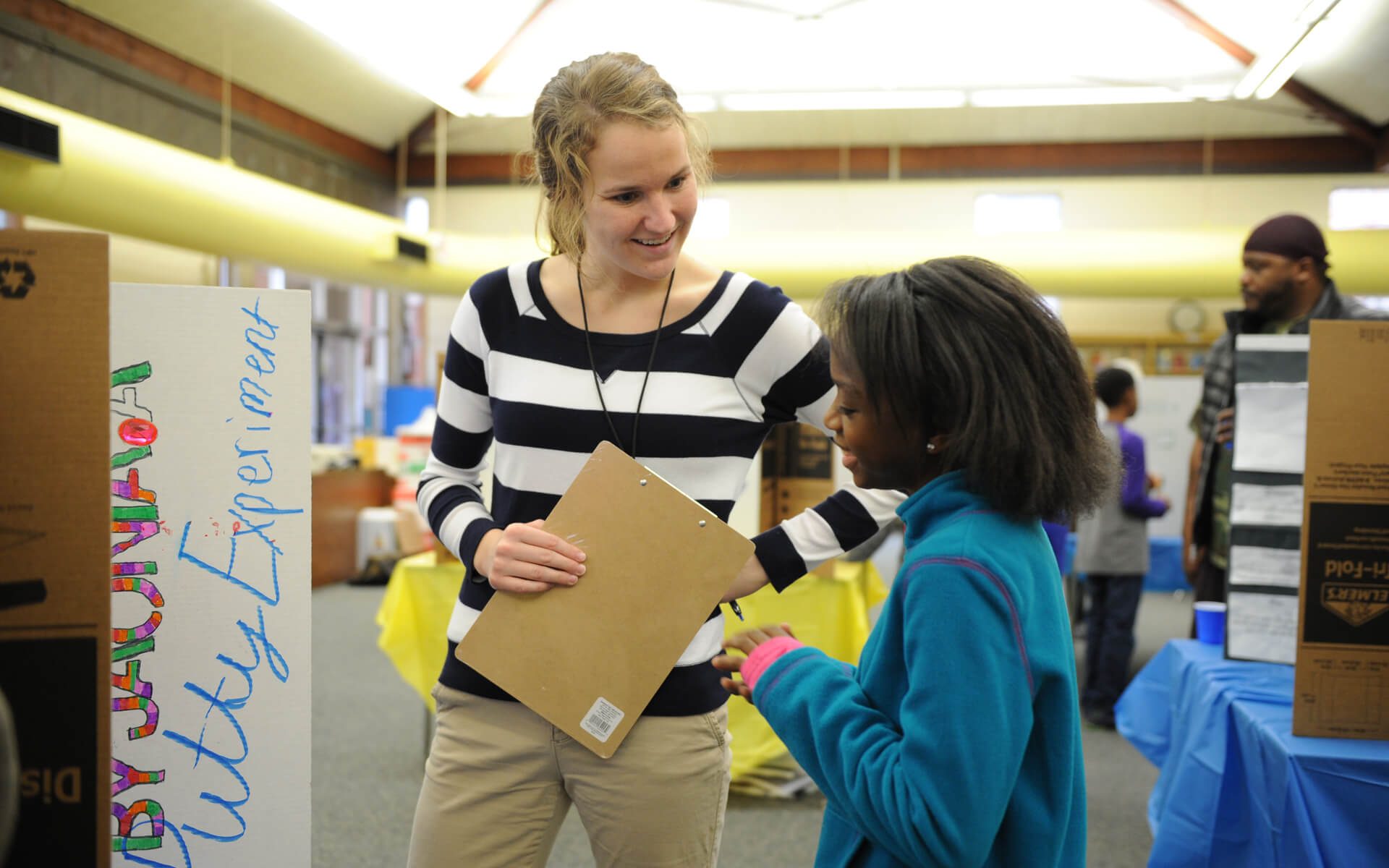
Middle Childhood Education (Undergraduate, Post-Baccalaureate)
Otterbein’s Middle Childhood (4-9) candidates learn to integrate content through a comprehensive middle childhood philosophy, preparing them to teach in their own classrooms from Day one. Middle Childhood teachers can teach two content areas from the following choices: Language Arts & Reading, Math, Science, and Social Studies.
Licensure
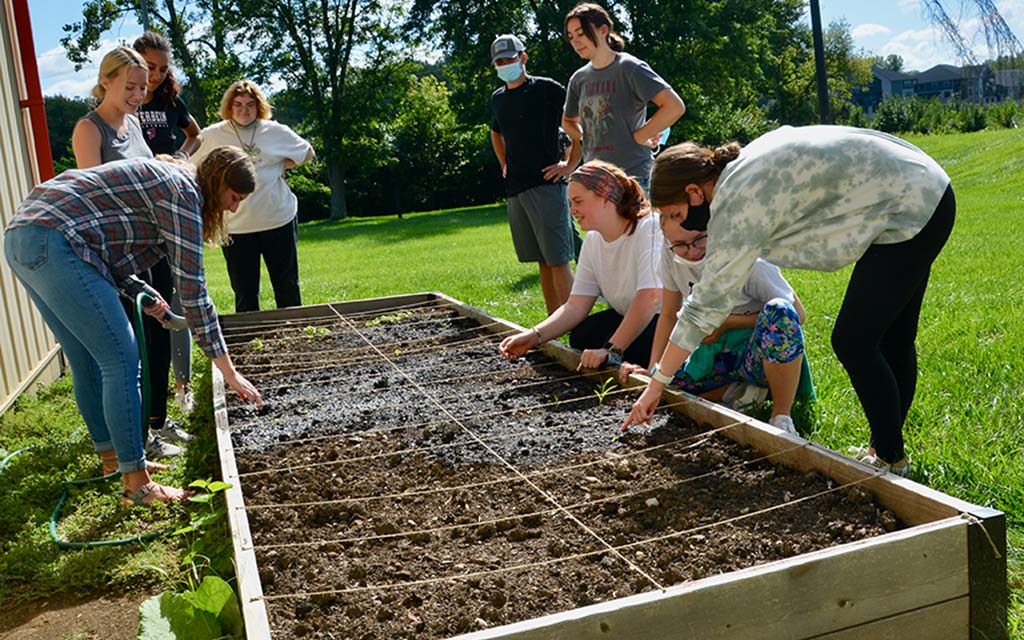
Adolescence to Young Adult Education
Interested in teaching adolescents and young adults? Complement your content area bachelor’s degree with a teaching license (grades 7-12). Learn how to integrate technology in your teaching and implement a variety of instructional strategies, assessments, and materials unique to teaching secondary and multi-age curriculum.
B.S.E.
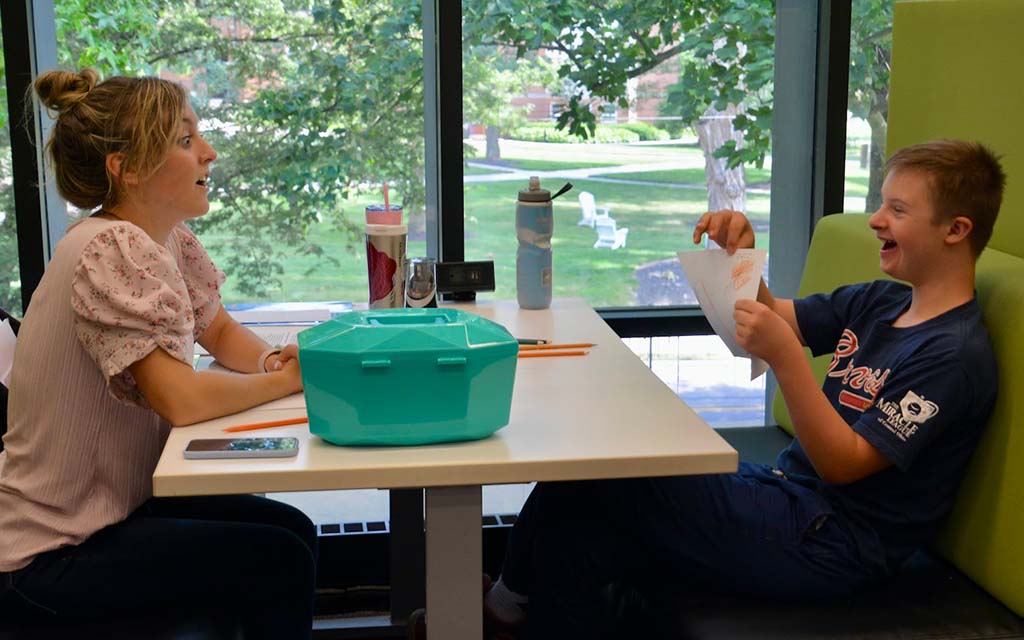
K-12 Special Education (Intervention Specialist)*
Intervention Specialists see the potential in every child. We will provide you with the knowledge, tools, and skills you need to meet the needs of every student. This license can be earned in two areas, “mild/moderate” or “moderate/intensive.”
Bachelor of Arts (B.A.)
Educational Studies
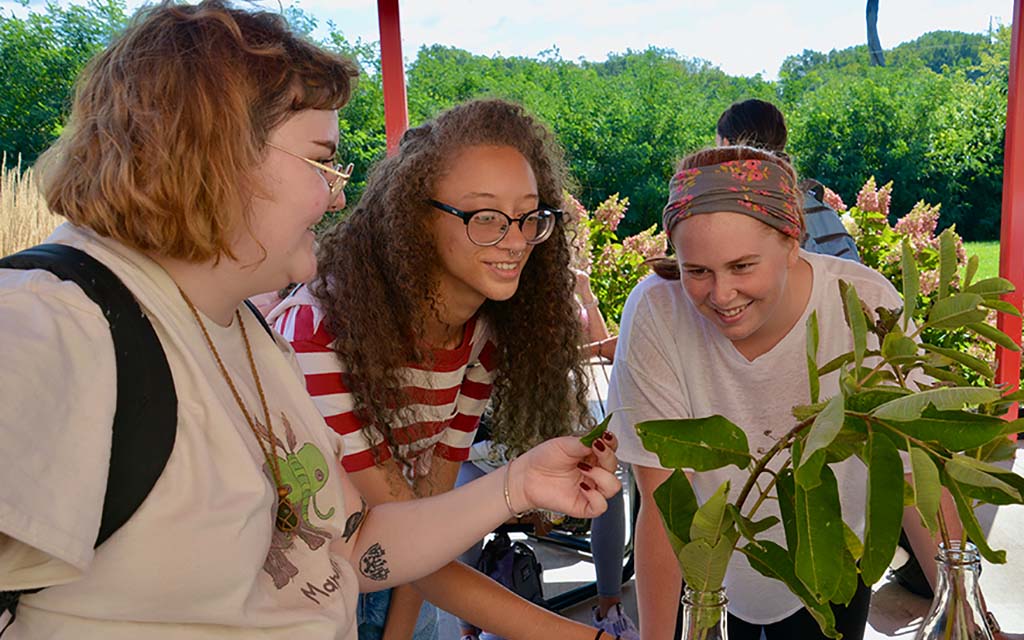
Educational Studies is for those interested in education (as corporate trainers, museum docents, pre-professional preparation as school counselors or psychologists, etc.) but not as teachers. Students can major or minor in Educational Studies and explore education from diverse disciplinary perspectives with unique opportunities for internships outside of the classroom.
B.M.E
Multi-Age Music Education
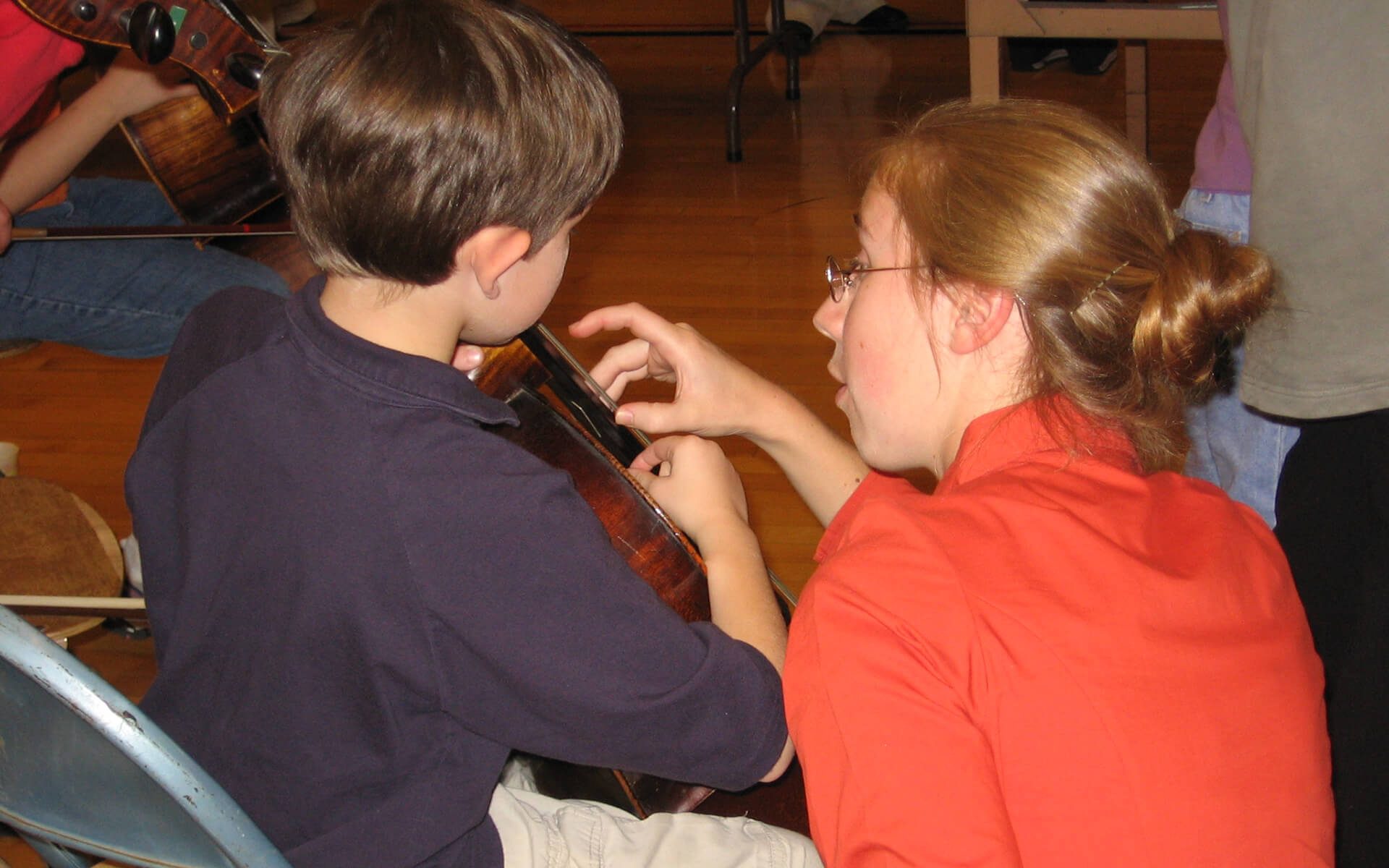
Students in the Bachelor of Music Education (B.M.E.) take coursework that develops musicianship skills and competencies in the field of education. This program leads to Music Multi-Age licensure and prepares the student for teaching instrumental and vocal music in the public and private schools, grades PreK-12.
Licensure
Post-Baccalaureate Teacher Licensure
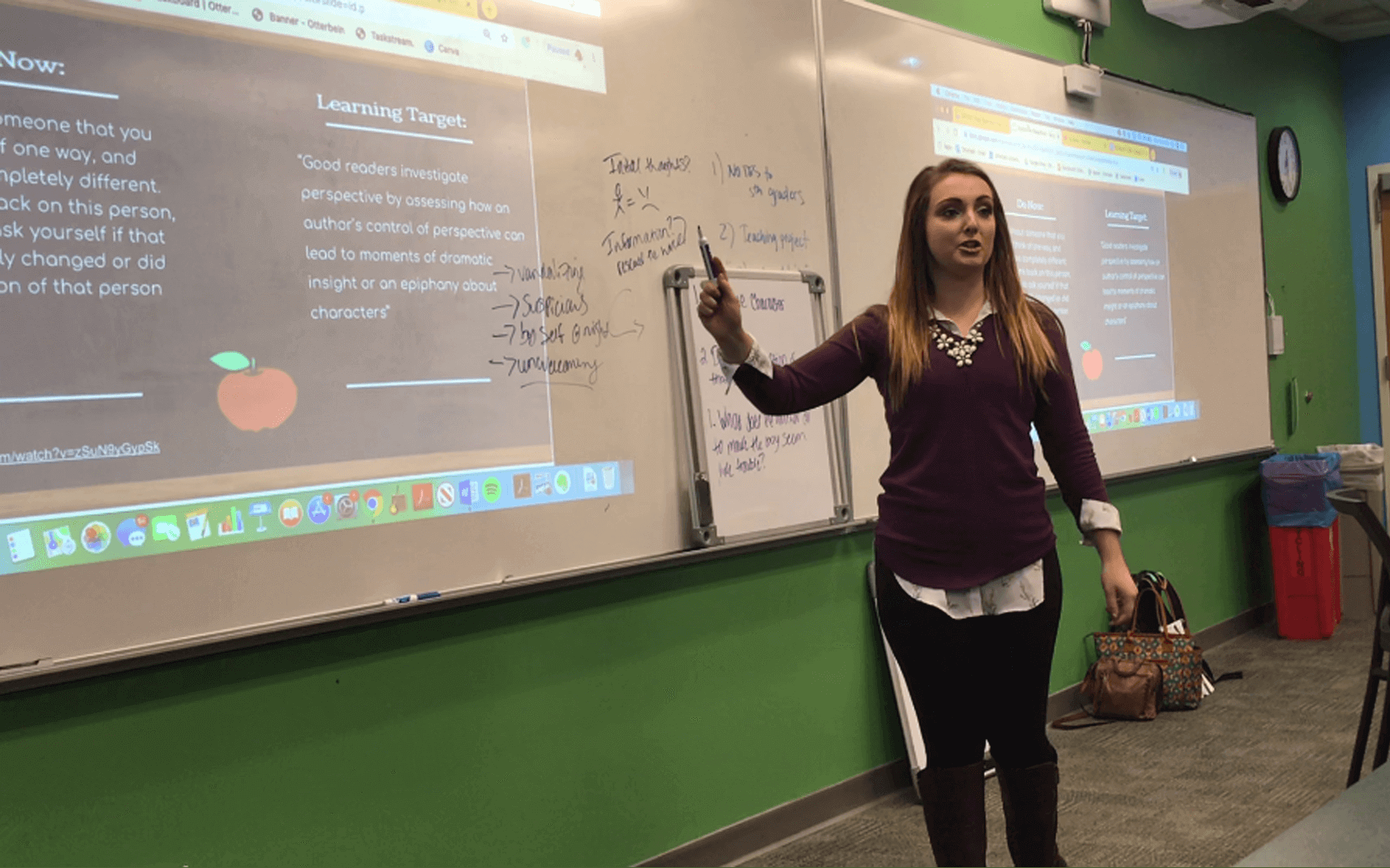
Passionate about education? Otterbein offers non-degree licensure programs for students with a bachelor’s degree who want to become licensed teachers. Licensure programs include PreK-5 and PreK-5 Intervention, Middle Childhood (grades 4-9), Adolescence to Young Adult (grades 7-12), K-12 Special Education (pending state approval), and Music Education.

M.A.T.
Middle Childhood and Special Education/Intervention Specialist
Make a difference in the classroom with our Master of Arts in Teaching programs (M.A.T.) in either Middle Childhood (4-9) or Special Education (K-12). Otterbein’s M.A.T. programs offer a graduate route to initial teacher licensure for students with a bachelor’s degree in another field. Students will experience embedded field placements, flexible scheduling, and expert instruction. Contact Amy Featherstone for more information.
M.A.E.
Master of Arts in Education in Curriculum and Instruction
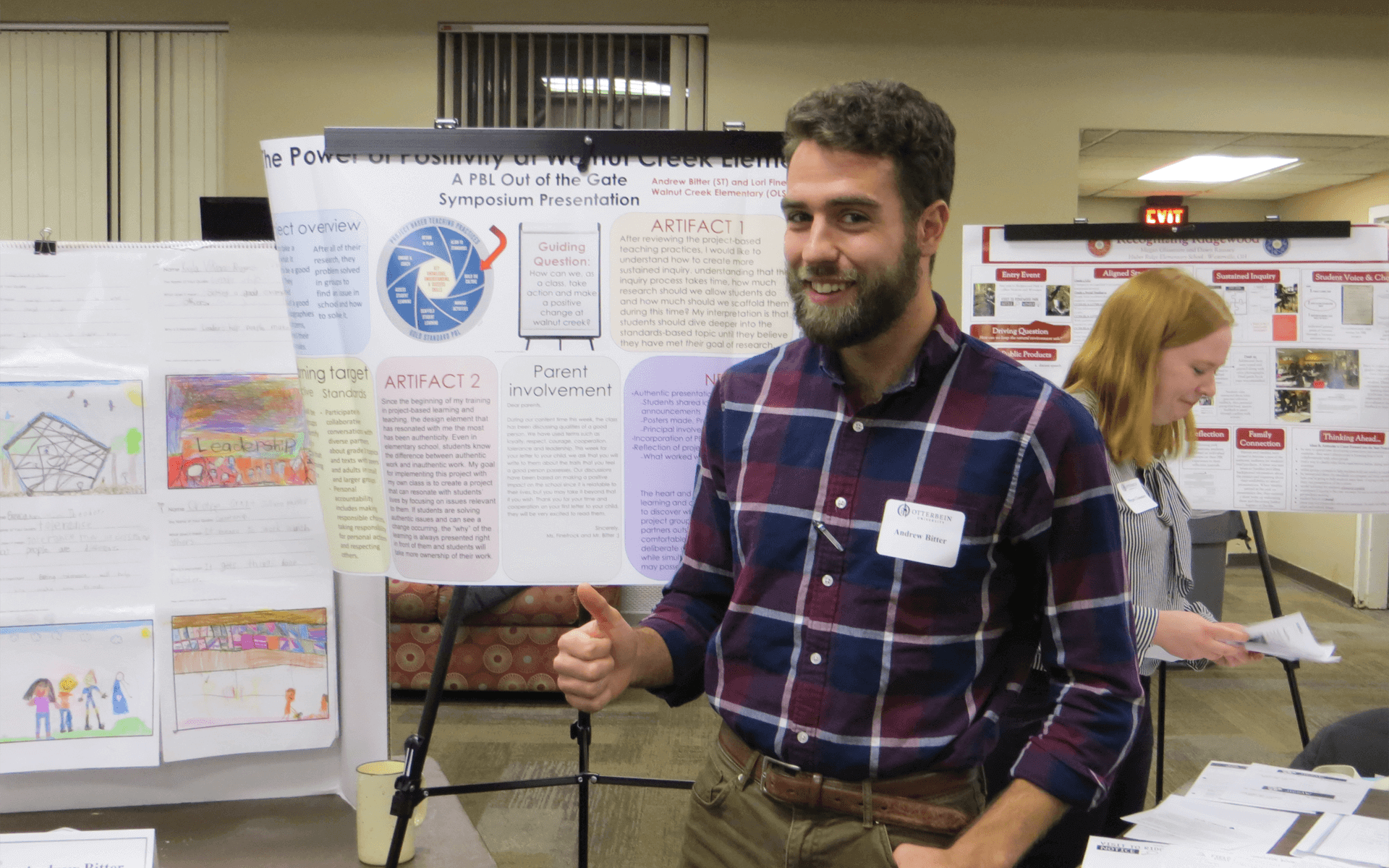
The M.A.E. Curriculum and Instruction program at Otterbein empowers teachers through study, research, and reflection. Teachers complete their Capstone projects transformed and ready to lead and make a difference in their schools and classrooms.
Endorsement
Reading Endorsement
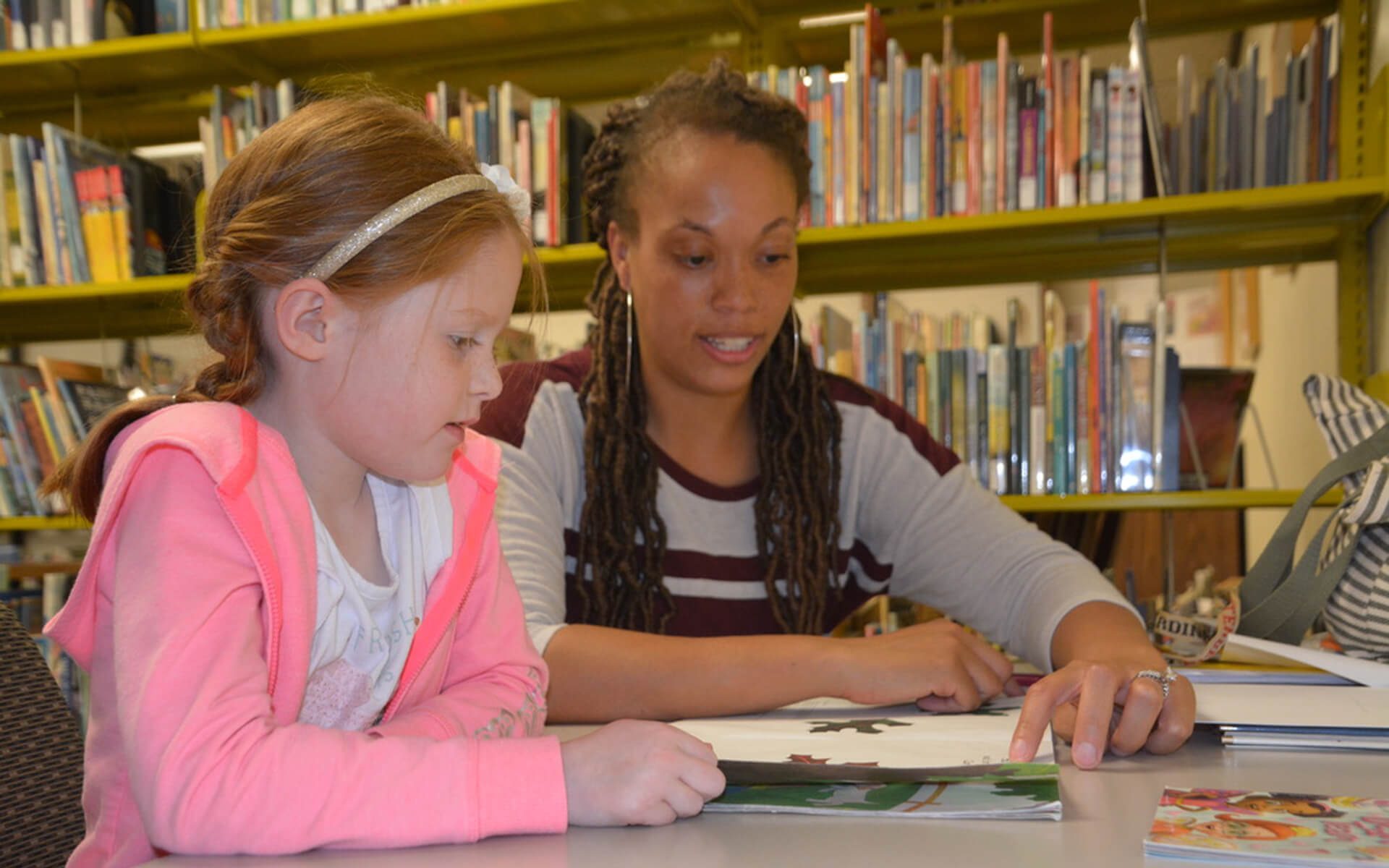
Add the valuable PreK-12 Reading Endorsement to your current license and enjoy flexible scheduling and expert literacy instruction and mentorship. Our four-course sequence* allows students to start in the spring and finish during the summer, ending with our unique community-based onsite reading clinics that put your knowledge into practice.
Endorsement
TESOL Endorsement
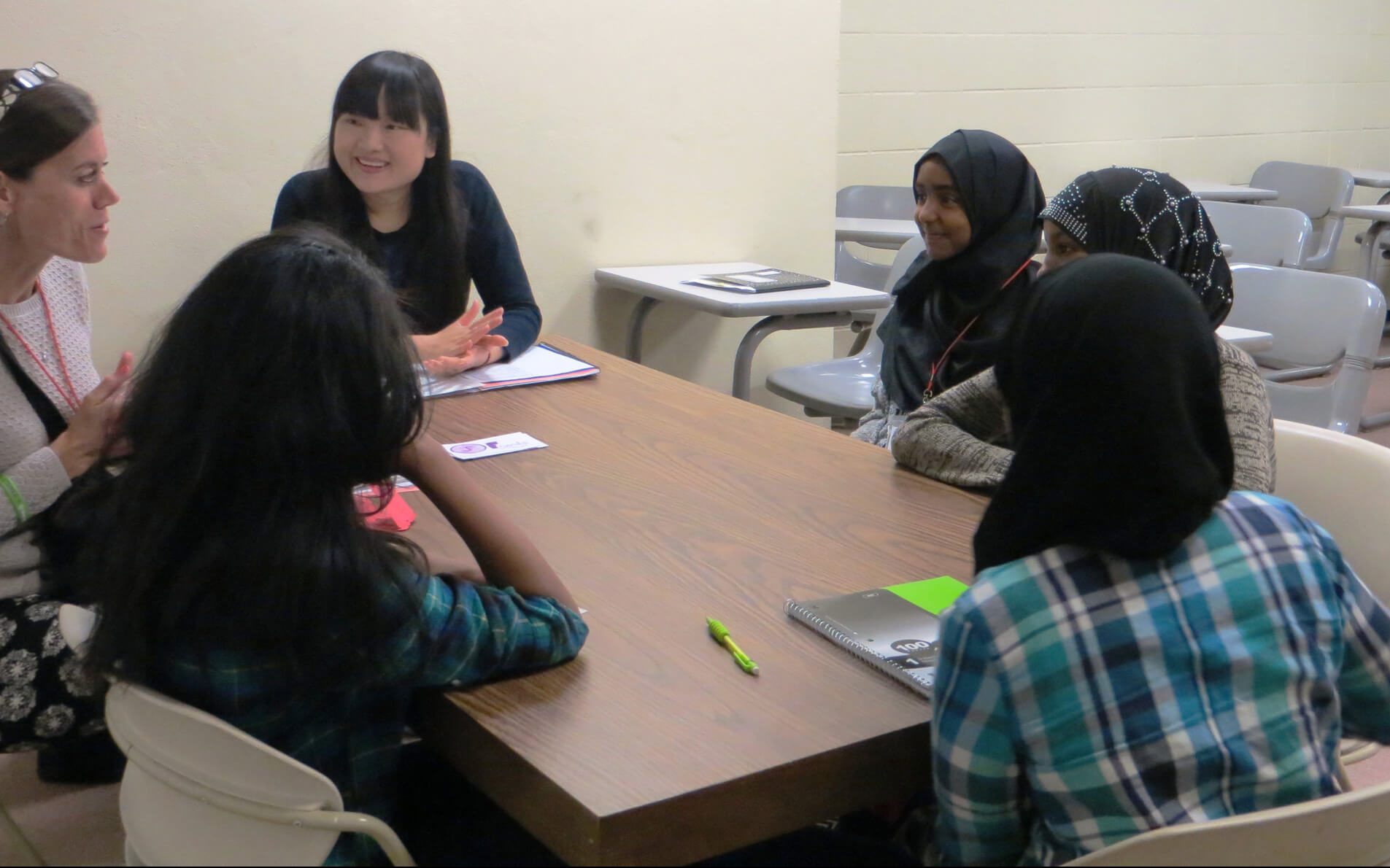
Take the next step at Otterbein and add the PreK-12 TESOL Endorsement to your current license. Our graduate blended courses offer both the convenience of online work and the power of collaboration with professors and classmates. Students can put their knowledge into practice during the summer mentored TESOL field practicum.
Student, Faculty, and Alumni Spotlights
STUDENT SPOTLIGHT

Are you looking for a place to feel welcomed, supported, make connections with new friends and faculty, always see a smile from a stranger that is contagious, find your true self and gain an education from the most personable professors? Welcome to Otterbein! You just found another place to call home.
Julia Gott ’23
P-5 Primary Education
Julia Gott is a Cardinal Corp leader (CCL) at Otterbein where she plans community service events on and off campus. One of her main roles with CCL was picking up leftover bagels, pastries and bread from Panera and delivering them to the Promise House. Julia is a member of Student Government, and President of Otterbein’s Catholic Student Ministry. She is also a part of Sigma Alpha Tau, a sorority that works with the Ronald McDonald House in downtown Columbus. Julia is currently student teaching at an elementary school in Worthington.
STUDENT SPOTLIGHT

I love the atmosphere Otterbein creates, the various people I’ve met from all majors and coming from different backgrounds! I also love how the professors and advisors strive to make that special connection with the students. Sue Constable has been a great advisor and has offered to help with potential graduate school opportunities.
Katie Queen ’24
Educational Studies Major
Katie Queen plans to become a school counselor after graduation. Katie completed an internship at Columbus East High School shadowing a guidance counselor, and getting the opportunity to take field trips, attend professional development meetings, and help with their career fair. Katie currently is completing another internship with a school counselor at Westerville North High School.
STUDENT SPOTLIGHT

The Education Department at Otterbein is a home away from home. I have always felt supported through the actions of the faculty and staff. No matter where I am or what I am going through, the Education Department will meet me where I am. A big part of my growth is because of the Education Department!
Zoe Conley ’22
Early Childhood Intervention Specialist
You might meet Zoe as an orientation leader, or working in technical services at the Otterbein’s Courtright Memorial Library. Zoe is the co-president of the Otterbein Deaf Culture Club, and enjoys participating in Otterbein Student Education Association (OSEA).
STUDENT SPOTLIGHT
My experience as an Otterbein education major has really been transformative. Otterbein helped me realize my true passion for teaching and goes above and beyond in preparing me to be the best teacher I can be.
Lyndsay Blum ’22
PreK-5 Primary Education
When Lyndsay is not in the classroom, you might find her on the links as the Otterbein Women’s Golf Team Captain. Lyndsay also served as Vice President and President of the OSEA (Otterbein Student Education Association), and various leadership roles in Otterbein athletics and organizations.
STUDENT SPOTLIGHT
The smaller school experience allows for great faculty and student relationships. I feel I can reach out and communicate with any faculty member, especially my professors and advisor. One of the most valuable aspects of the Education Department at Otterbein is the field experiences in the classroom even right at the start.
Mia Stanich ’23
Middle Childhood Education, Math and Science content areas
Mia is an organizer at Otterbein with her roles as Secretary for OCMLA (Ohio Collegiate Middle Level Association) and Co-President for OCSM. (Otterbein Catholic Ministry).
STUDENT SPOTLIGHT
Otterbein hands down is one of the best schools with making the learning process personal with the students. The help and support I receive from faculty is what makes me strive to do my best and one day hopefully become a supporting academic faculty member myself.
Jake McDivitt ’23
Middle Childhood Math & Science
Jake is a student athlete and is on the Otterbein Tennis team and ultimate frisbee club. He also serves as an officer in OSEA (Otterbein Student Education Association).
STUDENT SPOTLIGHT
Otterbein University was my first choice for college, both because I’ve heard such positive things from both of my sisters who went there and because of the large and diverse selection of classes and professors in Educational Studies. The Human and Community Service concentration will prepare me to work with children in educational settings beyond schools, especially in hospitals or nonprofit setting.
Laura Calvaruso ’23
Educational Studies Major with a Human and Community Service concentration.
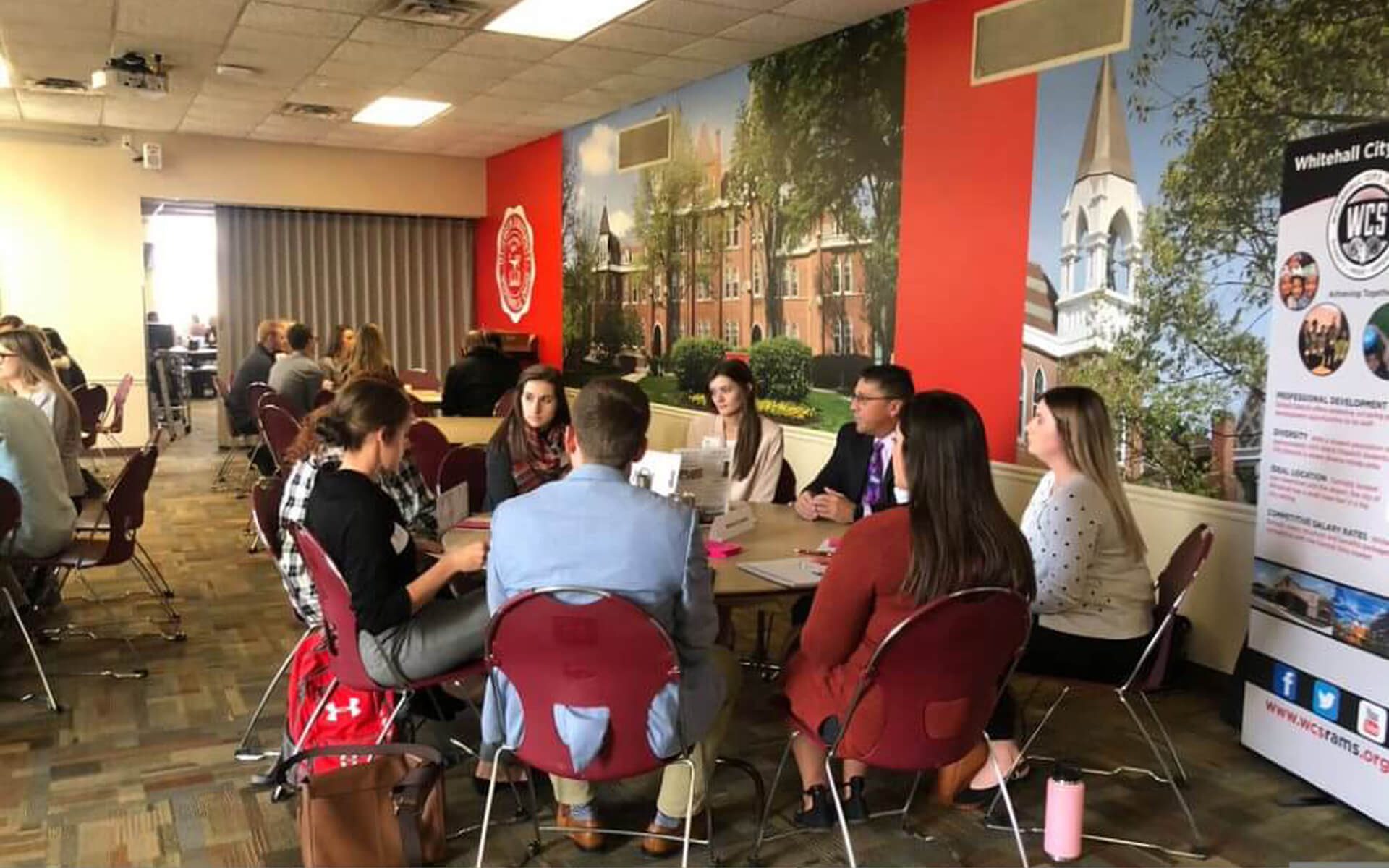
We prepare you for success! Otterbein connects you with local school districts for student teaching and annual events including the HR Round Table and Education Interview Day. Teacher candidates at Otterbein become exceptional teachers, and they are ready to teach at any school, from day one!
Join Otterbein’s professional student organizations to make friends with your future colleagues. Our student organizations are open to all education majors and provide opportunities to attend conferences and workshops, engage with renowned speakers, and attend social events.
ALUMNI SPOTLIGHT
Much of the classwork I took at Otterbein has set me up for success in my own classroom… I took a course on teaching reading to students with specialized learning disabilities, and now I get to teach a reading intervention that is very similar to what I learned in the course… Otterbein also set me up for success with the courses on how to create proper IEPs/ETRs. I am able to confidently navigate writing IEPs, as well as understand education law, which is a really important part of my job as an Intervention Specialist.
Mackenzie Wendt ’23
MAT Intervention Specialist – Moderate/Intense
Mackenzie Wendt is currently an Intervention Specialist in the Specialized Learning Center at Worthingway Middle School in Worthington.
ALUMNI SPOTLIGHT
Student teaching gave me hands-on experience in the classroom which is invaluable. I wouldn’t be the teacher I am today without my wonderful mentor teachers and students who taught me so much during that semester.
Annie Livesay ’23
P-5 Primary Education & P-5 Intervention Specialist
Annie Livesay is starting her first year of teaching as an Intervention Specialist with the Olentangy Local School District.
ALUMNI SPOTLIGHT
Otterbein and the Education department will hold you accountable for your own success, hold high standards for you to meet and provide you with many opportunities to demonstrate your strengths and skills, just as teachers and educators should do for ALL students. Learn to love and love to learn. This career is not just to stand in front of a classroom and speak or pass time, this career is one of the most honorable careers because those who care, can change the world within a classroom.
Alex Natividad ’21
Multi-Age PreK-12 Spanish Education
ALUMNI SPOTLIGHT
The Education faculty members were always willing to collaborate and support my learning and goals. This looked like meetings, borrowing books, recommending conferences, and conversations.
Mia Munoz ’20
Early Childhood, Generalist
Mia is a current student in the Otterbein Master of Arts in Education program. She began her teaching career as a third-grade teacher in Cincinnati. This year Mia will teach third grade in Dublin City Schools.
ALUMNI SPOTLIGHT
Otterbein is the reason I survived my first year of teaching. I felt prepared and ready because the education did such a great job with real world applications and experience in the classroom. My professors were also right there to help me while I was in school and I still contact them for advice even since I graduated. Once you’re in the education program, you are family. That support really helped me.
Janin Rosas ’19
Middle Childhood LA & SS
Janin is a current 6th grade Engligh Language Arts and Social Studies teacher. Her future goals include earning a PhD in education to help preservice teachers the way professors helped her. Janin is also involved with different children’s theatres around Central Ohio.
FACULTY SPOTLIGHT
I graduated from The College of Wooster in 1980, 43 years ago. The 15 women that I lived with there still meet monthly for Zoom calls and biannually go on vacation together. Know that your Otterbein friends and faculty will be there for your lifetime if needed. Reach back and stay connected.
Dr. Diane Ross
Professor
Dr. Ross teaches Middle Level Education courses at Otterbein.
FACULTY SPOTLIGHT
The Otterbein Education Department treats both professors and students as education professionals. I help students develop their lessons and my students offer suggestions for my practice. We quickly become colleagues trading teaching ideas.
Dr. Paul Wendel
Professor & Department Chair
Dr. Wendel teaches Science Education courses at Otterbein.
Learn more about Otterbein’s 2020 Teacher of the Year, Dr. Paul Wendel >
FACULTY SPOTLIGHT
Otterbein has always embraced equity in resources and community service. Otterbein’s literacy education outreach is a wonderful example of our institution living those values and ‘doing the most good’.
Dr. Susan Constable
Professor & Department Chair
Dr. Constable teaches Educational Literacy courses at Otterbein, including Phonics, Reading Endorsement courses, and Early Childhood Methods.
FACULTY SPOTLIGHT
Otterbein Education faculty members are caring, passionate, and knowledgeable, and we prepare high-quality teachers. When I visit schools in central Ohio, I always run into our graduates. Otterbein alumni have a major presence in area schools. Come to Otterbein to learn the tools to make an impact!”
Dr. Dee Knoblauch
Professor
Dr. Dee Knoblauch teaches Educational Psychology; Equity Literacy; Why Race and Culture Matter in Our Schools; Integrated Curriculum Internship, Grades 4-5.
Learn more about Otterbein’s 2021 Teacher of the Year, Dr. Dee Knoblauch >
Department Features and Student Opportunities

Travel Experiences
Travel with Middle Childhood educator Dr. Diane Ross for a transformative teaching experience in Uganda. This life-changing opportunity is open to all education majors.
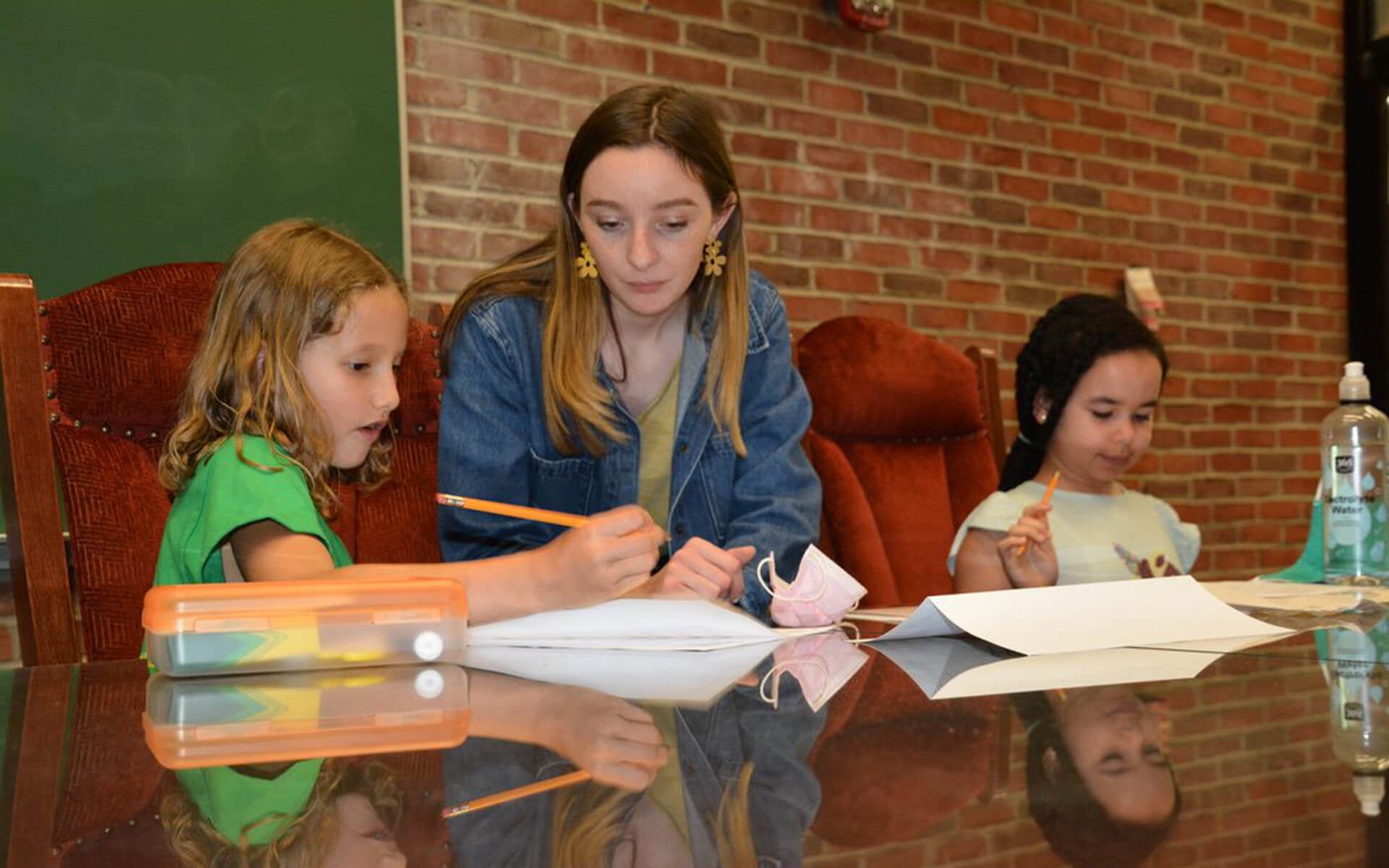
Summer Reading Clinic
Otterbein’s unique Summer Reading Clinic pairs students in our Reading Endorsement courses with children in the community seeking additional literacy instruction.
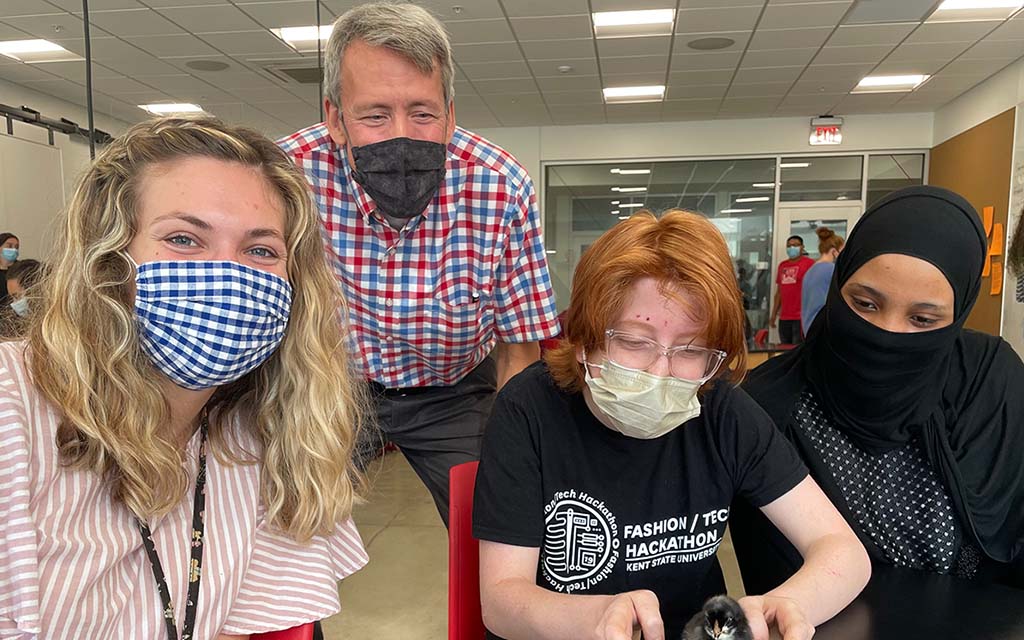
Teaching Talent Awards
These Education scholarships are awarded annually to incoming education students who have early exposure to teaching in their High School Teacher Academy or Career Center.
Education Department News
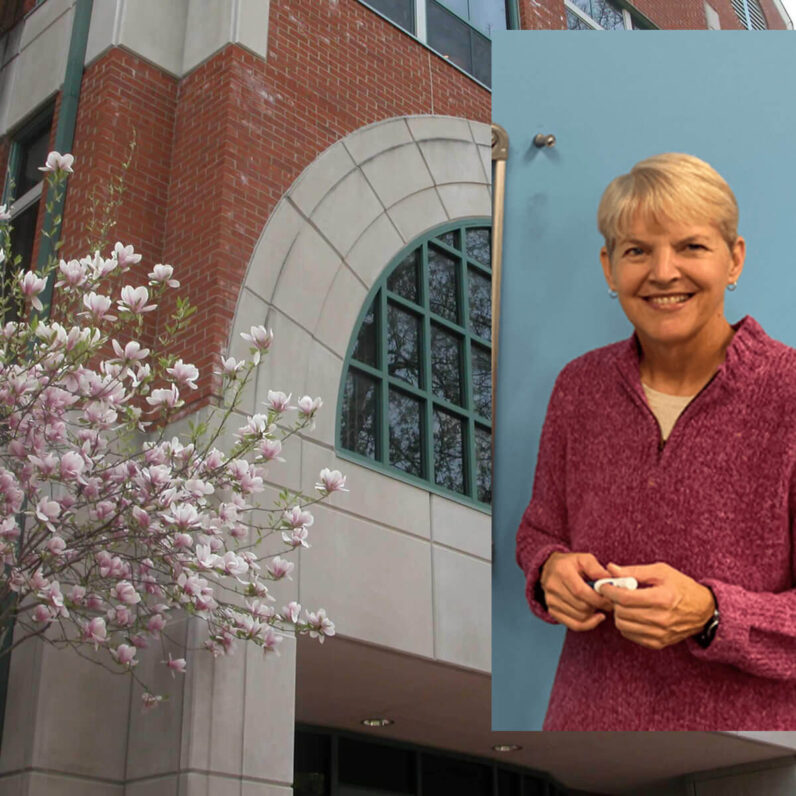
Diverse Perspectives Belong in Education
News - September 27, 2023
As teachers across the nation grapple with book bans, censorship, and backlash regarding Critical Race Theory (CRT), Ohio colleges and universities grapple with Senate Bill 83. SB 83, in short, overhauls public universities by creating policies for vaguely defined "intellectual diversity" and controversial concepts; banning mandatory DEI programs and training; banning affinity groups and affirmative action policies; banning public positions on vaguely defined “controversial” issues; banning striking and forms of collective bargaining; and several other provisions. The Otterbein University Education…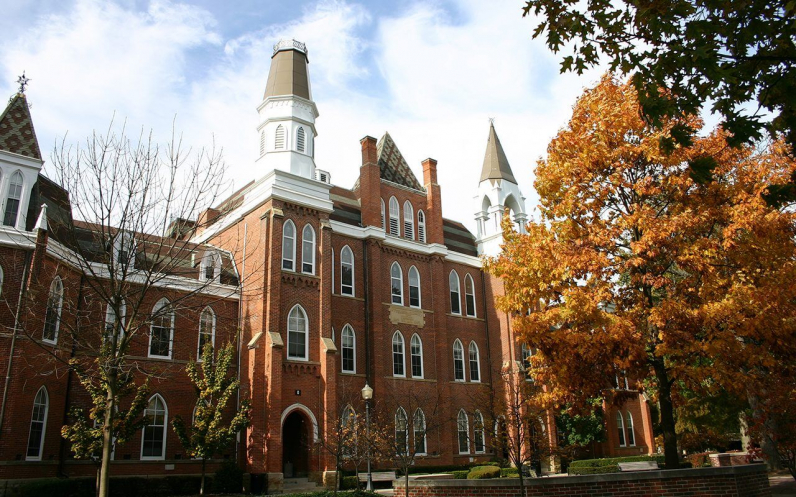
National Media Recognize Otterbein University for Programs and Values
News - September 18, 2023
Otterbein University has been collecting honors this fall, as it is recognized in national publications for its programs and values, including U.S. News & World Report, Colleges of Distinction, and Washington Monthly. US News & World Report Otterbein University has been recognized by U.S. News & World Report for its academic excellence, commitment to undergraduate teaching, and focus on affordability, student success outcomes, and experiential learning. In the 2024 Best Colleges rankings by U.S. News & World Report, Otterbein has…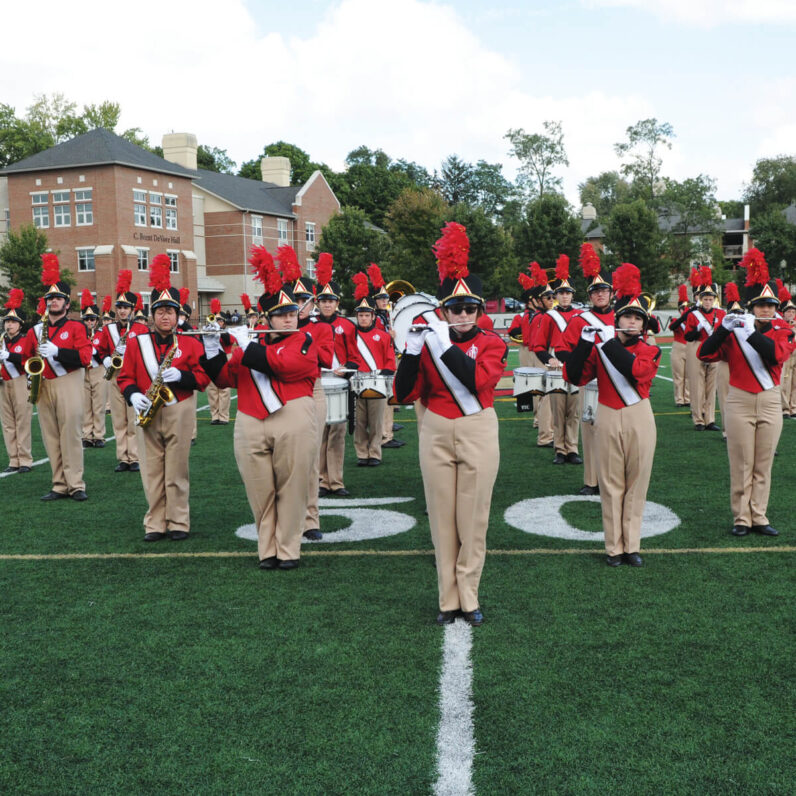
Fast Track Innovation Fund Lets Community Shape Otterbein’s Growth
News - July 31, 2023
Otterbein University is using an innovative approach to grow enrollment and revenue by “crowd sourcing” ideas from its own community and investing in the best ideas with $1 million approved by the Board of Trustees. Under the Fast Track Innovation Fund initiative, seven projects proposed by Otterbein faculty and staff in May have been funded and are already being implemented on campus. “This investment in Otterbein’s future demonstrates our trustees’ commitment to allowing every member of our community to be heard…Our Affiliated Organizations


Contact Us
Roush Hall 430
27 S. Grove St.
Westerville, OH 43081
Academic Administrative Coordinator
Gaby Miller
614-823-1214
gmiller@otterbein.edu
Apply
Now!